Metallic Bonding
Principles of Chemistry
What an alloy is
- An alloy is a mixture of a metal with one or more other elements (usually another metal, sometimes a non-metal such as carbon)
- Common examples:
- Steel: iron with a small percentage of carbon
- Brass: copper and zinc
- Bronze: copper and tin
Why alloys are harder than the pure metal
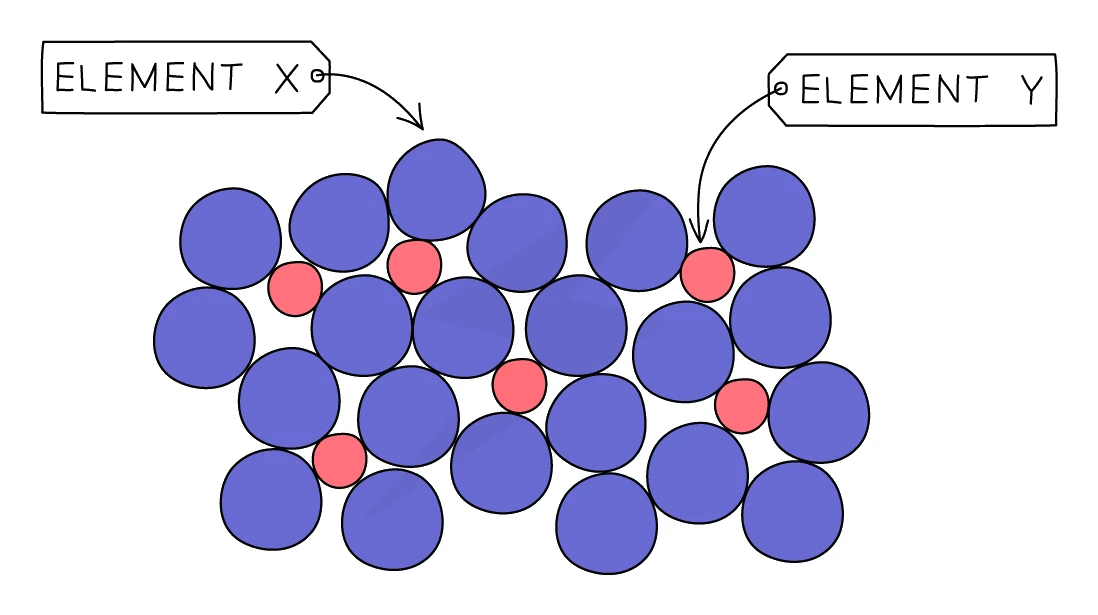
- The added element has atoms of a different size from the host metal
- These differently sized atoms disrupt the regular arrangement of the lattice
- The layers can no longer slide smoothly past each other
- The alloy is therefore harder and stronger, with reduced malleability compared with the pure metal
Common exam question
Why an alloy is harder than the pure metal
Question: Explain why an alloy is harder, stronger or less malleable than the pure metal (2–3 marks).
Asked in 3 of the 23 papers, all on Paper 2. For three marks: in the pure metal the atoms are all one size, so the layers slide over each other easily; the alloy's atoms of a different size disrupt the regular arrangement; so the layers cannot slide. For two marks, the first mark is the alloy idea (atoms of different sizes, or the disrupted regular arrangement) and the second is the layers being harder to slide; saying that the pure metal's layers slide easily earns nothing there. One scheme deducts a mark if layers (rows or sheets) are never named, and labelled diagrams can earn every mark when the question invites them.
Use atoms, ions or particles throughout: mentioning molecules, intermolecular forces, negative ions or ionic or covalent bonding costs one mark, however many of them appear, and saying the metallic bonds are stronger earns nothing. Asked what an alloy is (1 mark), say a mixture of metals, or of a metal and carbon; "compound" is rejected.