4CH1
The Reactivity Series
Inorganic Chemistry · 1 question type
Goal of the practical
- Compare how three different metals — magnesium, zinc and iron — react with two different dilute acids (HCl and H2SO4), and use the observations to rank the metals by reactivity
Method
- Wear safety glasses; acids and the hydrogen produced are hazardous
- Set up six labelled test tubes in a rack
- Into each tube, measure 5 cm3 of one of the acids using a small measuring cylinder
- Drop a small, comparable sample of metal into each tube: a 1 cm strip of magnesium ribbon, a few zinc turnings, or a few iron filings
- Watch each tube for bubbling, heat change and any colour change in the solution; time how long it takes for the metal to disappear
- Test any gas given off by holding a lit splint at the mouth of the tube — a hydrogen pop confirms the gas
- Repeat with the second acid and record observations in the same table
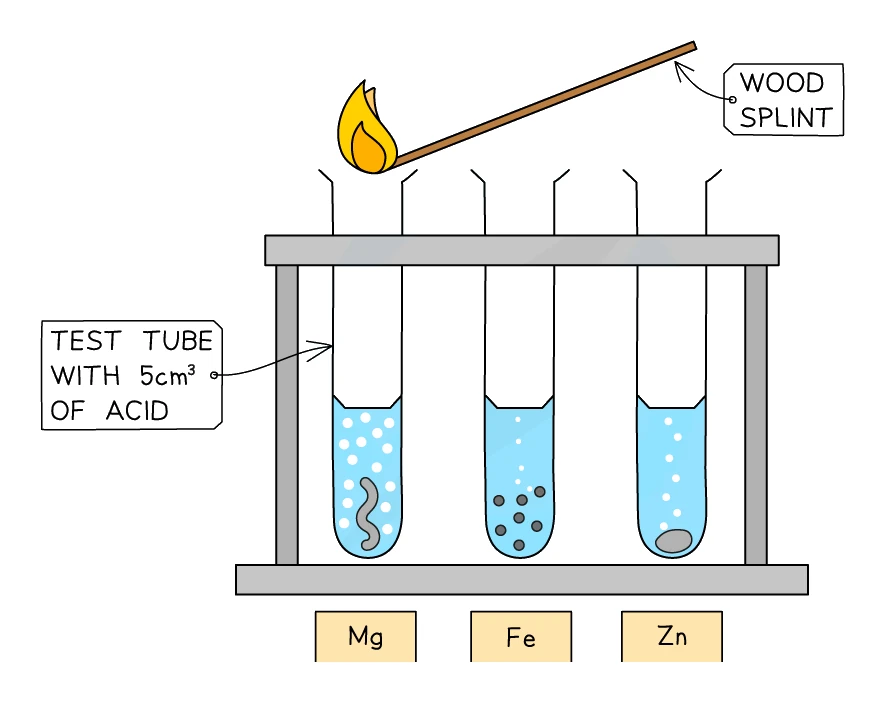
Typical observations
| Metal | With dilute HCl | With dilute H2SO4 |
|---|---|---|
| Magnesium | Rapid fizzing, tube warms noticeably, metal disappears within a minute, splint pops | Rapid fizzing, tube warms, metal disappears within a minute, splint pops |
| Zinc | Steady stream of small bubbles, metal dissolves gradually, splint pops | Steady fizzing, metal dissolves more slowly than magnesium, splint pops |
| Iron | Very slow bubbling, metal almost unchanged after several minutes | Slow bubbling, only small bubbles seen |
Conclusion
- Order of reactivity from these observations: Mg > Zn > Fe
- For each metal, the products with hydrochloric acid and with sulfuric acid follow the same general pattern: a soluble salt of the metal plus hydrogen gas
- The order found in this practical matches the order of these metals in the standard reactivity series in section 3