Atomic Structure
Principles of Chemistry
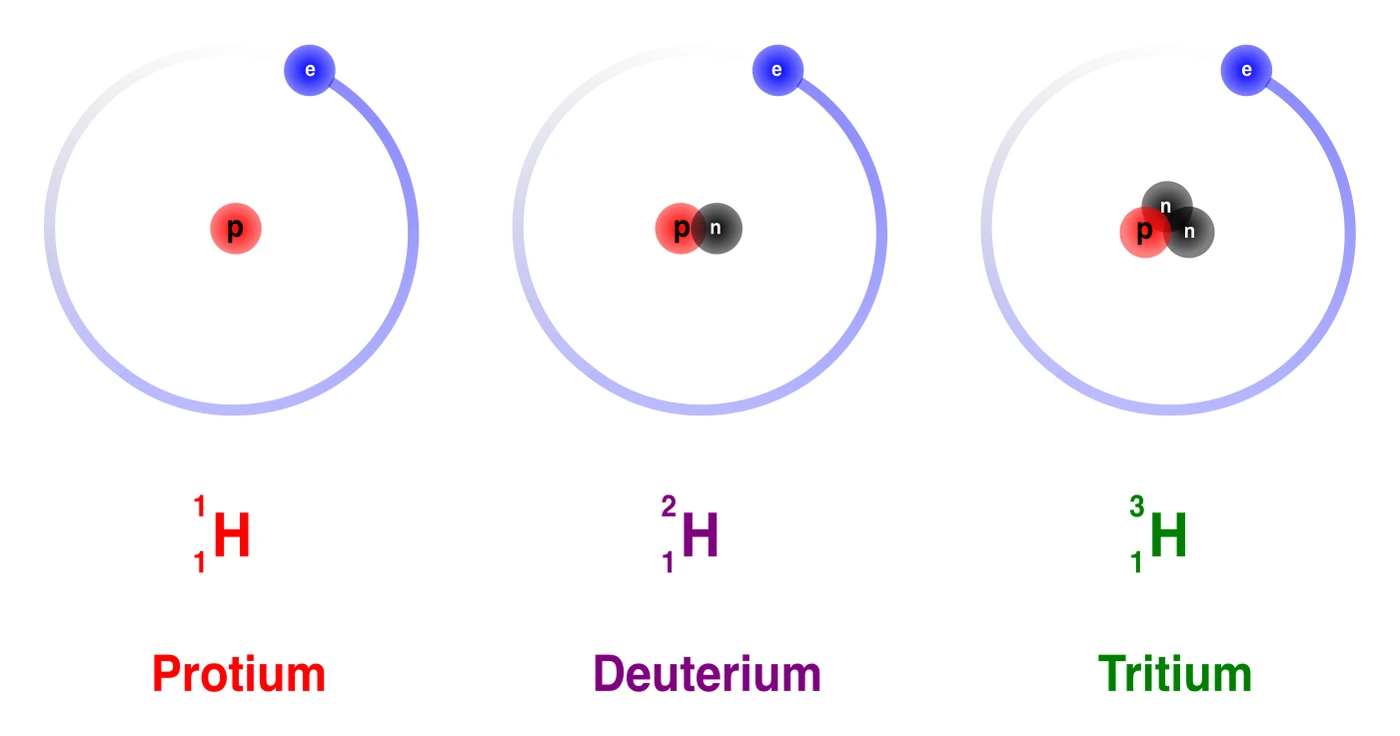
- Isotopes are atoms of the same element with the same number of but a different number of
- All isotopes of an element share:
- the same (so the same number of protons and electrons)
- the same chemical properties (chemistry is set by the electron count, which equals the proton count)
- Isotopes differ in:
- (different neutron count)
- some physical properties like density and rate of diffusion
- Isotopes are written with the mass number as a left-superscript on the element symbol:
- ¹²C, ¹³C, ¹⁴C are three isotopes of carbon
- All three have 6 protons; they have 6, 7 and 8 neutrons respectively
Common exam question
Defining isotopes or explaining why two atoms are isotopes
Question: State the meaning of the term isotopes, or explain in terms of subatomic particles why two given atoms are isotopes, or give one similarity and one difference between them (2 marks).
Asked in 6 of the 23 papers, and the two marks never move: one for the same number of protons, one for a different number of neutrons. Quoting the numbers is accepted, as in "both have 6 protons, but one has 6 neutrons and the other 8".
Answering with atomic number and mass number is risky: it earns both marks in the plain definition, but when the question is about particles, or is built on a table of them, the schemes either cap it at one mark or ignore it. Build the similarity on protons rather than electrons. "Same number of electrons" is accepted by some schemes and ignored by others, and one rejects "different number of electrons" outright.
Common exam question
Why isotopes have identical chemical properties
Question: State or explain why two isotopes of an element react in the same way, or have identical chemical properties (1–2 marks).
Set in 2 of the 23 papers. The credited idea is the same electron configuration, or simply the same number of electrons, because chemistry is decided by the electrons. In the two-mark version the first mark is for the same number of protons, which is what makes them the same element, and the second is for the electrons.
In the two-mark version any mention of neutrons is ignored, so a neutron-based answer scores nothing. Both schemes also ignore "the same number of outer-shell electrons": give the whole configuration or the whole electron count. In the one-mark version "same number of protons" is ignored as well, because it does not explain the chemistry.
Why isotopes matter
- Most elements in nature are a mixture of their isotopes in fixed natural proportions
- This is why most relative atomic masses on the periodic table are not whole numbers — they are weighted averages over the natural isotope mix (see section 5)