4BI1
Nutrition & Digestion
Structures and Functions in Living Organisms · 9 question types
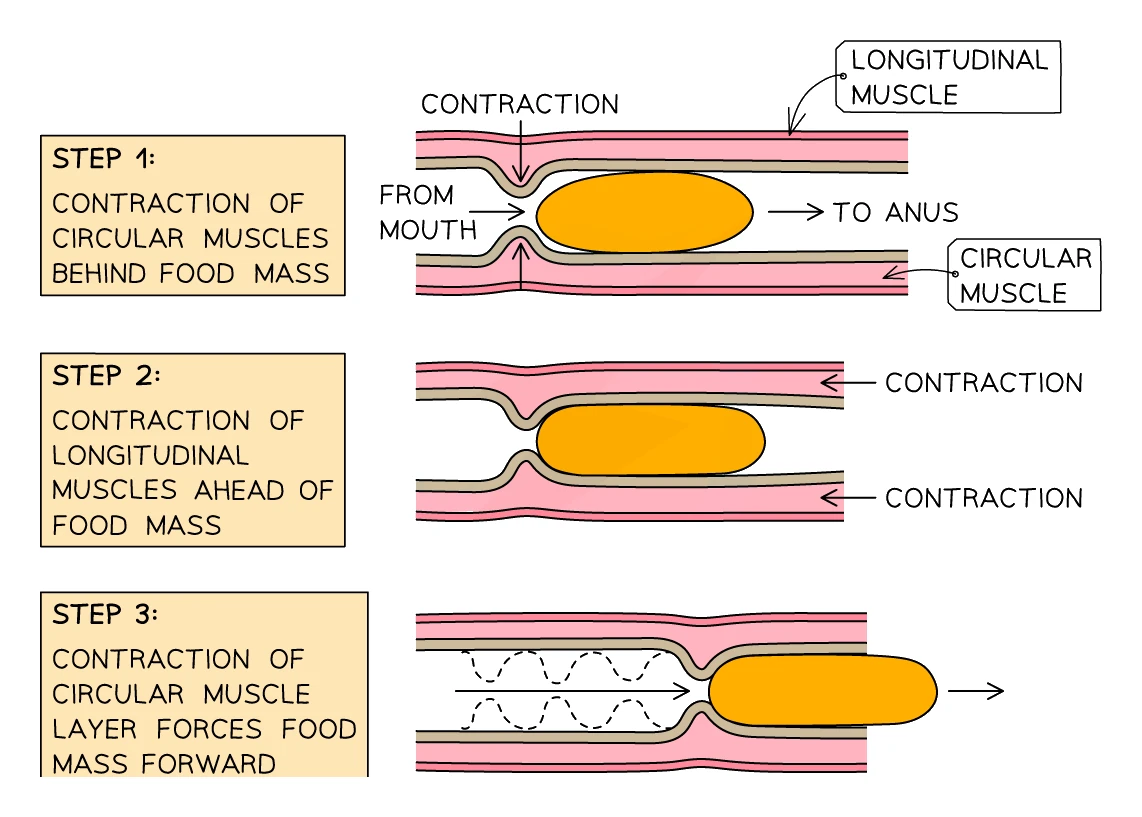
Peristalsis is the wave of muscle contraction that pushes food along the alimentary canal. The wall of the canal contains two layers of muscle:
- Circular muscles run around the canal. When they contract, the diameter of the tube narrows.
- Longitudinal muscles run along the length of the canal. When they contract, the section of tube shortens.
These two layers contract in turn, creating a wave that travels along the canal and pushes the bolus forward, exactly like squeezing toothpaste out of a tube. Peristalsis works against gravity too, which is why an astronaut in space can still swallow food without it floating back up.
Dietary fibre provides the bulk that the muscles can push against. Without enough fibre, peristalsis is sluggish and constipation can develop.