Crude Oil
Organic Chemistry · 1 question type
Sulfur dioxide from sulfur impurities in fuels
- Crude oil contains a small percentage of sulfur compounds; when fossil fuels are burned, the sulfur is oxidised to sulfur dioxide:
S(s) + O2(g) → SO2(g)
- SO2 escapes into the atmosphere through the chimneys of power stations and the exhausts of unfiltered vehicles
- Many modern power stations now use flue-gas desulfurisation with limestone or calcium hydroxide to scrub SO2 out before the gas reaches the atmosphere
Nitrogen oxides from hot engines
- The air drawn into a car engine, a jet engine, or an industrial blast furnace is mostly nitrogen and oxygen
- At the high temperatures inside these engines, the normally unreactive N2 and O2 react to form nitrogen monoxide (NO) and nitrogen dioxide (NO2), collectively called (NOx)
- Modern petrol cars carry a in the exhaust system that converts NOx and CO back to N2 and CO2 before they leave the tailpipe
Acid rain
- Both SO2 and NOx dissolve in rain droplets high in the atmosphere
- SO2 reacts with water (and more oxygen) to give sulfuric acid:
2 SO2(g) + O2(g) + 2 H2O(l) → 2 H2SO4(aq)
- NO2 reacts with water and oxygen to give nitric acid:
4 NO2(g) + 2 H2O(l) + O2(g) → 4 HNO3(aq)
- The mixture of acids falls as , with a pH typically of 4–5 (rainwater unaffected by pollution sits around pH 5.6, due only to dissolved CO2)
Effects of acid rain
- Acidifies lakes and rivers, killing fish and aquatic invertebrates
- Damages tree leaves and dissolves nutrients out of soil — large areas of forest decline
- Corrodes metal structures (bridges, railings) and dissolves carbonate building materials (limestone, marble) — historic statues lose facial detail over decades
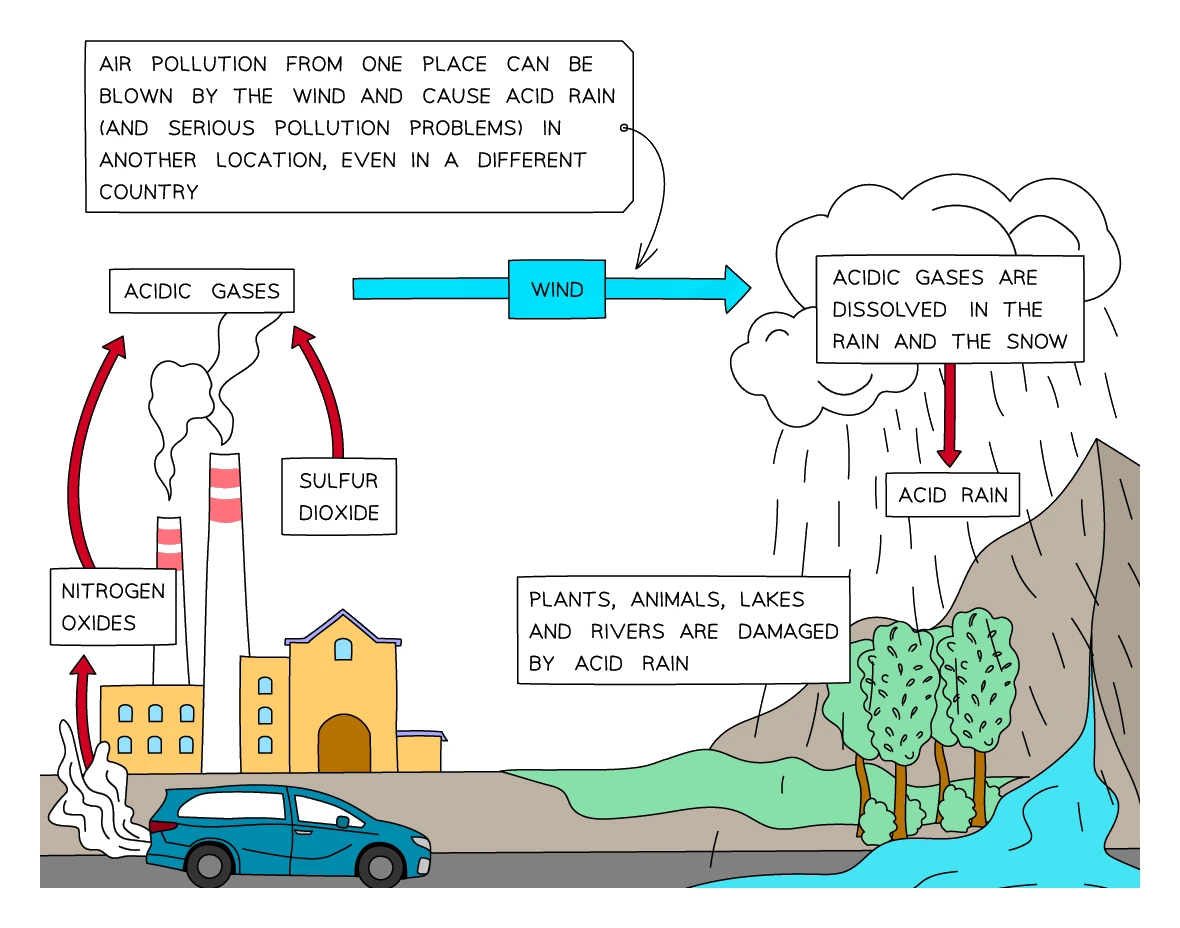
Explaining how burning fuels produces acid rain
What comes up: A 3-mark "explain how" question linking sulfur in fuels to acid rain.
Write (three marks): (1) Fuels contain sulfur (as impurities). (2) When the fuel burns, the sulfur is oxidised and produces sulfur dioxide. (3) Sulfur dioxide reacts with water in the atmosphere to form acid rain.
Watch out: The mark scheme rejects "nitrogen" as the cause in mark point 1 (that is a separate pollutant pathway). Also, the mark scheme ignores references to CO, CO₂, and global warming for this question — keep the answer focused on the sulfur → sulfur dioxide → acid rain chain.