Cell Structure
Structures and Functions in Living Organisms
Bacterial cells (prokaryotes)
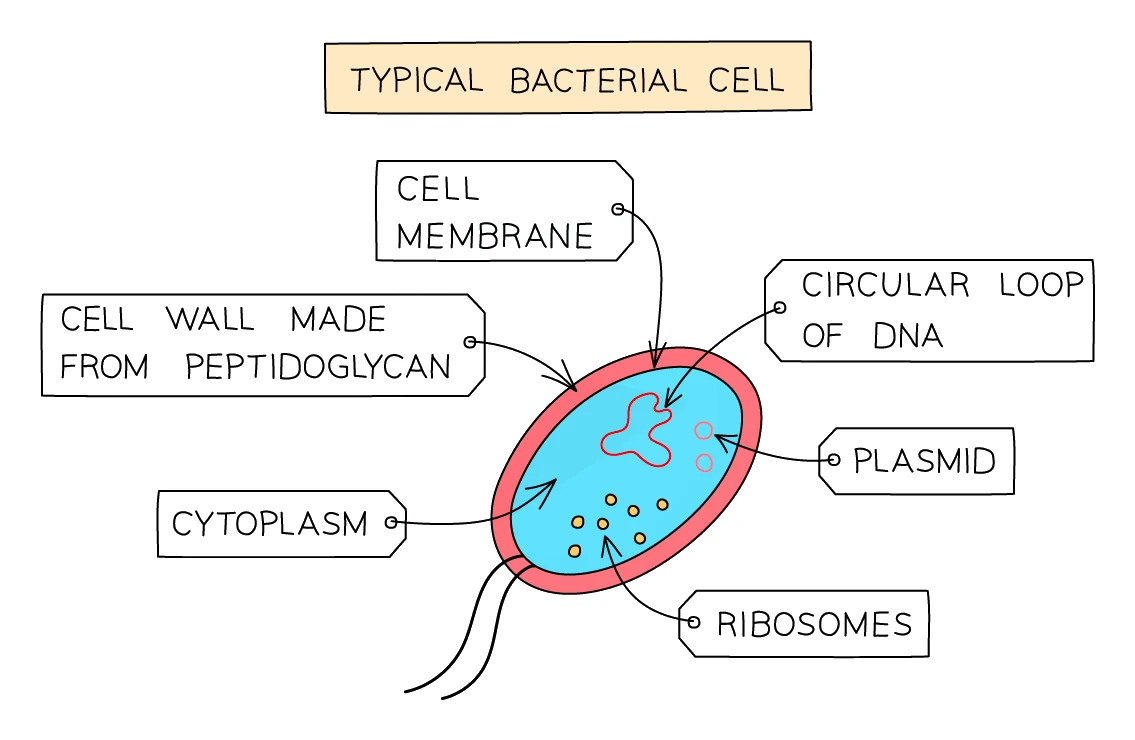
Bacteria are very different from animal and plant cells. They are prokaryotic, which means they have no and no membrane-bound at all. The main features of a bacterial cell are:
- A made of peptidoglycan (not cellulose; this is different from a plant cell wall)
- A just inside the wall
- filling the inside of the cell
- A single circular chromosome of DNA floating free in the cytoplasm
- Smaller circular pieces of DNA called plasmids, which can carry useful genes such as antibiotic resistance and which bacteria can swap between each other
- (smaller than the ribosomes in eukaryotic cells) for making proteins
- Some bacteria have a flagellum for swimming and pili for sticking to surfaces
Bacteria are also much smaller than eukaryotic cells. A typical bacterium is around 1 to 10 μm across, compared with 10 to 100 μm for an animal or plant cell.
Exam tip
Describing a bacterial cell in exam vocabulary
A bacterium has no nucleus, so never write "nucleus" for one: its DNA is a single circular chromosome lying in the cytoplasm ("nucleoid" is also accepted), and the small rings of DNA are plasmids. The two are credited as separate points, so name both. The wall is peptidoglycan, not cellulose, and there are no mitochondria or chloroplasts.
Yeast cells: a useful comparison
Yeast is a single-celled fungus (so it is a eukaryote, not a prokaryote). Yeast cells are roughly oval-shaped and contain:
- A with chromosomes
- (yeast respires both aerobically and anaerobically)
- A made of chitin (the same material as in multicellular fungi, different from both plant cellulose and bacterial peptidoglycan)
Yeast is important in two big industries: it makes carbon dioxide in bread baking (which makes the dough rise) and ethanol in brewing (anaerobic respiration of yeast on sugar produces alcohol).