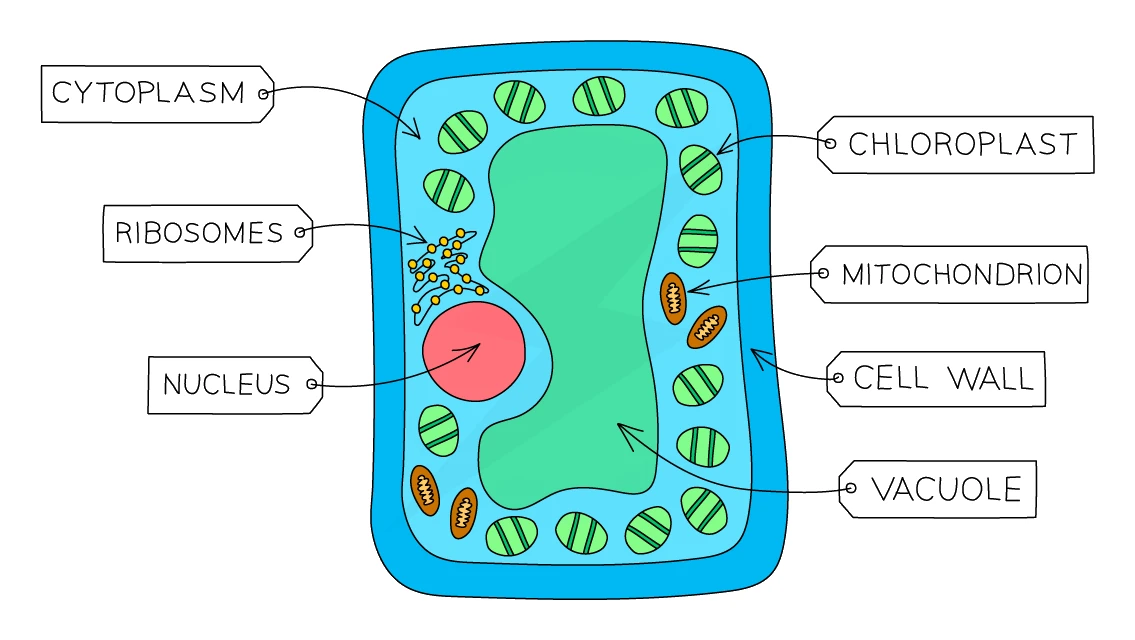
Cell Structure
Structures and Functions in Living Organisms
What differentiation means
Differentiation is the process by which an unspecialised cell takes on the shape, mix and behaviour needed to perform one specific role in the body
When an embryo first forms, all of its cells look more or less the same. As the organism develops, each cell switches on a different set of genes and starts to change shape, change the organelles it contains, and produce different proteins. The result is a cell that is specialised for one specific job. A muscle cell is full of mitochondria; a nerve cell is long and thin; a sperm cell has a tail.
Two important points about differentiation:
- In animals, cells finish their differentiation very early on, mostly during embryonic and childhood growth. After that, only a small number of adult tucked away in particular tissues (bone marrow, skin, gut lining) still have the ability to differentiate; their job is to replace and repair damaged cells.
- In plants, many cell types keep the ability to differentiate throughout life. This is why a gardener can take a cutting from a shoot and grow a whole new plant: the cells in the cutting can still re-specialise into roots, leaves and so on.
Specialised cells you need to know
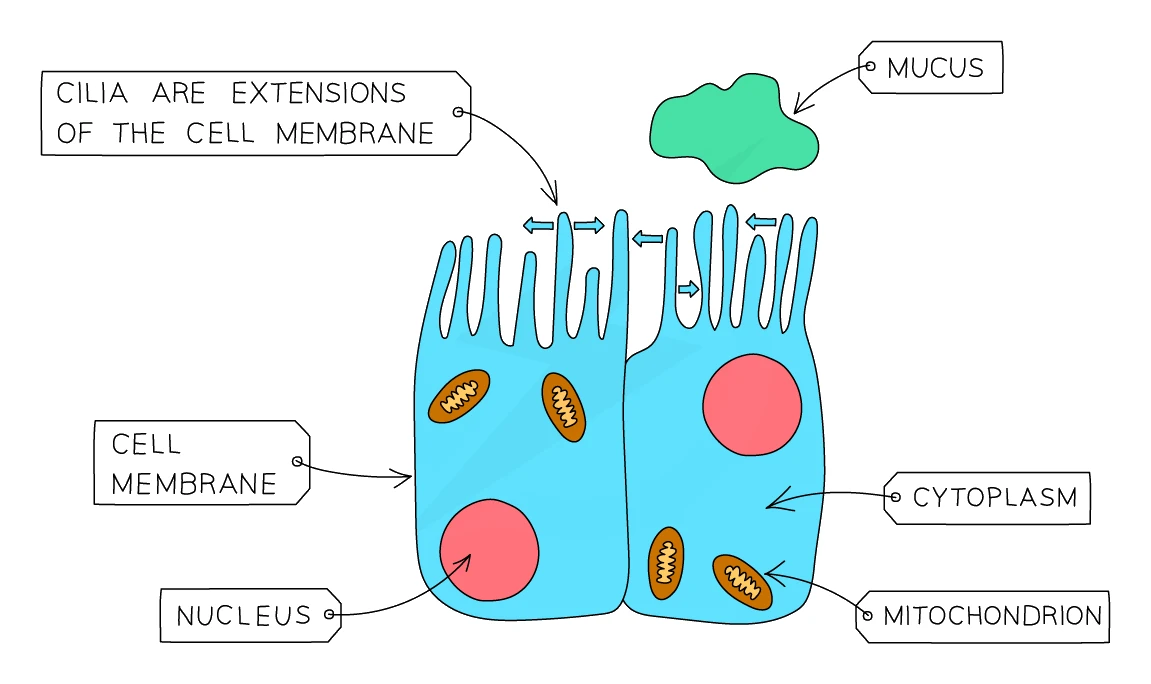
Ciliated epithelial (lining the trachea and bronchi)
- Has tiny hair-like extensions called cilia on its upper surface
- The cilia beat in a wave-like motion to sweep mucus (and the dust and microbes trapped in it) up the airways towards the throat, where it can be swallowed
- Helps keep the lungs clear of dirt and pathogens
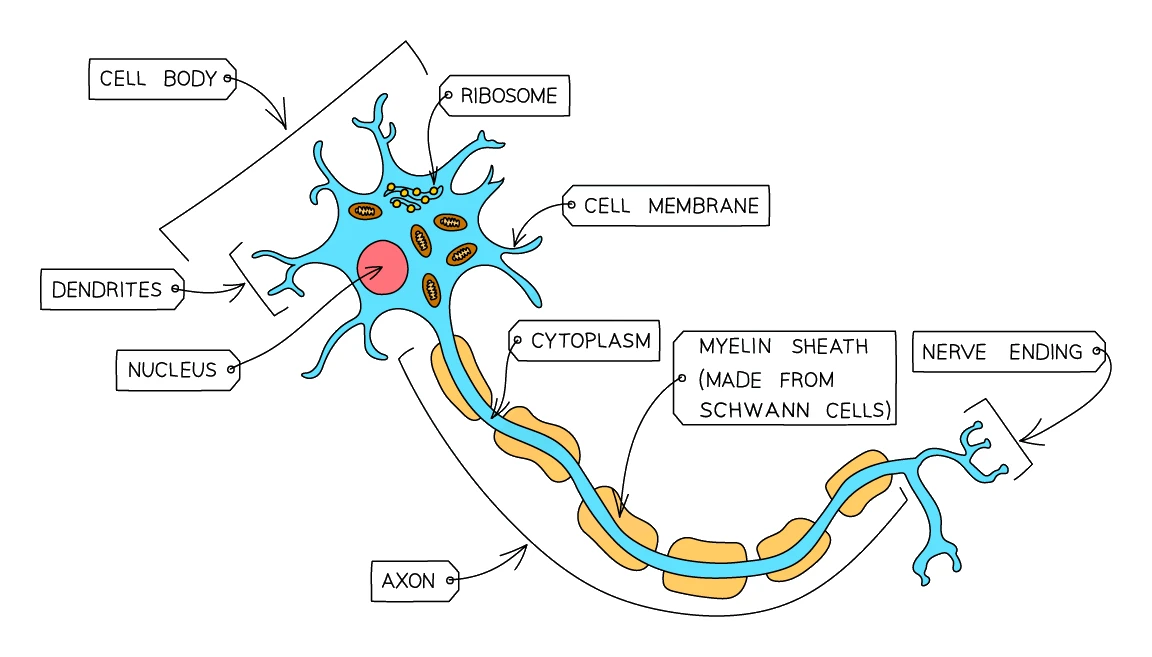
Nerve cell (neurone)
- Very long (some neurones in the leg are over a metre in length) so it can carry electrical signals over long distances
- Has many fine branches at each end called dendrites that connect to many other cells
- The long axon is wrapped in a fatty myelin sheath that insulates it and speeds up signal transmission
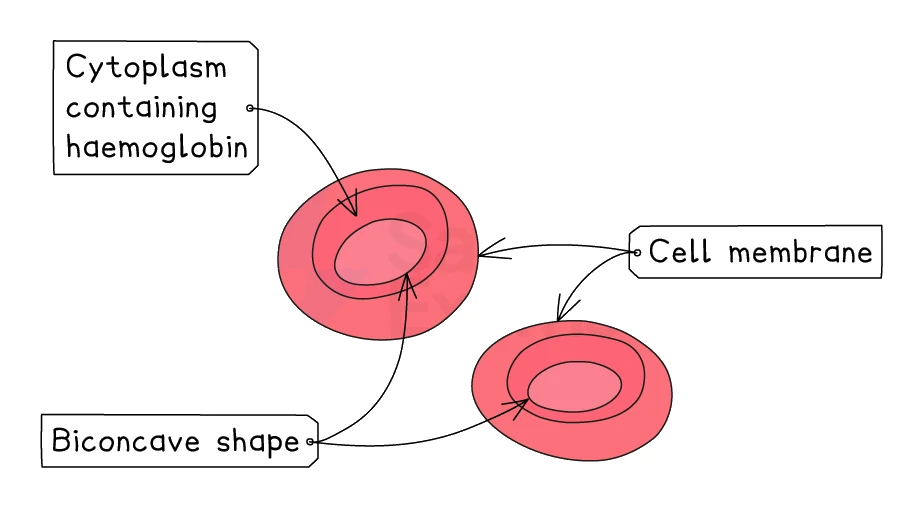
Red blood cell (erythrocyte)
- Biconcave disc shape (squashed in the middle on both sides), giving a high surface-area-to-volume ratio for efficient oxygen exchange
- No in mature red blood cells, leaving more room for haemoglobin
- Loaded with the oxygen-binding protein haemoglobin, which picks up oxygen in the lungs and lets go of it again wherever the body needs it
- Flexible enough to squeeze through capillaries narrower than itself
Sperm cell
- Has a long tail (flagellum) that beats to swim towards the egg
- Many in the middle section to supply the energy needed for swimming
- The head contains a haploid nucleus with the male DNA, and the tip carries enzymes (in the acrosome) to digest the egg's outer layer
Egg cell (ovum)
- One of the largest cells in the human body
- Cytoplasm packed with nutrients to feed the developing embryo if fertilisation occurs
- After one sperm has entered, the membrane hardens to block any others
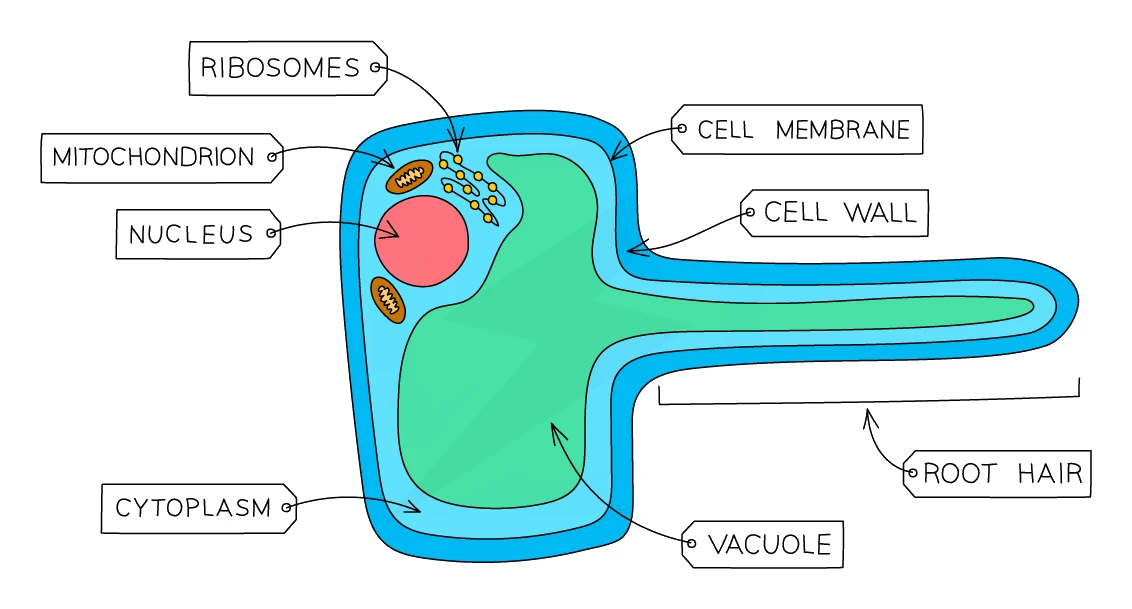
Root hair cell (in plant roots)
- Has a long extension sticking out into the soil that hugely increases its surface area for absorbing water and dissolved mineral ions
- A thin wall so that water moves quickly through it
- No (roots are underground, where there is no light)
- Found in their thousands in the root hair zone just behind the root tip
Common exam question
How a root hair cell is adapted for absorption
Question: Explain how a root hair cell is adapted for its function, or explain its role in absorbing water from the soil (3–4 marks).
Set in 2 of the 23 papers, both on Paper 2. Structure first, then process: the cell has a long extension that reaches into the soil, which increases the surface area; water is absorbed by osmosis, because the water potential inside the cell is lower than in the soil water; mineral ions are absorbed as well, by active transport. Each of those is a separate mark, so "large surface area for absorption" on its own earns one mark, not three. Linking the water to its use (photosynthesis, keeping cells turgid) or to the gradient set up by water loss from the leaves can also score.
Palisade mesophyll (in plant leaves)
- Found in the upper layer of the leaf, just under the epidermis, where the light is brightest
- Packed with many for photosynthesis
- Column-shaped and stacked tightly together side by side, so that as much chloroplast as possible can intercept the incoming light