4PH1
Static Electricity
Electricity
Conductors and Insulators
Conductors
- A conductor is a material that lets electric charge flow through it readily
- Familiar conductors are almost all metals:
- silver, copper, gold (excellent conductors)
- aluminium, steel, iron (good conductors)
- Why metals conduct so well:
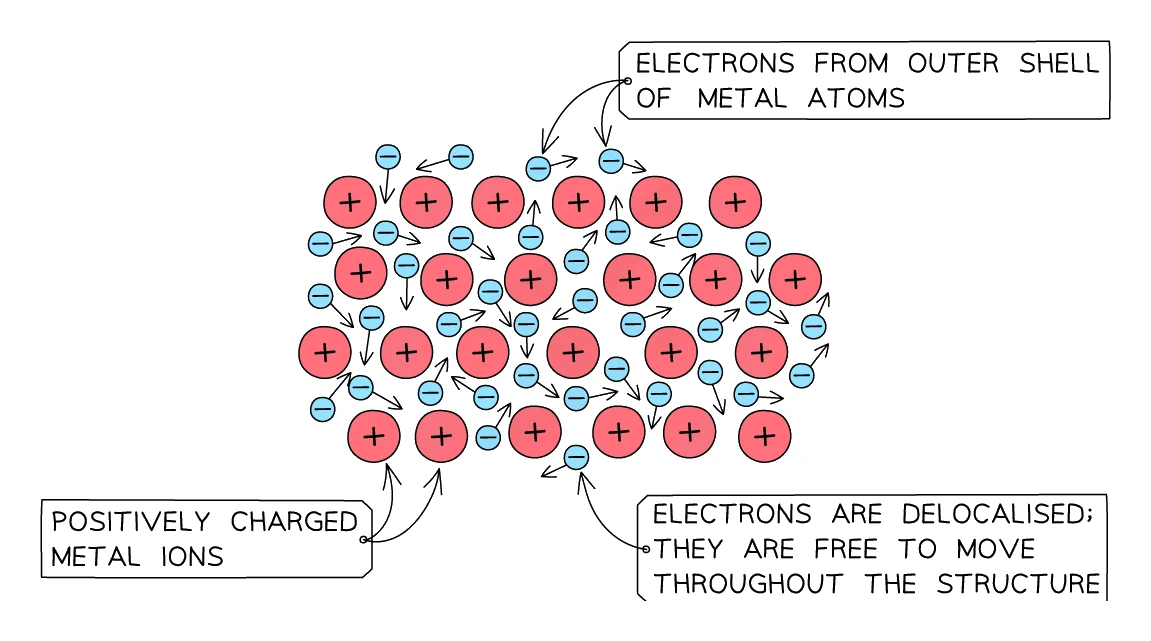
- inside a metal, the outermost electrons of each atom are delocalised, so they are no longer tied to one particular atom and drift freely through the lattice of fixed positive ions
- an electric field set up across the metal makes these free electrons drift along the wire, and a current is simply the rate at which they move
Insulators
- An insulator is a material with no free electrons: every electron is bound to a particular atom, so charge cannot drift through the bulk of the material
- Familiar insulators include:
- plastic, rubber, dry wood, glass, dry paper, ceramic
- Insulators do not conduct current, but charge can still be deposited on their surface by rubbing, and that surface charge is what static electricity is all about
- Some insulators (wood, paper, hair) can build up a noticeable surface charge that leaks slowly into the surroundings; truly dry, pristine plastics can hold a charge for hours
Why the distinction matters for static electricity
- Excess charge on a spreads itself evenly across the surface and flows away to earth almost instantly if any conducting path exists
- Excess charge on an stays put on the surface where it was deposited; it cannot leave by flowing through the bulk
- Static-electricity experiments therefore use insulating rods (polythene, acetate, perspex) so that the charge built up by friction stays on the rod long enough to test