4PH1
Radioactivity, Uses & Dangers
Radioactivity & Particles · 1 question type
How radiation harms cells
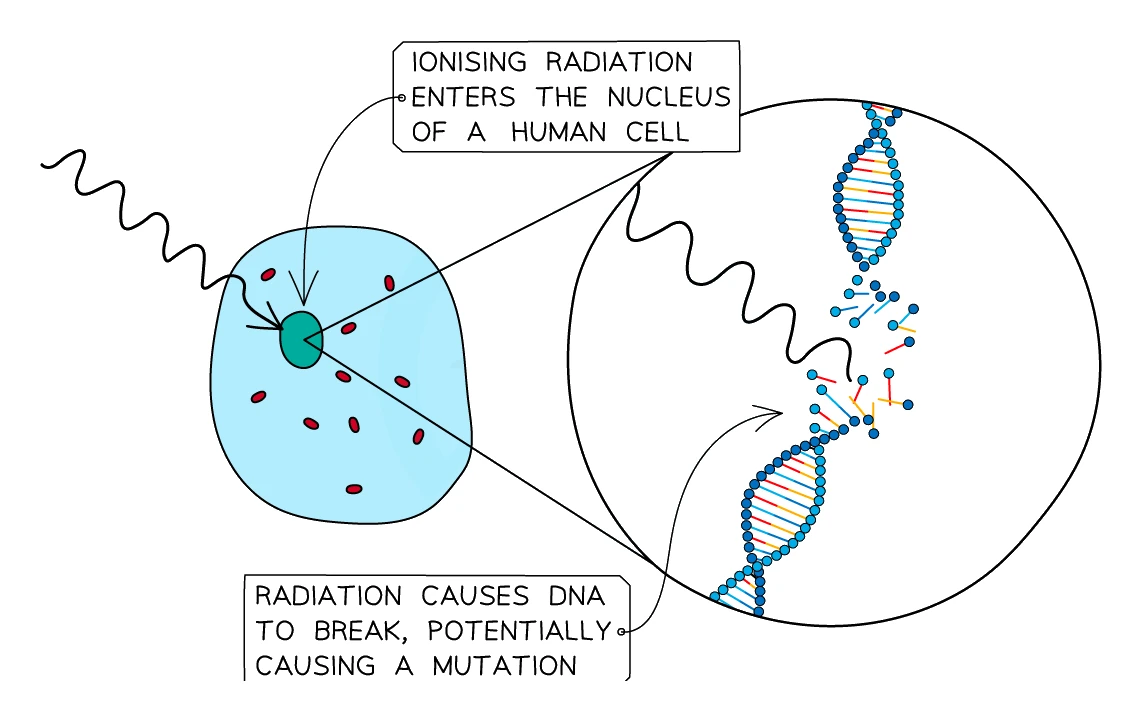
- All three types of nuclear radiation (and X-rays) are ionising: they knock electrons off atoms inside the body
- This can damage the DNA inside a cell in two main ways:
- Low doses: the DNA is damaged but not destroyed. The cell may repair the damage incorrectly, producing a mutation. A mutation in a gene that controls cell division can lead to cancer
- High doses: large numbers of cells are killed outright. Tissues stop working. Symptoms include radiation sickness (nausea, hair loss, burns) and, at very high doses, death
- Cells that divide quickly (bone marrow, gut lining, hair follicles, embryos) are most sensitive
- This is also why radiotherapy works: cancer cells divide faster than most healthy cells, so they are killed preferentially by a carefully aimed dose
Inside the body vs outside the body
- The dangers of alpha, beta and gamma flip around depending on whether the source is outside or inside the body:
| Outside the body | Inside the body | |
|---|---|---|
| Most dangerous | Gamma (and beta) | Alpha |
| Least dangerous | Alpha | Gamma |
| Why | Alpha is stopped by a few cm of air and by the skin. Beta and especially gamma can pass through clothing and skin and damage tissues underneath | Alpha is intensely ionising and deposits all of its energy in a tiny volume of tissue near where the atom decays, doing maximum damage. Gamma mostly passes straight through and exits the body |
- This is why alpha-emitting dust or gas is especially feared. Outside the body the alpha would barely reach the skin; inhaled or swallowed it irradiates the lungs or gut at point-blank range
- Polonium-210 (an alpha emitter) is a famous example: harmless if held in a sealed lump, lethal in microgram quantities if ingested
Sources of background radiation
- Everyone is exposed to background radiation all the time. It comes from:
- Radon gas seeping up from rocks (the single biggest contribution in the UK, especially in granite areas)
- Cosmic rays from the Sun and outer space
- Rocks and soil containing tiny amounts of uranium, thorium and potassium
- Food and drink containing trace amounts of naturally radioactive isotopes (potassium-40, carbon-14)
- Medical sources such as X-rays, CT scans and radiotherapy
- Nuclear power and weapons testing (a small but measurable contribution)
- Background radiation levels are low and most people receive a very small dose each year. The risk of cancer at these levels is tiny, but it is not zero, which is why exposure should be kept as low as reasonably achievable