Gases in the Atmosphere
Inorganic Chemistry · 1 question type
How the natural greenhouse effect works
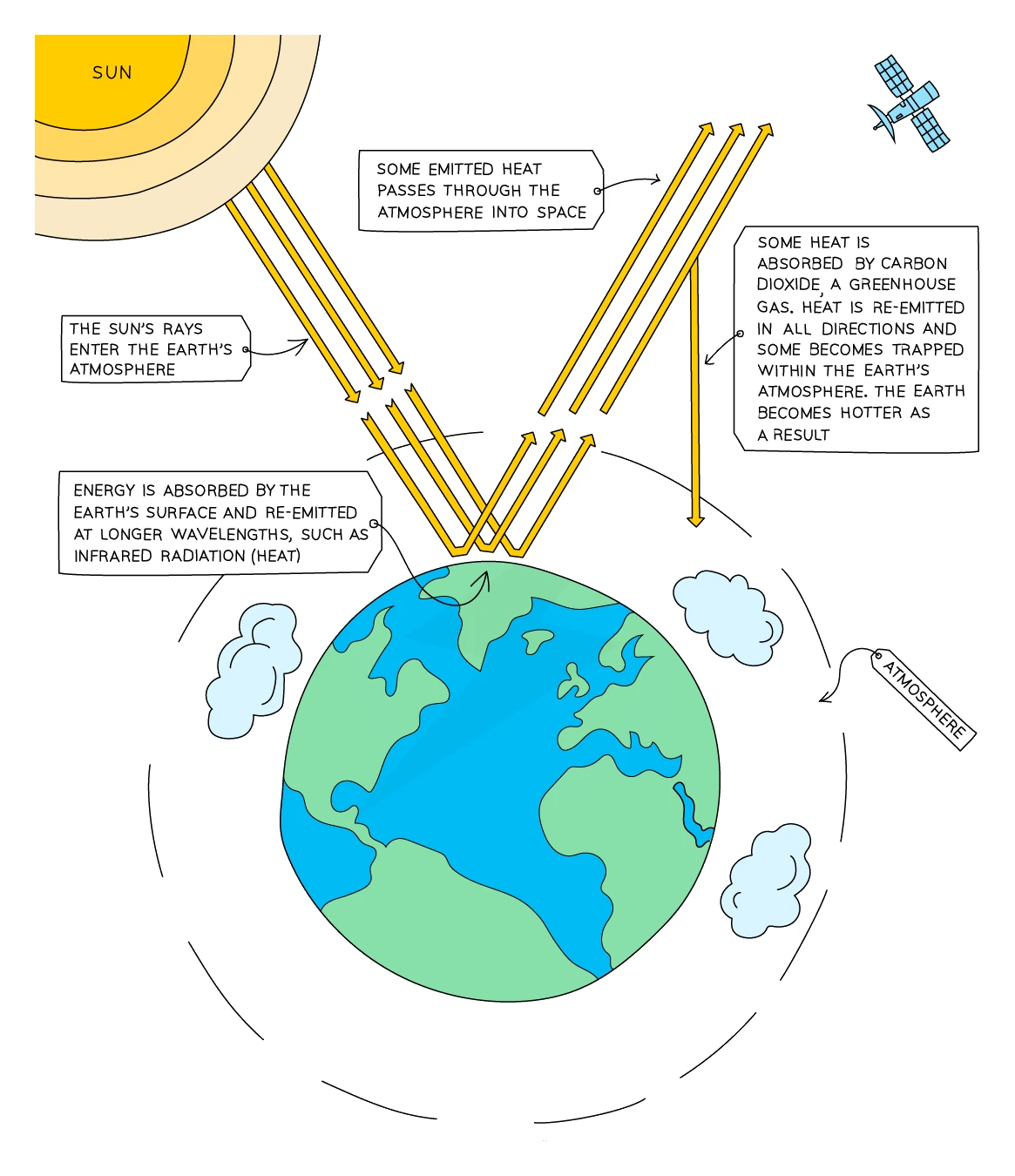
- Short-wavelength radiation from the Sun (visible and ultraviolet) passes through the atmosphere and warms the Earth's surface
- The warmed surface re-emits energy as infrared radiation with a longer wavelength
- Some of this outgoing infrared is absorbed by greenhouse gases in the atmosphere and re-radiated in all directions, including back down toward the surface
- The trapped energy keeps the average surface temperature at about +15 °C — without it, the planet would freeze
The main greenhouse gases
- Carbon dioxide, CO2
- Methane, CH4
- Water vapour, H2O
Sources of atmospheric carbon dioxide
- Burning fossil fuels (coal, oil, natural gas) and wood
- Heating limestone and other carbonate rocks during cement manufacture, releasing CO2 by thermal decomposition
- Natural weathering, where acids react with carbonate rocks
- Respiration: plants and animals exhale CO2 as a metabolic by-product
Enhanced greenhouse effect
- Human activity has raised CO2 and CH4 concentrations above their long-term natural values
- More greenhouse gas means more outgoing infrared is trapped, so the average surface temperature drifts upward — the enhanced
- This is the basis of the link between greenhouse gas emissions and global warming and
Explaining why rising CO₂ levels are an environmental problem
What comes up: a 2-mark question asking you to explain the environmental problem caused by an increasing concentration of CO₂ in the atmosphere.
Write (two marks): (1) Carbon dioxide is a greenhouse gas — it traps infrared radiation in the atmosphere (or: absorbs outgoing infrared and re-radiates it back toward the surface). (2) This causes global warming / climate change / a rise in global temperature. Specific consequences such as melting polar ice caps, flooding, or wildfires are also credited for the second mark.
Watch out: the mark scheme rejects any reference to the ozone layer — that is a separate issue from the greenhouse effect. Acid rain is ignored (not credited). You need to link the greenhouse mechanism (M1) to a named consequence (M2) to collect both marks.