Esters
Organic Chemistry · 1 question type
What an ester is
- An ester is an organic compound formed from the reaction of a with an
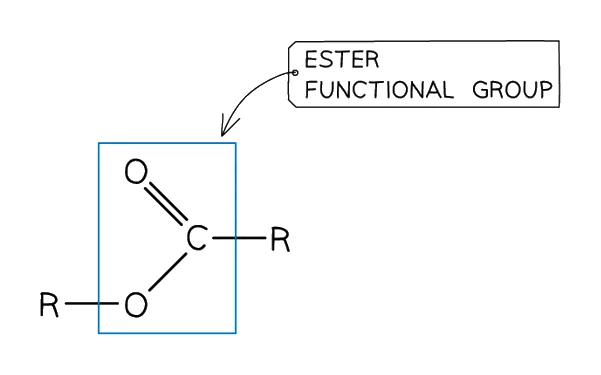
- The functional group is the , written as −COO− and drawn as a carbon with a double bond to one oxygen and a single bond to a separate −O− that continues into the rest of the molecule
- General structure: R–COO–R′, where R is the alkyl group of the carboxylic acid (minus its acidic H) and R′ is the alkyl group of the alcohol (minus its hydroxyl H)
- Physical properties:
- Small esters are colourless, sweet-smelling oily liquids
- They are insoluble or only slightly soluble in water but mix freely with organic solvents
- Many natural fruit aromas are esters: ethyl butanoate (pineapple), 3-methylbutyl ethanoate (banana), octyl ethanoate (orange)
- Esters are widely used as food flavourings and as the scent base of many perfumes
Esterification: making an ester
- The reaction between a carboxylic acid and an alcohol, in the presence of a concentrated sulfuric acid catalyst, is called
- Word equation:
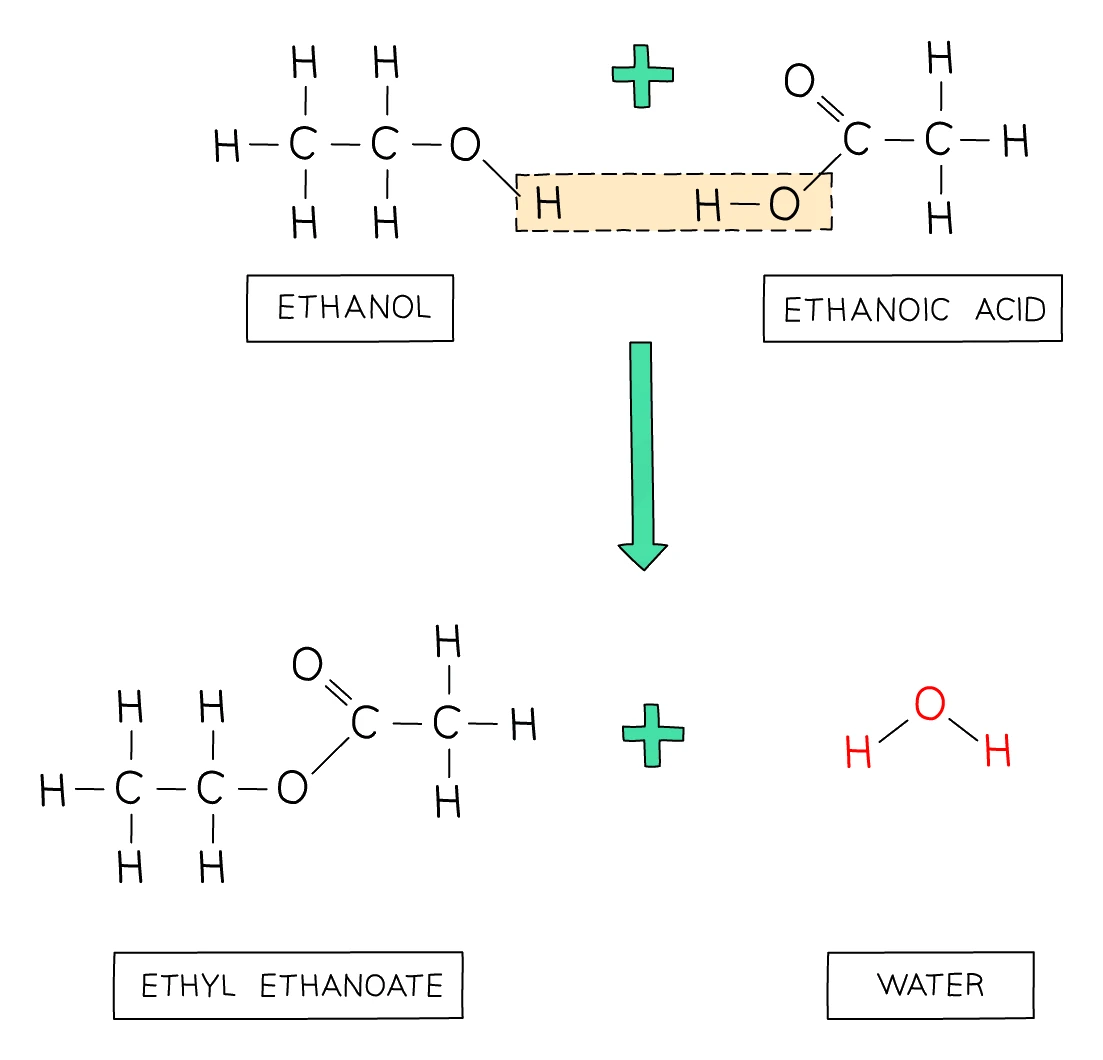
carboxylic acid + alcohol → ester + water
- The catalyst is (H2SO4) — it speeds the reaction up and helps drive water out of the mixture
- The −OH of the acid combines with the −H of the alcohol to leave behind a molecule of water; the remaining fragments join through the ester linkage
Naming the catalyst in esterification
What comes up: "State the catalyst used in esterification" or "Explain why concentrated sulfuric acid is added."
Write: concentrated sulfuric acid (or H2SO4). If asked what it does, write that it increases the rate of the reaction.
Watch out: the mark scheme ignores the word "dilute" — writing "dilute sulfuric acid" scores zero. The catalyst must be specified as concentrated.
Naming an ester
- An ester's name has two words, one for each parent molecule:
- First word — derived from the that supplied the −OR′ group. Drop the "-ol" ending of the alcohol and replace it with "-yl" (e.g. methanol → methyl, ethanol → ethyl, propan-1-ol → propyl)
- Second word — derived from the that supplied the −COO− group. Drop the "-oic acid" ending of the acid and replace it with "-oate" (e.g. methanoic acid → methanoate, ethanoic acid → ethanoate, propanoic acid → propanoate)
- The first word comes from the alcohol, the second from the acid
| Alcohol | Carboxylic acid | Ester name | Ester formula |
|---|---|---|---|
| Methanol (CH3OH) | Methanoic acid (HCOOH) | Methyl methanoate | HCOOCH3 |
| Ethanol (C2H5OH) | Methanoic acid (HCOOH) | Ethyl methanoate | HCOOC2H5 |
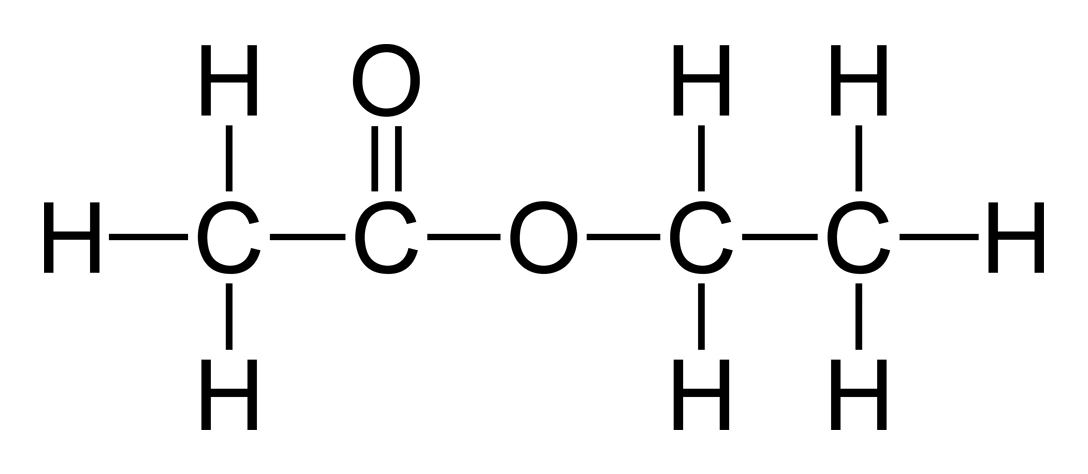
| Ethanol (C2H5OH) | Ethanoic acid (CH3COOH) | Ethyl ethanoate | CH3COOC2H5 |
| Propan-1-ol (C3H7OH) | Ethanoic acid (CH3COOH) | Propyl ethanoate | CH3COOC3H7 |
| Pentan-1-ol (C5H11OH) | Butanoic acid (C3H7COOH) | Pentyl butanoate | C3H7COOC5H11 |
Naming an ester from its structure
What comes up: Given a structural or displayed formula, identify and name the ester (1 mark); or choose the correct name from a multiple-choice list.
Write (two-word rule): (1) identify the −OR′ (alcohol-derived) fragment and name it as the alkyl part (e.g. −OCH3 → methyl); (2) identify the −COO− (acid-derived) fragment and name it as the -anoate part (e.g. CH3COO− → ethanoate). Alcohol-derived word comes first: methyl ethanoate, not ethanoate methyl.
Watch out: swapping the two words (e.g. writing "ethanoate methyl" or confusing which fragment comes from the acid and which from the alcohol) gives zero. Spelling must also be exact.
Predicting an ester structure from its name
- Take pentyl butanoate as a worked example:
- "pentyl" → from pentan-1-ol, so the −OR′ side has 5 carbons (C5H11)
- "butanoate" → from butanoic acid, so the −COO− side has 4 carbons in total (including the carboxyl carbon — so 3 in the alkyl part and one in the C=O)
- Combine: butanoate side is C3H7−COO−, pentyl side is −C5H11
- Full formula: C3H7COOC5H11
- The same procedure works in reverse — given an ester's structure, identify the −COO− linkage, split the molecule at the O–C single bond, and read the two parent molecules from each fragment