Diffusion, Osmosis & Active Transport
Structures and Functions in Living Organisms · 6 question types
What osmosis is
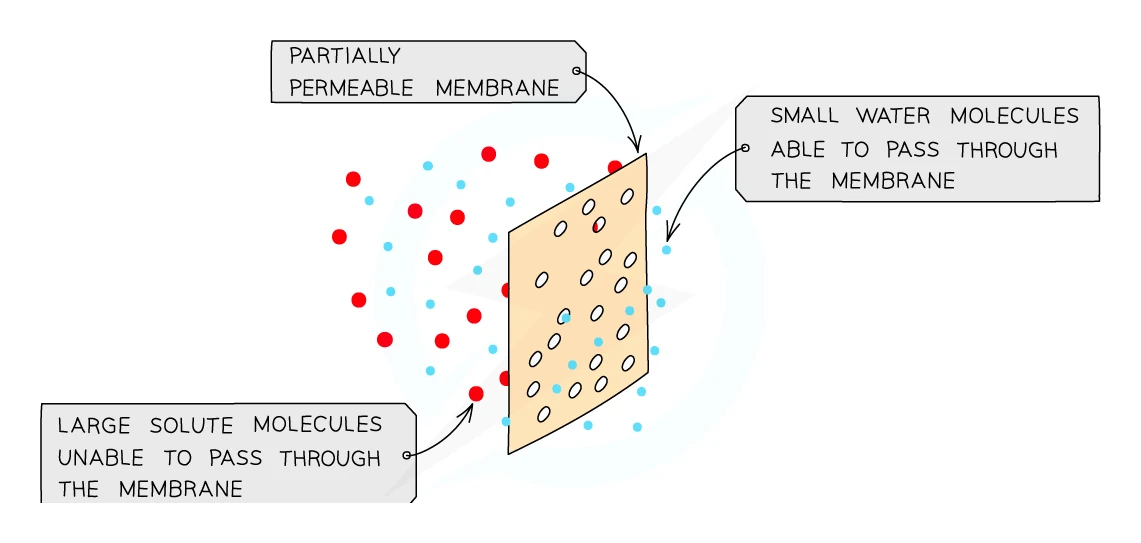
Osmosis is the net movement of water molecules from a region of higher water concentration (a dilute solution) to a region of lower water concentration (a concentrated solution), across a
Osmosis is really just a special case of diffusion: it is the diffusion of water through a partially permeable membrane. The membrane has to be partially permeable because that is the only way to keep two solutions with different concentrations of solute separate; if everything could cross freely, the solutes would simply diffuse out and equalise.
Water potential: a more accurate way to talk about it
Some textbooks use the term instead of water concentration. The idea is the same:
- Pure water has the highest water potential (the highest "willingness" of water to leave)
- The more solute dissolved in a solution (sugar, salt, etc.), the lower its water potential
- Water always moves from higher water potential to lower water potential by osmosis
Both ways of describing osmosis are accepted in exam answers. Using water potential is slightly more accurate.
Define osmosis
Defining osmosis comes up (2 marks), so you need to know it is the net movement of water molecules across a partially permeable membrane, from higher water potential (dilute) to lower water potential (concentrated). Don't drop "water" or "partially permeable membrane", and get the direction right.
Osmosis in animal cells
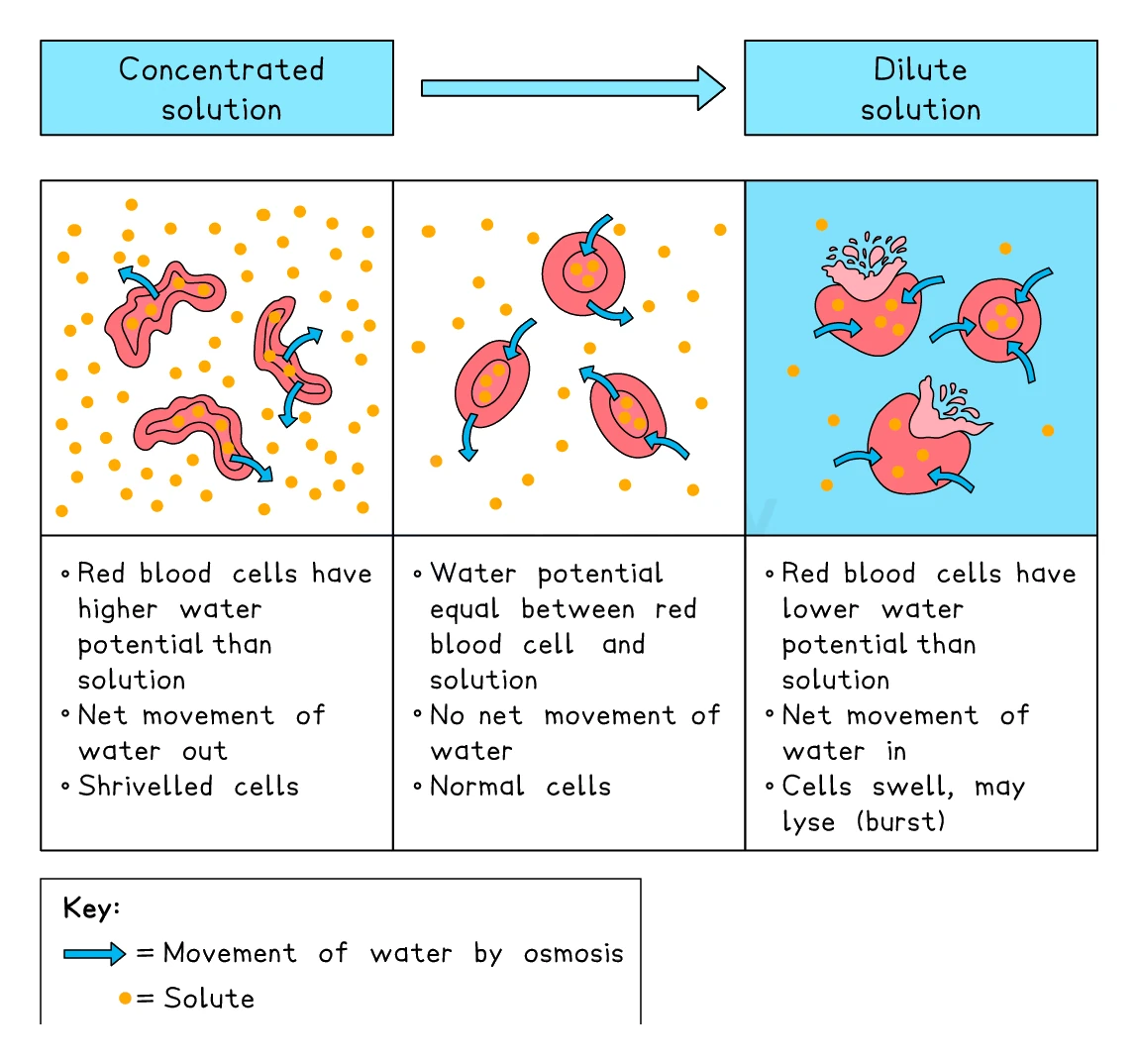
Animal cells have no cell wall, so what happens to them in different solutions is dramatic:
| External solution | What happens to the cell | Cell state |
|---|---|---|
| Distilled water (higher water concentration outside) | Water moves in by osmosis. The cell swells and eventually bursts because there is no wall to resist | Lysed (or haemolysed for red blood cells) |
| Solution with the same concentration as the cytoplasm | No net movement of water | Normal shape |
| Concentrated sugar or salt solution (lower water concentration outside) | Water moves out by osmosis. The cell shrivels | Crenated |
This is why doctors are careful about what solutions they use for intravenous drips: pure water would burst red blood cells, and very concentrated solutions would shrivel them.
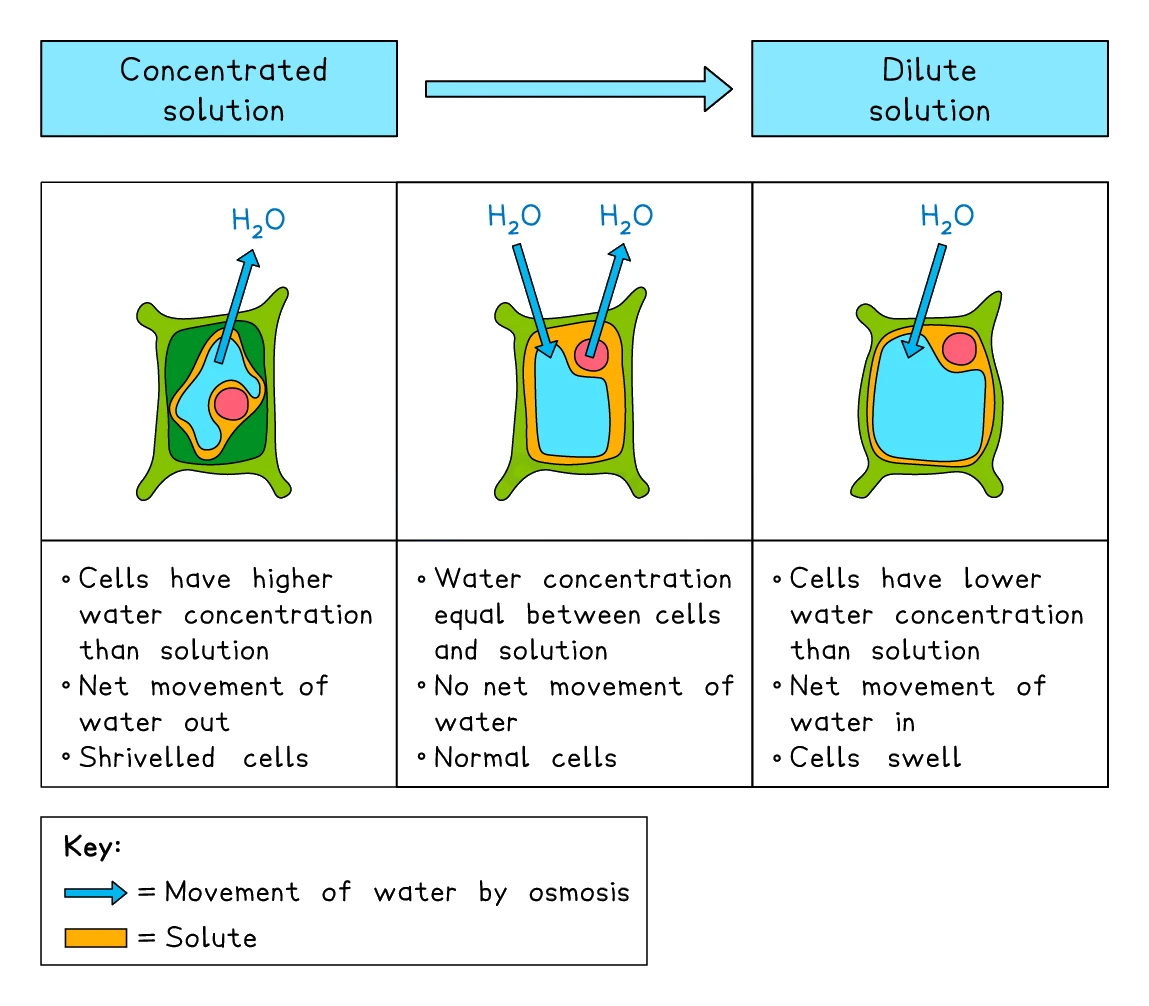
Osmosis in plant cells
Plant cells have a tough cellulose cell wall that prevents bursting, so the same situations produce different results:
| External solution | What happens to the cell | Cell state |
|---|---|---|
| Distilled water | Water moves in. The vacuole fills up and pushes the cytoplasm hard against the cell wall. The cell becomes firm but does not burst because the wall holds | Turgid (the desired state; keeps plants upright) |
| Solution at the same concentration as the cytoplasm | No net movement | Normal but limp |
| Concentrated solution | Water moves out. The vacuole shrinks; the cytoplasm pulls away from the wall. The cell becomes limp | Flaccid, and at extremes plasmolysed (membrane separated from wall) |
A wilting houseplant is showing flaccid cells. Watering it brings the cells back up to turgid and the plant stands up again.