4PH1
Electrical Power & Mains Electricity
Electricity · 2 question types
Why current heats wires
- When current flows through a metal wire, the drifting electrons repeatedly collide with the vibrating positive ions in the lattice
- Each collision transfers some of the electron's kinetic energy to the ion, making the ion vibrate more vigorously
- That extra vibration shows up as a rise in temperature of the wire, because kinetic energy in the electrons has been transferred to internal (thermal) energy in the metal
- Some of this thermal energy is then dissipated to the surroundings by heating (and at higher temperatures by infrared radiation as well)
Exam tip
Explaining why a wire heats up when current flows
When a question asks why a coil, element or wire gets hot while current flows through it, make three separate points, because the mark scheme gives one mark for each: the wire has resistance; the electrons lose energy to it as they pass along it; and they lose it because they collide with the ions of the metal lattice ("atoms" or "particles" is accepted for ions). "It has resistance, so it gets hot" earns only the first of the three: the electrons' energy loss and their collisions with the ions are the other two marks.
Useful applications of the heating effect
- The heating effect is the basis of every domestic appliance that turns electricity into warmth:
- electric kettle: current through a high-resistance heating element brings the water to the boil
- toaster: a coil of resistance wire glows red-hot under each slice of bread
- electric oven and grill: a hidden resistive element heats the oven cavity
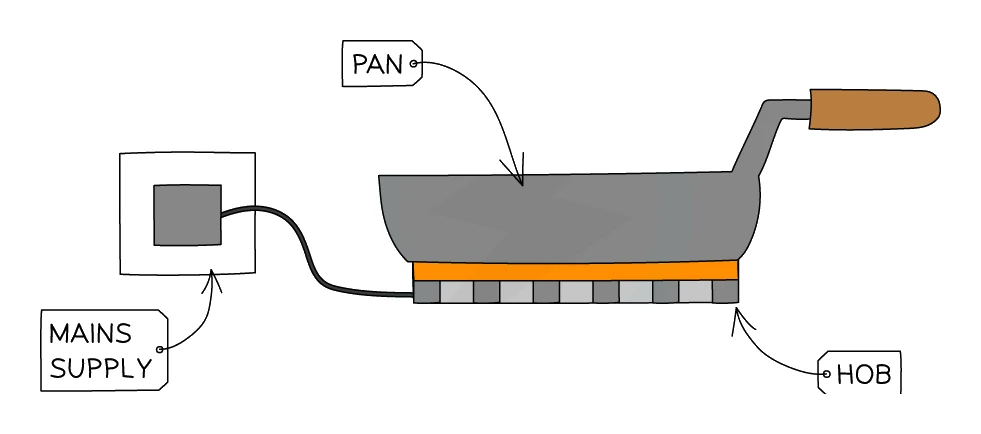
- electric hob: a resistive element under the ceramic surface heats the cookware
- bar heater / electric radiator: a long coil of resistance wire heats the room air
- filament lamp: heats the metal filament until it glows white-hot, producing light (along with a lot of waste heat)
- In wiring that is not meant to heat up, such as extension leads, mains cables, and transformer windings, the heating effect is a waste of energy, and good design uses thick, low-resistance copper conductors to minimise it