MathematicsExam code: 0580
Real Life Graphs
Coordinate Geometry and Graphs
What the number means
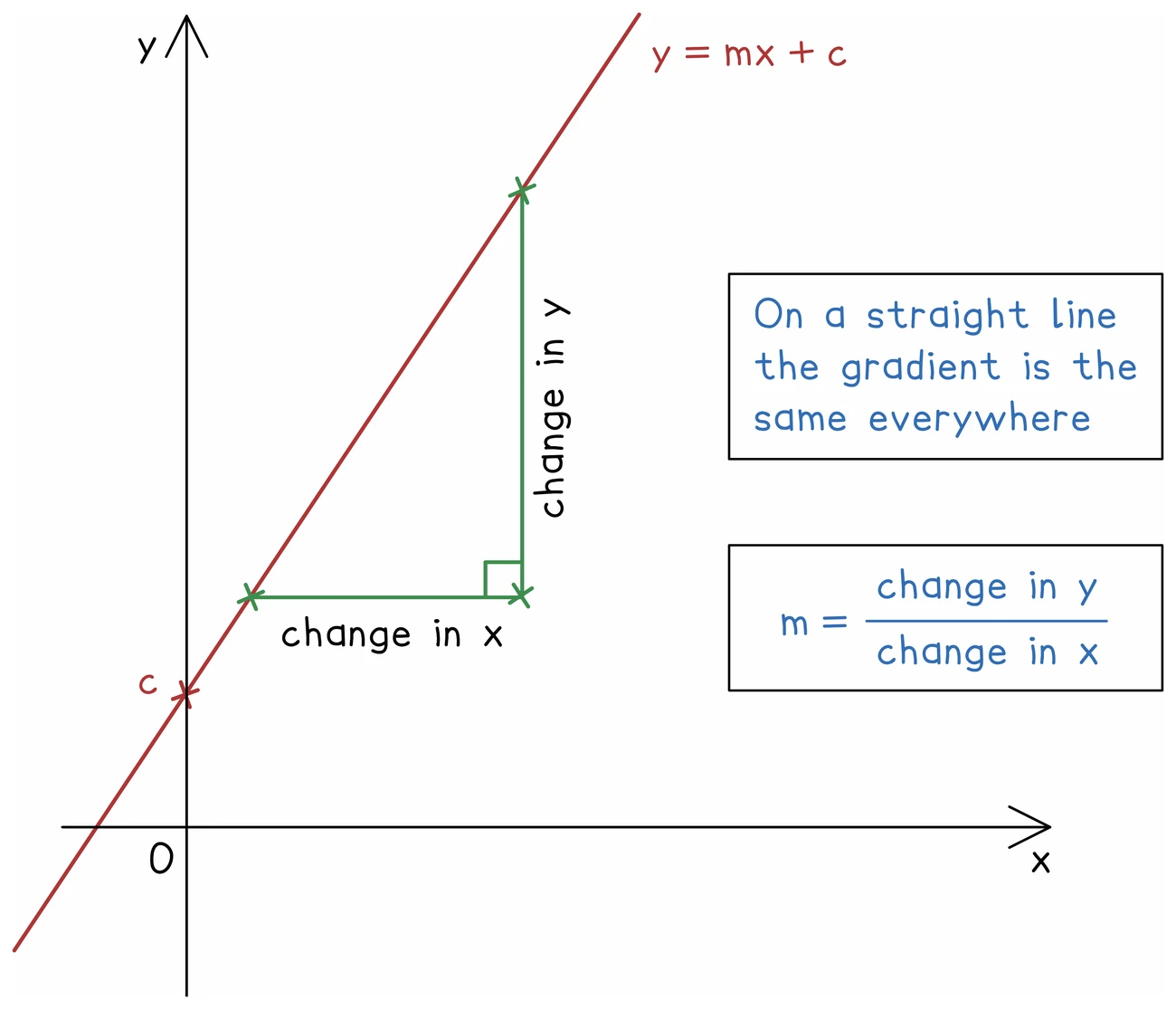
- On any graph of one quantity against another, the gradient says how much the vertical quantity changes for each unit of the horizontal one
- The units of that rate are the units up the side divided by the units along the bottom
- Litres against minutes gives litres per minute
- Dollars against hours gives dollars per hour
- A straight line means the rate never changes; a horizontal line means the quantity is not changing at all
- A negative gradient means the vertical quantity is falling as the horizontal one increases
- A graph of fuel in a tank against distance driven has a negative gradient, and its size is the fuel used per kilometre
- A question asking what the gradient represents wants the quantity named with its units, not just a number
Worked example
Saying what a gradient means
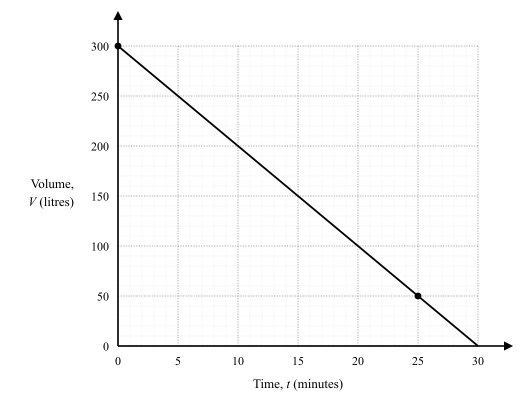
A tank is being emptied. The graph of the volume of water V litres against the time t minutes is a straight line through (0, 300) and (25, 50). Find the gradient and say what it represents.
Solution:
- Gradient = change up the side ÷ change along the bottom
- Change in volume = 50 − 300 = −250 litres
- Change in time = 25 − 0 = 25 minutes
- Gradient = −250 ÷ 25 = −10
- The units are litres per minute, taken from the two axes
- The gradient is negative because the volume is falling, so it represents the tank emptying at 10 litres per minute
- Naming the quantity and its units is what the question asks for; the bare number −10 is not an answer to "what does the gradient represent"