MathematicsExam code: 0580
Linear Graphs
Coordinate Geometry and Graphs
Gradient
What the number tells you
- The gradient measures how steep a line is and which way it slopes
- A gradient of 3 means the line rises 3 for every 1 step to the right, and a gradient of −4 means it falls 4 for every 1 step to the right
- An uphill line, running from bottom left to top right, has a positive gradient; a downhill line has a negative one
- Comparing steepness ignores the sign, so a gradient of −5 is steeper than one of 2
- A horizontal line has gradient 0, and a vertical line has no gradient at all because there is no horizontal step to divide by
Measuring it
- On a printed grid, pick two points that sit on the line and complete a right-angled triangle between them
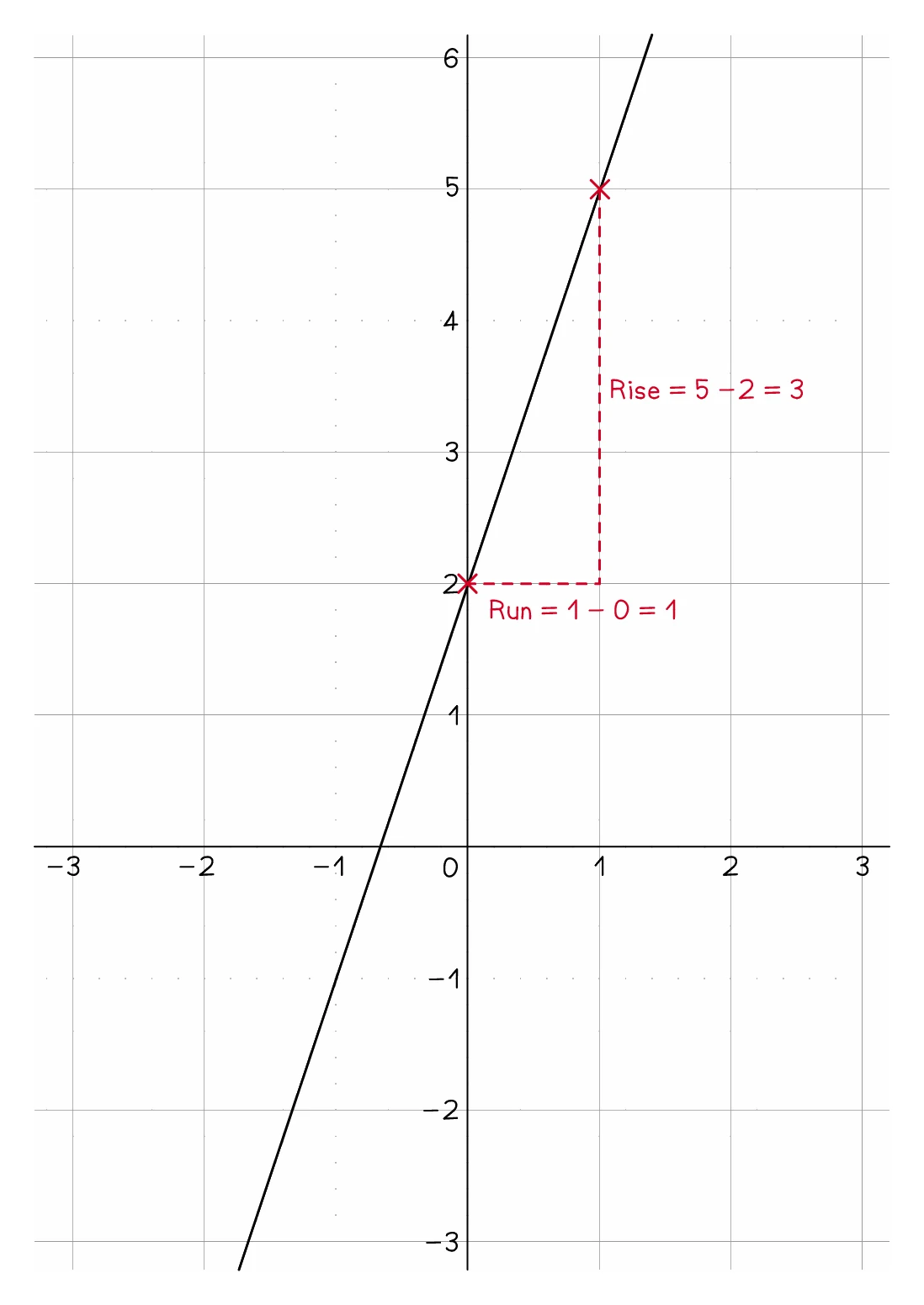
- The gradient is the vertical change divided by the horizontal change
- Choose two points that sit exactly on grid intersections and are far apart, because a short triangle magnifies any reading error
- Read the scales before counting squares: the two axes often use different scales, and one square is frequently not one unit
- Put the minus sign back in yourself for a downhill line, since the counting gives only the size
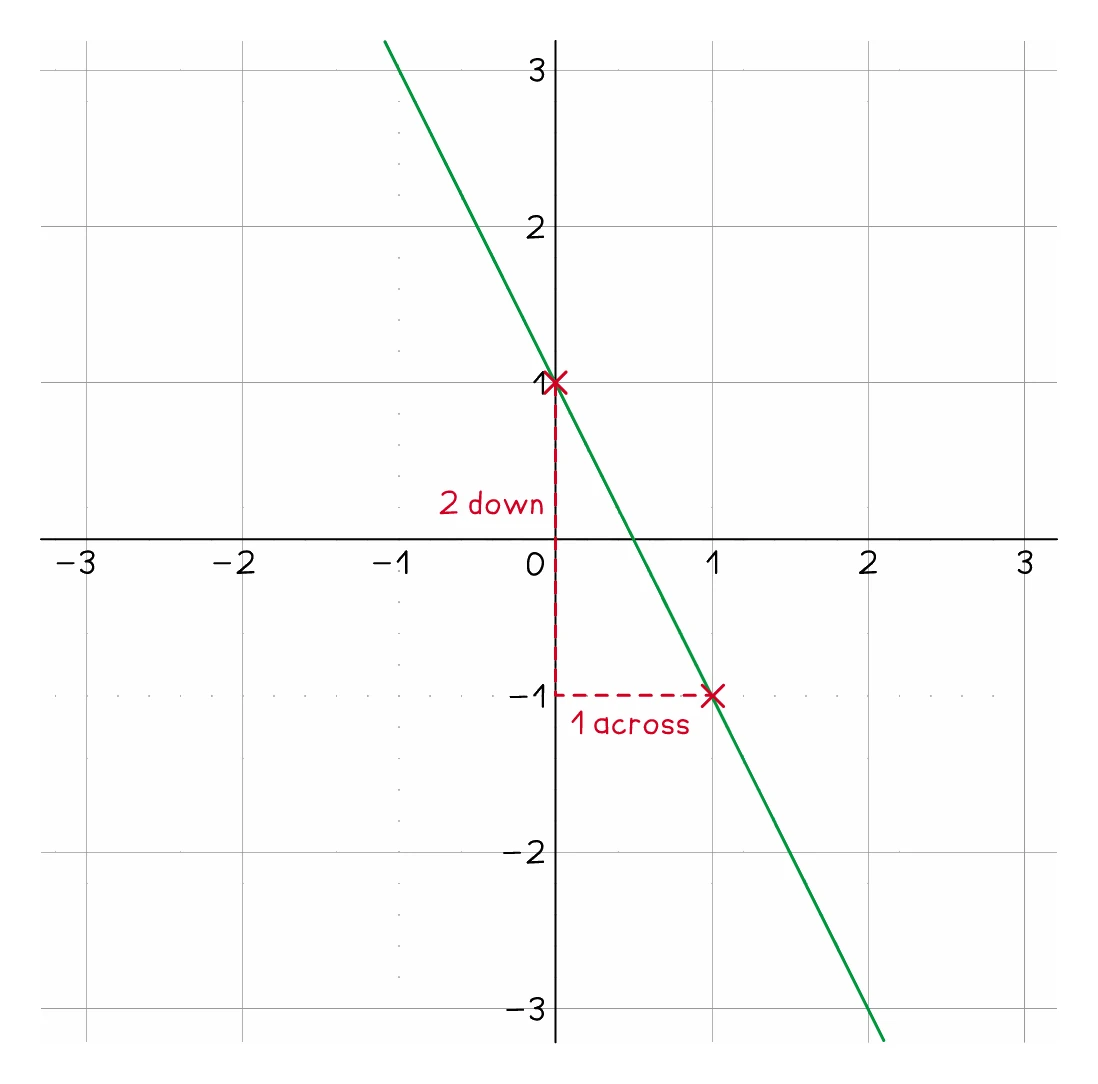
- Away from a grid, the gradient between (x₁, y₁) and (x₂, y₂) is (y₂ − y₁) ÷ (x₂ − x₁)
- Between (1, 3) and (5, 11): (11 − 3) ÷ (5 − 1) = 8 ÷ 4 = 2
- Subtract the two coordinates in the same order top and bottom, or the sign comes out wrong
Worked example
Finding a gradient from two points
A straight line passes through (1, 2) and (5, 10). Find its gradient.
Solution:
- Gradient is the change up the side divided by the change along the bottom
- Change in y: 10 − 2 = 8
- Change in x: 5 − 1 = 4
- Gradient = 8 ÷ 4 = 2
- Take the two coordinates in the same order in both subtractions; reversing both gives (2 − 10) ÷ (1 − 5) = −8 ÷ −4 = 2, the same answer
- Reversing only one of them gives −2, which is a line sloping the other way