4BI1
Genetics & Inheritance
Reproduction and Inheritance · 6 question types
The 23rd pair of human chromosomes is the sex chromosomes. The other 22 pairs are called autosomes and are the same in males and females.
- Females have two X chromosomes (XX)
- Males have one X and one Y chromosome (XY)
The X chromosome is much larger than the Y and carries many more genes. The Y chromosome is short and carries relatively few genes, but it does contain the SRY gene that triggers the development of male reproductive organs in an embryo.
How sex is inherited
When gametes are made:
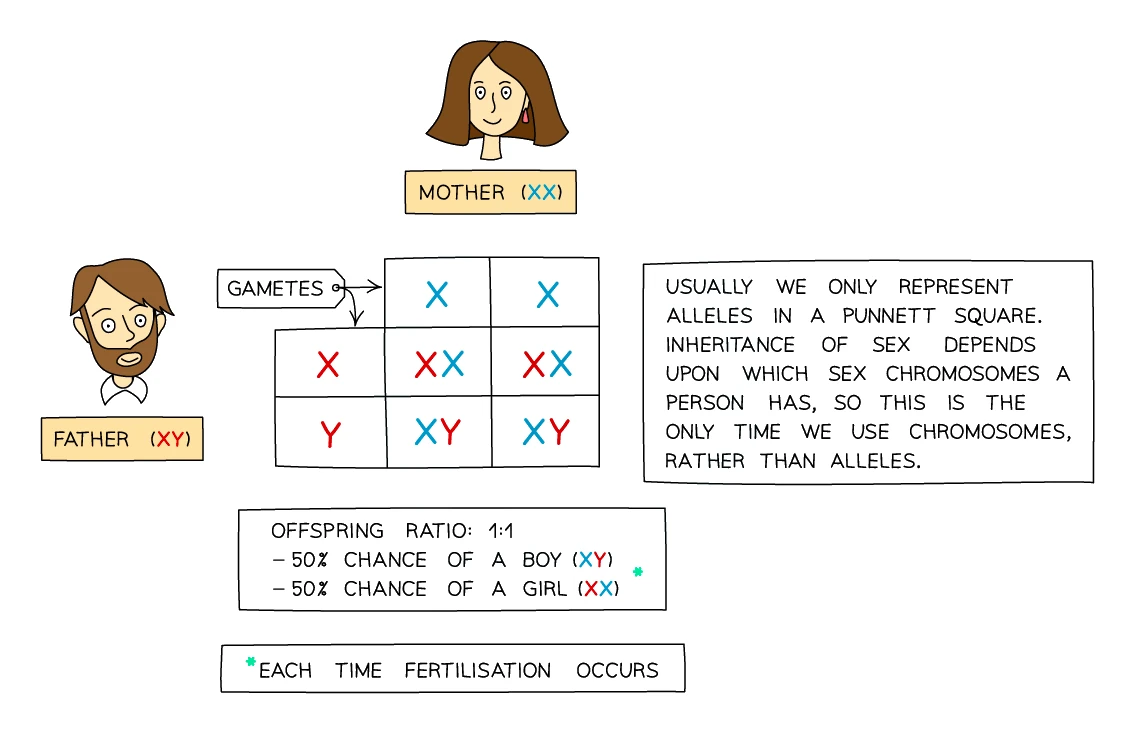
- A mother's eggs all carry an X chromosome (she has no Y to pass on).
- A father's sperm carry either an X or a Y, in a 50:50 mix.
So the father determines the sex of the child:
- If an X-carrying sperm fertilises the egg → XX → female
- If a Y-carrying sperm fertilises the egg → XY → male
Punnett square for inheritance of sex:
| X (from mother) | X (from mother) | |
|---|---|---|
| X (from father) | XX (female) | XX (female) |
| Y (from father) | XY (male) | XY (male) |
The ratio is 1 male : 1 female, so each new child has a 50% chance of being male and a 50% chance of being female.