MathematicsExam code: 0580
Geometry Toolkit
Geometry
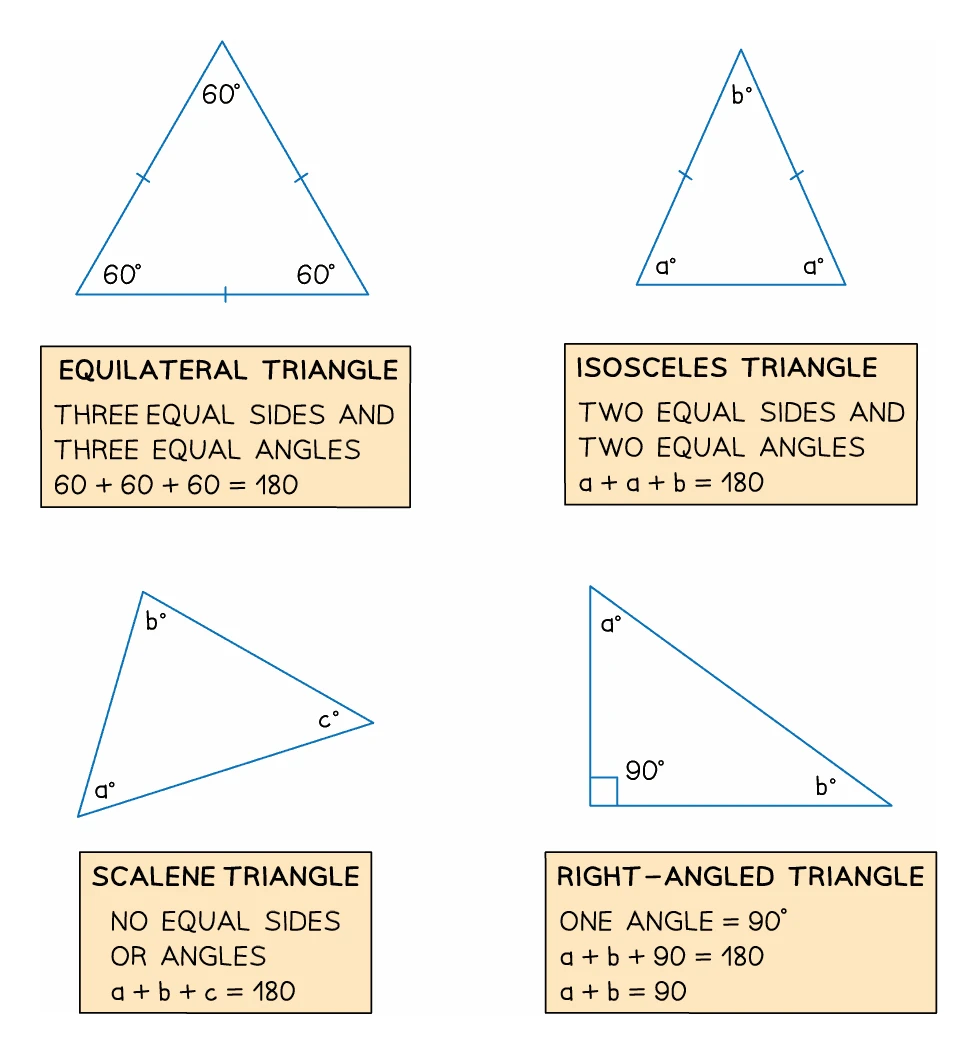
Types of triangle
- Equilateral: three equal sides and three angles of 60°, with three lines of symmetry
- Isosceles: two equal sides and the two angles opposite them equal, with one line of symmetry
- Scalene: all three sides different and all three angles different, with no line of symmetry
- Right-angled: contains one angle of 90°, and it may also be isosceles or scalene
- A question giving the sides as equal expects the name, so mark equal sides on the diagram before deciding
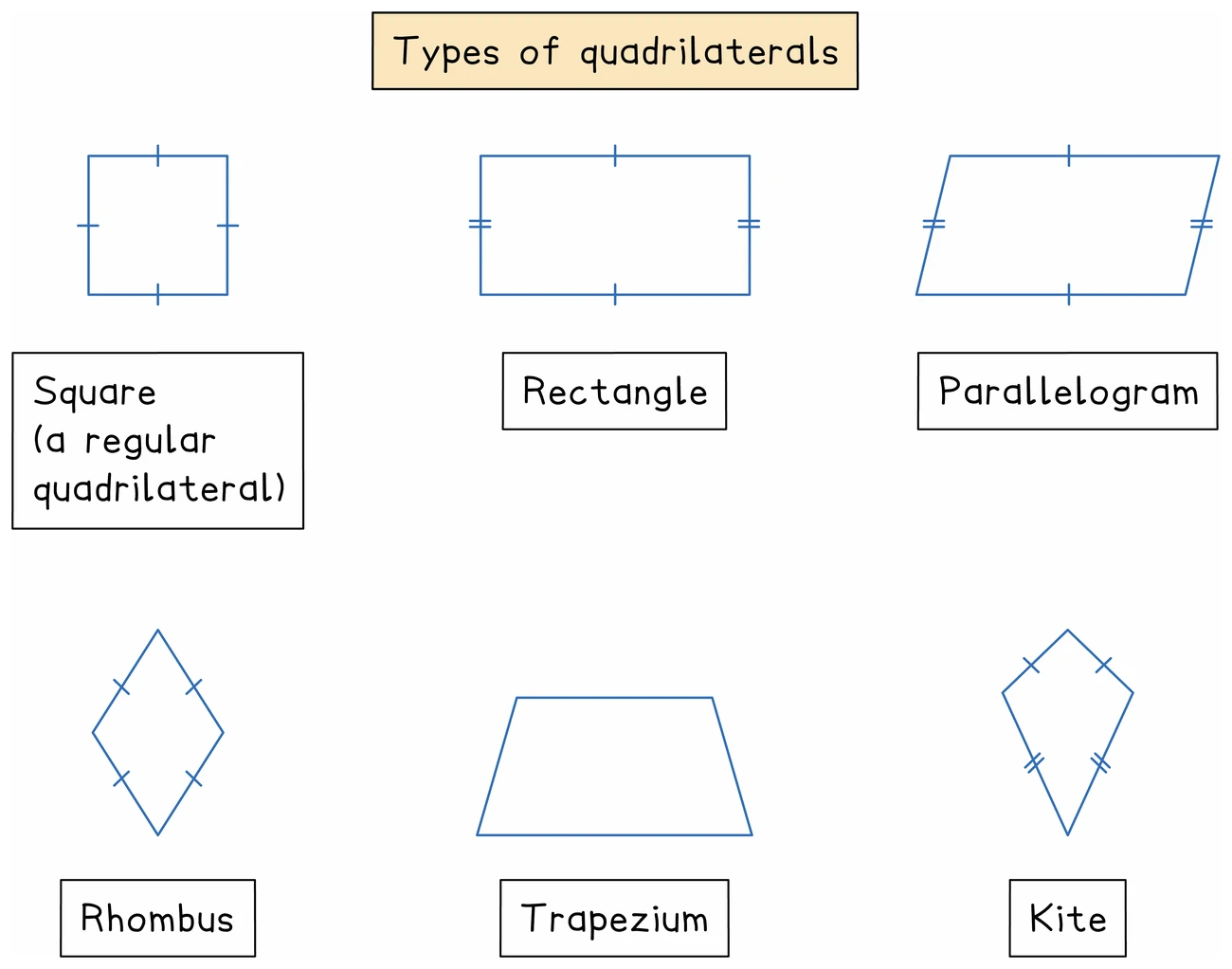
The six special quadrilaterals
| Shape | Sides | Angles | Diagonals | Symmetry |
|---|---|---|---|---|
| Square | 4 equal, 2 pairs parallel | all 90° | bisect each other, equal, perpendicular | 4 lines, order 4 |
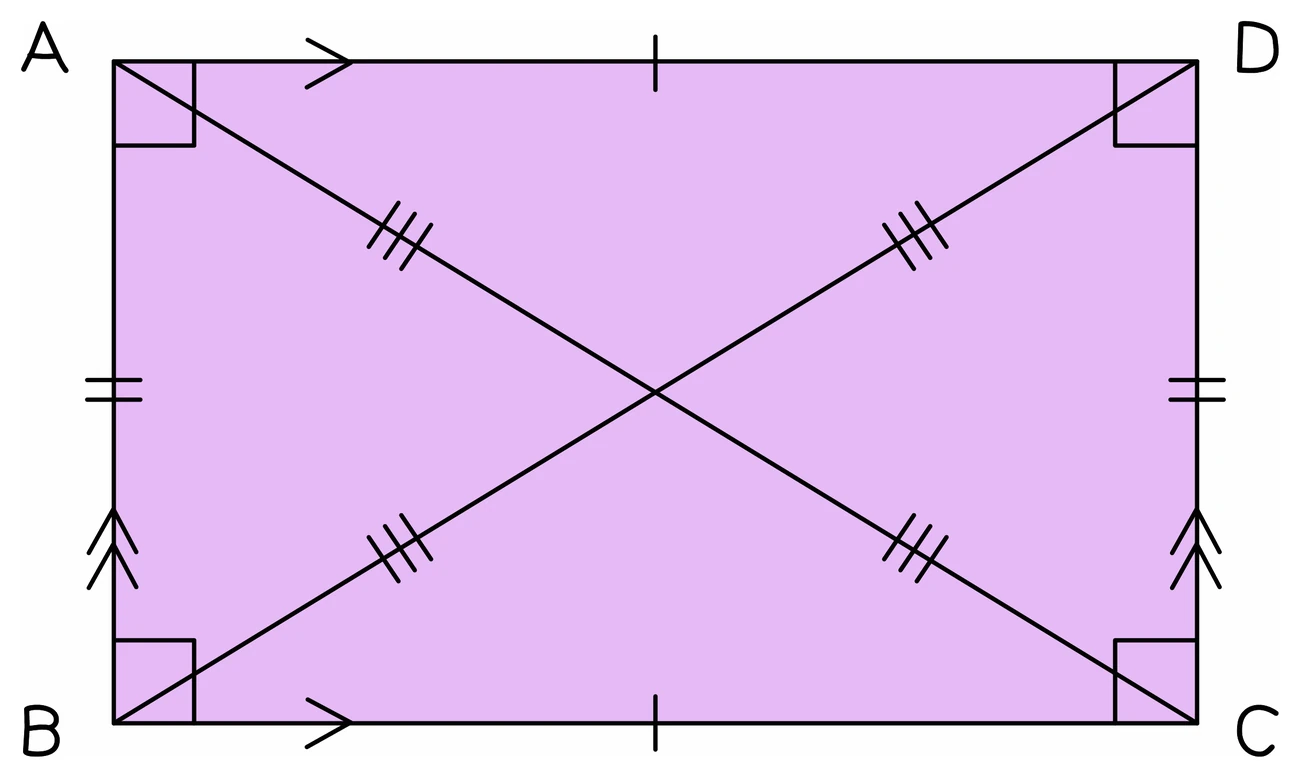
| Rectangle | 2 pairs equal and parallel | all 90° | bisect each other, equal | 2 lines, order 2 |
| Rhombus | 4 equal, 2 pairs parallel | opposite angles equal | bisect each other, perpendicular | 2 lines, order 2 |
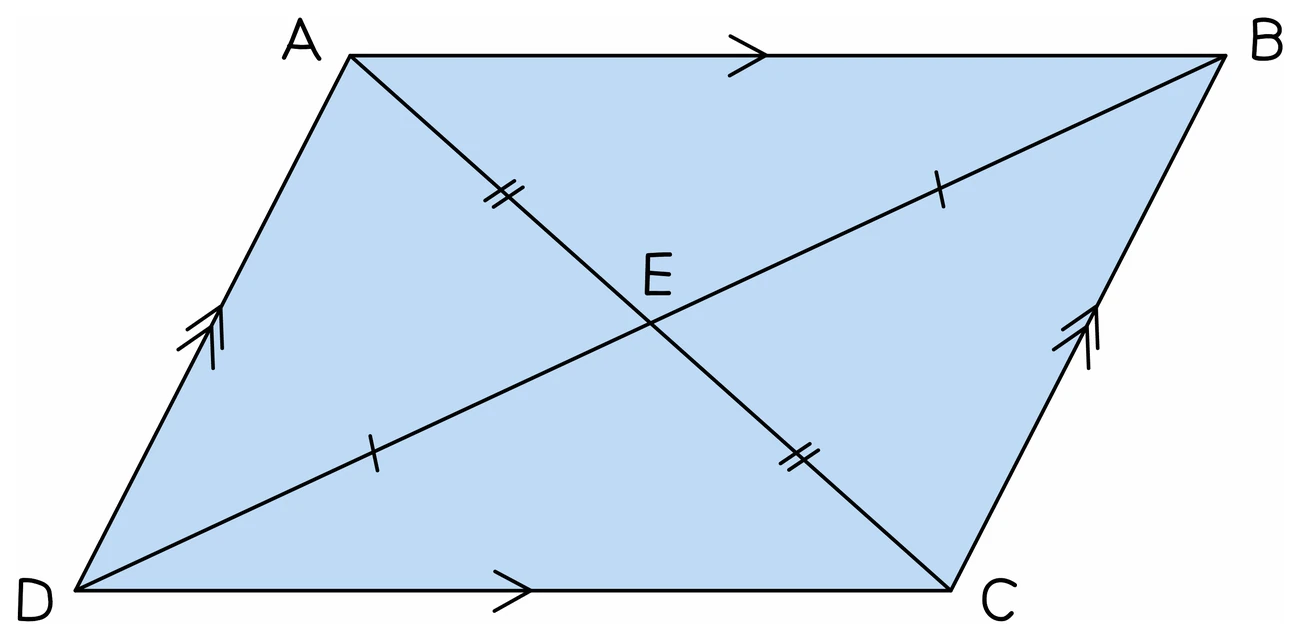
| Parallelogram | 2 pairs equal and parallel | opposite angles equal | bisect each other | no lines, order 2 |
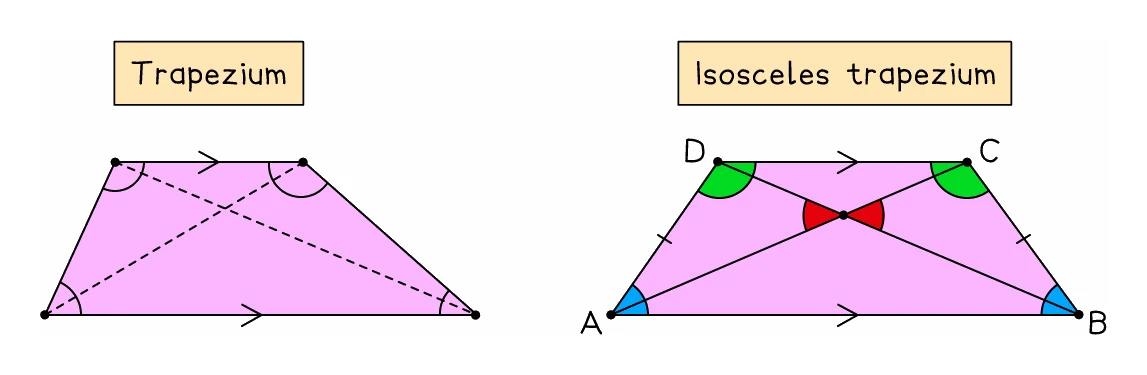
| Trapezium | exactly one pair parallel | two pairs adding to 180° | do not bisect | none, order 1 |
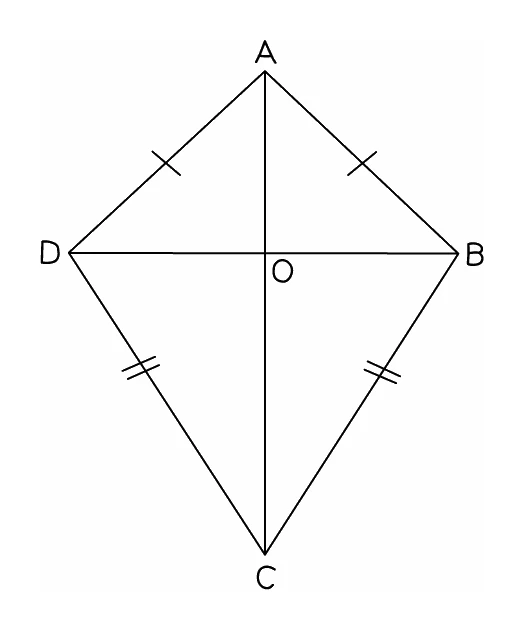
| Kite | 2 pairs of equal adjacent sides | one pair of opposite angles equal | one bisects the other, perpendicular | 1 line, order 1 |
- A square is a rectangle with all sides equal, and a rhombus is a parallelogram with all sides equal
- An isosceles trapezium adds one line of symmetry, equal non-parallel sides and equal diagonals
- Questions describe a shape by its properties and ask for its name, so read every property before answering
- One line of symmetry and diagonals crossing at right angles describes a kite
- Four equal sides, two lines of symmetry and rotational symmetry of order 2 describes a rhombus, since a square would have four lines
Worked example
Naming a quadrilateral from its properties
In a quadrilateral the equal sides occur in two pairs that meet at a corner, no side is parallel to any other, and there is exactly one line of symmetry. Write down its mathematical name.
Solution:
- Work through the six special quadrilaterals against each property in turn
- "No parallel sides" rules out the square, rectangle, rhombus, parallelogram and trapezium, since every one of those has at least one parallel pair
- The remaining shape is the kite, so check the other two properties against it
- A kite is built from equal sides that sit next to one another rather than opposite, which matches
- A kite has exactly one line of symmetry, the diagonal through the two corners where each pair of equal sides meets, which also matches
- The quadrilateral is a kite