MathematicsExam code: 0580
Geometry Toolkit
Geometry
Naming solids
- A prism has the same cross-section all the way along, and it is named after that cross-section
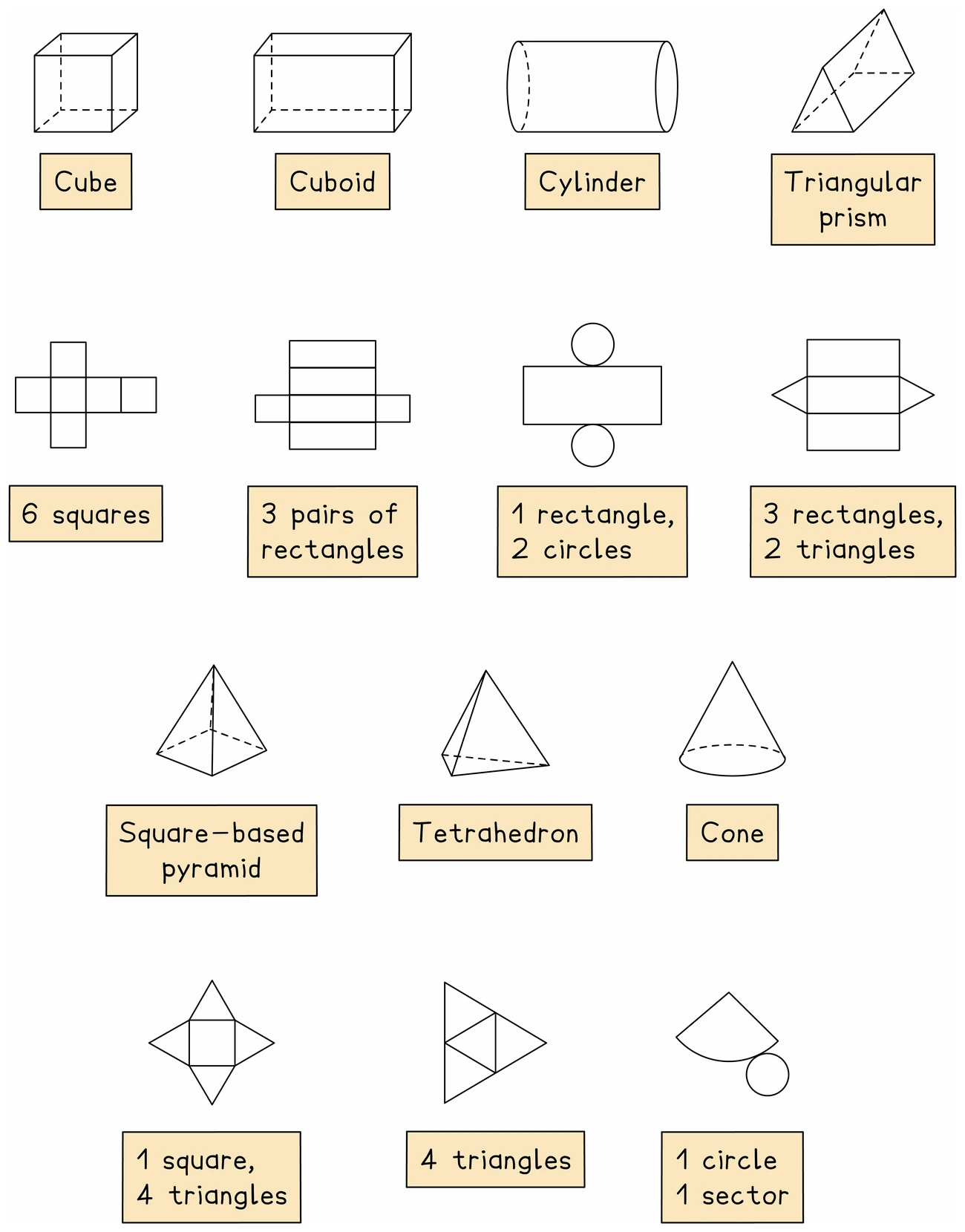
- A cube has a square cross-section and a cuboid a rectangular one
- A triangular prism and a hexagonal prism are named the same way
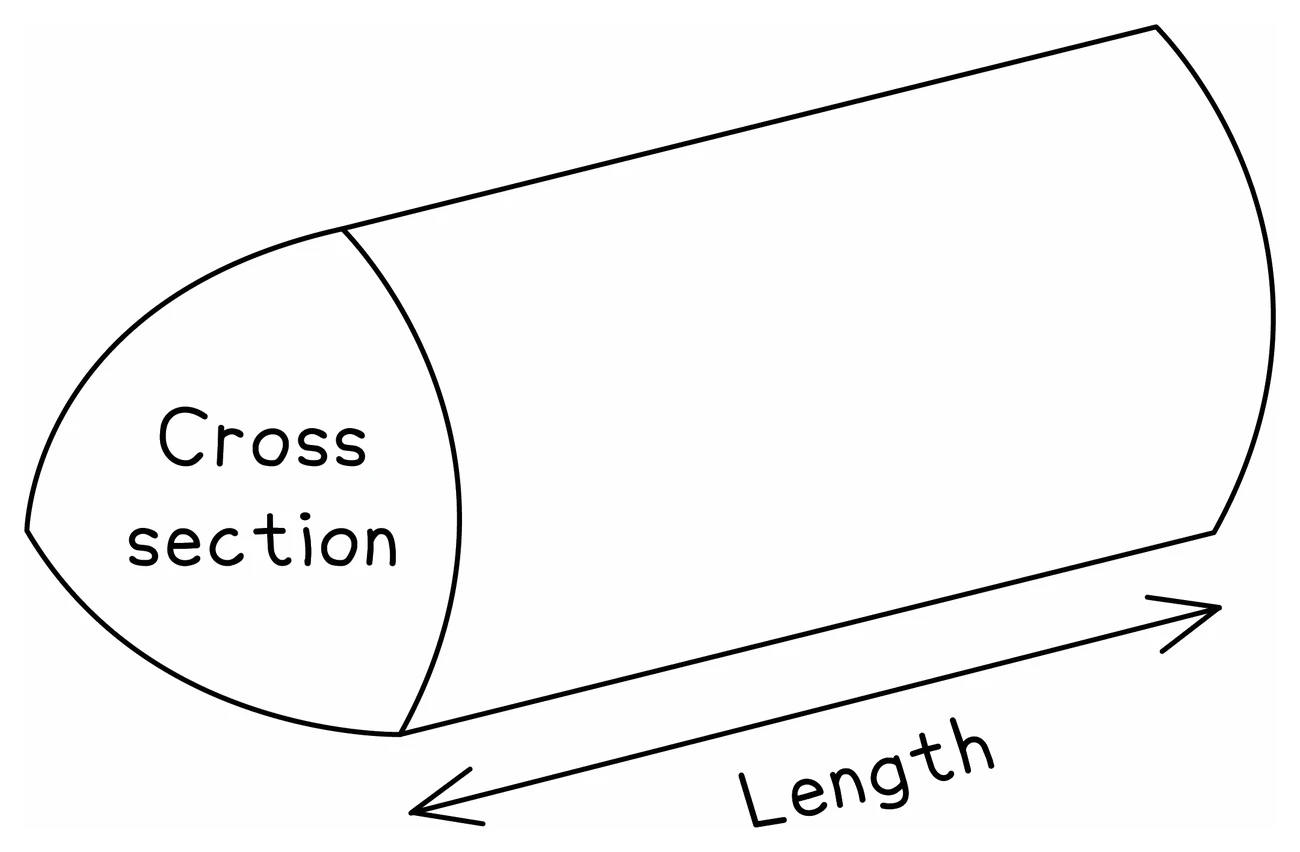
- A cylinder behaves like a prism whose cross-section is a circle
- A pyramid stands on a base, with triangular sides rising to meet at a single point above it, and takes its name from that base
- A pyramid on a triangular base is a tetrahedron
- A cone is like a pyramid on a circular base, and a sphere is a ball
- A hemisphere is half a sphere, and a frustum is what remains when the top of a cone or pyramid is sliced off parallel to the base
Faces, edges and vertices
- A face is a flat surface, an edge joins two faces, and a vertex is a corner; the plural of vertex is vertices
- A curved surface, such as the side of a cylinder, counts as a surface rather than a face
| Solid | Faces | Edges | Vertices |
|---|---|---|---|
| Cube | 6 squares | 12 | 8 |
| Cuboid | 6 rectangles, in 3 matching pairs | 12 | 8 |
| Triangular prism | 2 triangles and 3 rectangles | 9 | 6 |
| Square-based pyramid | 1 square and 4 triangles | 8 | 5 |
| Tetrahedron | 4 triangles | 6 | 4 |
| Cylinder | 2 circles, plus a curved surface | 2 | 0 |
| Cone | 1 circle, plus a curved surface | 1 | 1 |
| Sphere | curved surface only | 0 | 0 |
- For a solid with flat faces and no hole through it, the three counts satisfy faces − edges + vertices = 2, which is a quick way to check a count
Worked example
Counting faces, edges and vertices
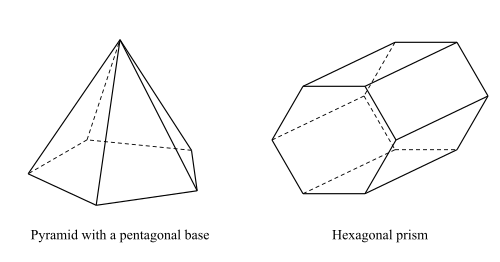
Write down the number of faces, edges and vertices of a pyramid with a pentagonal base and of a hexagonal prism.
Solution:
- For the pyramid, count the flat surfaces first
- One pentagonal base and a triangle on each of its five sides gives 6 faces
- The base has 5 edges, and 5 more rise from its corners to the apex, giving 10 edges
- The 5 corners of the base plus the apex give 6 vertices
- For the hexagonal prism, the two hexagonal ends plus one rectangle for each of the six sides give 8 faces
- Six edges round each hexagon plus six joining them gives 18 edges
- Six corners on each hexagon gives 12 vertices
- Check each with Euler's relationship, faces + vertices − edges = 2: 6 + 6 − 10 = 2, and 8 + 12 − 18 = 2
Nets
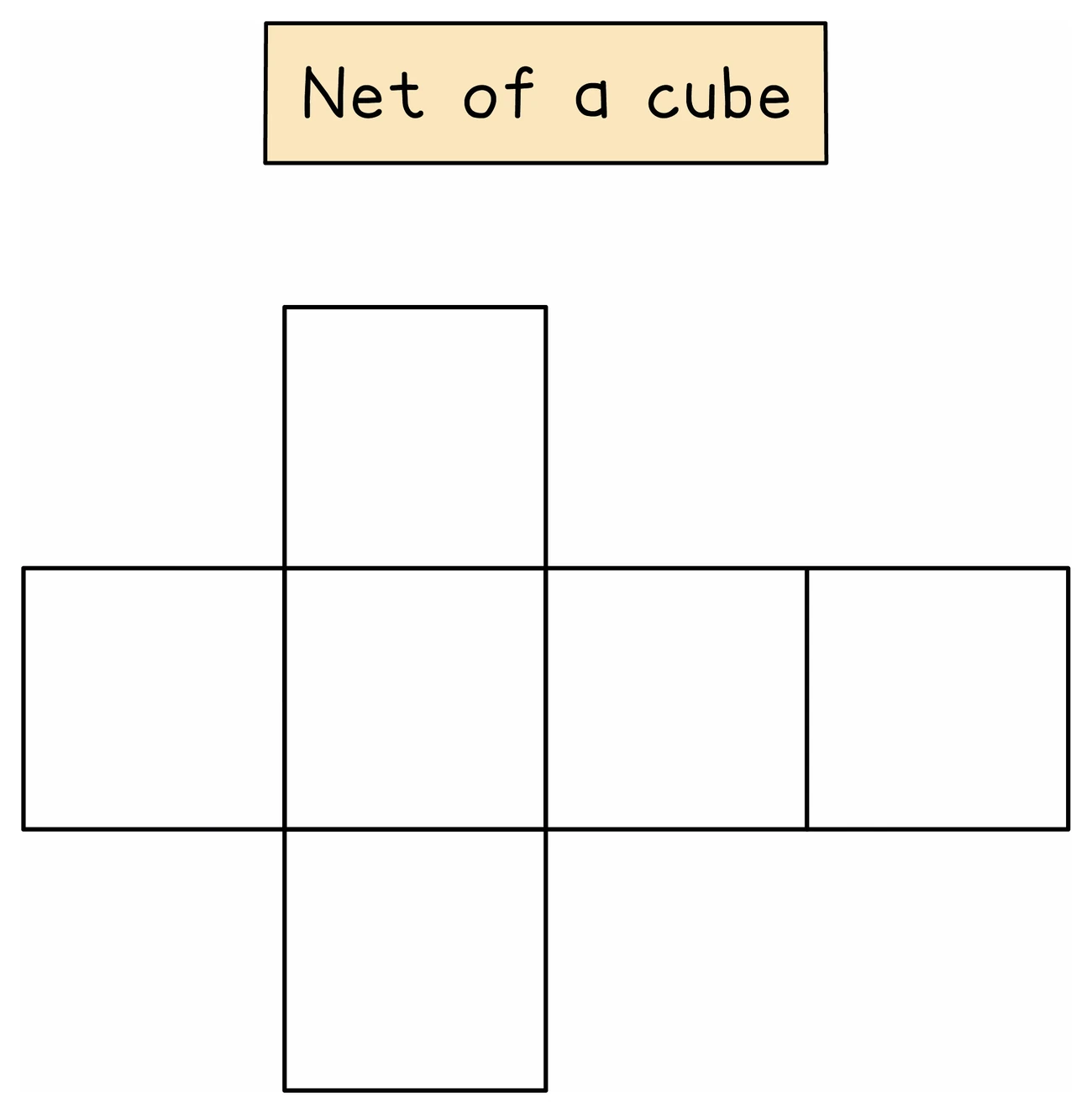
- A net is the flat shape that folds up to make a solid, so it shows every face laid out
- The area of a net equals the surface area of the solid, which is why nets are worth drawing for surface-area questions
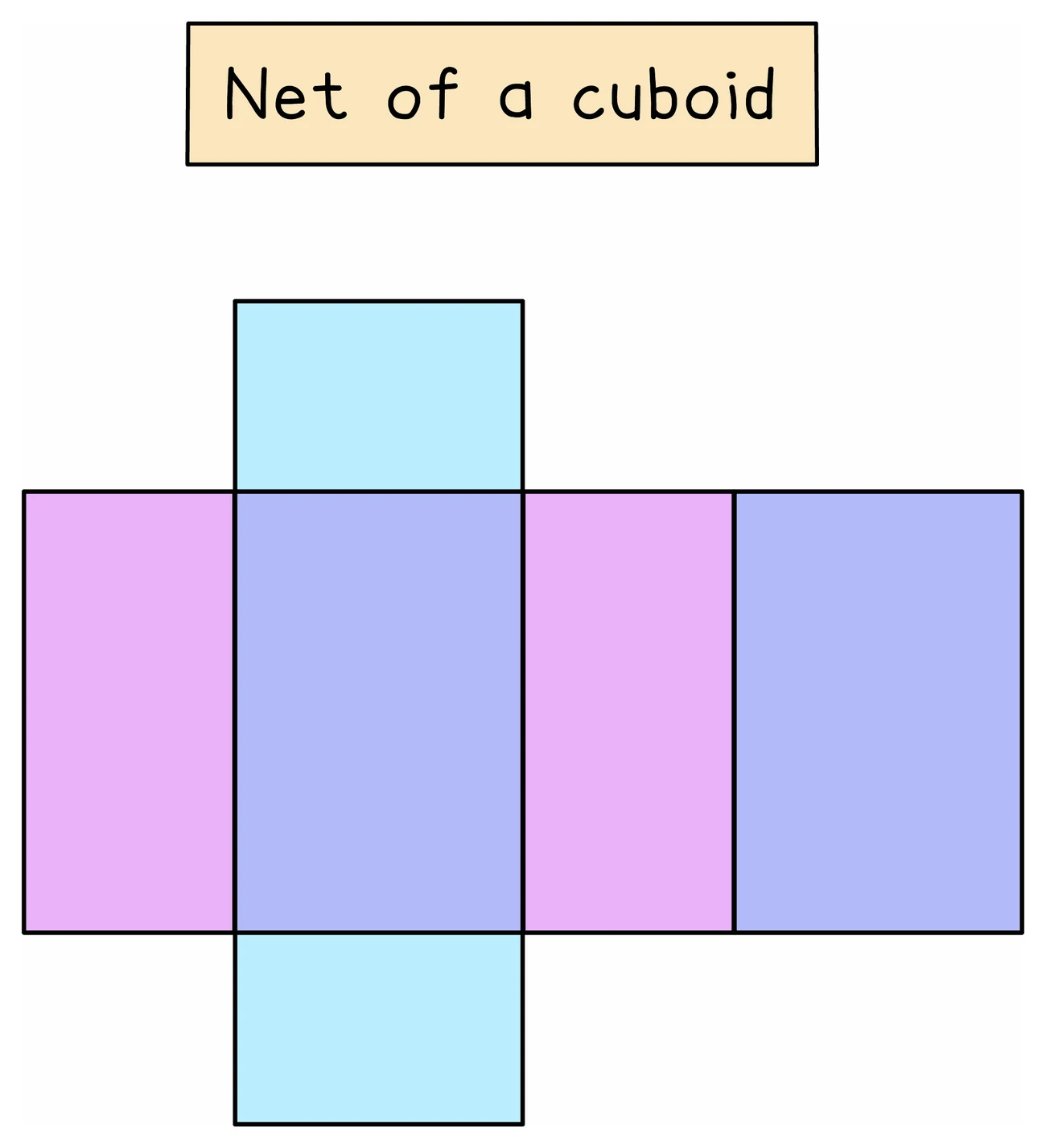
- A solid has more than one possible net, and a cube has eleven, so an arrangement different from yours may still be correct
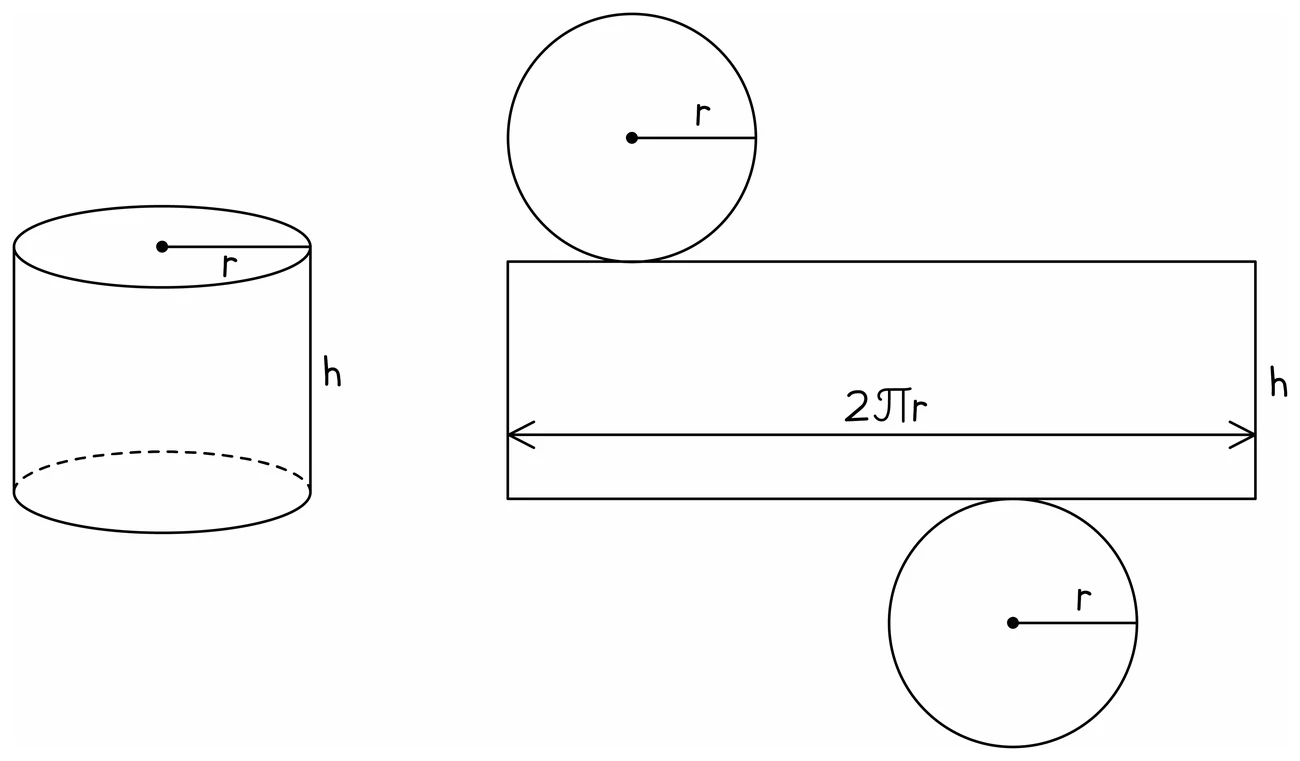
- The net of a cylinder is two circles and a rectangle whose length equals the circumference of those circles
- Check a proposed net by asking whether the faces would overlap or leave a gap when folded