Reproduction
Reproduction and Inheritance · 7 question types
Natural asexual reproduction: runners
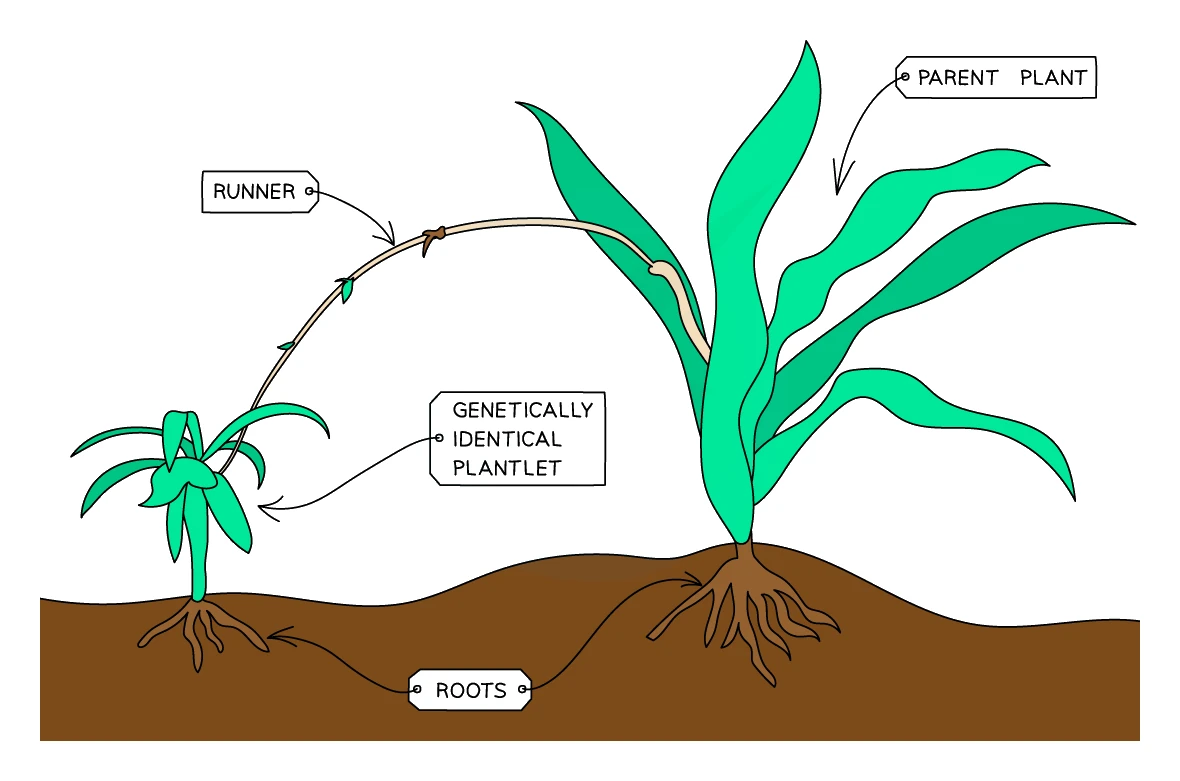
Some plants grow horizontal stems called runners that creep along the soil surface from the parent plant. At the tip of each runner, a small plantlet forms. When the plantlet touches soil, it grows its own roots and eventually breaks free from the parent to become an independent plant.
Strawberry plants are the classic example. A single mother strawberry plant can colonise a wide patch of ground in a few years by running.
Other natural asexual mechanisms in plants include:
- Bulbs (e.g. onions, tulips) split into daughter bulbs
- Tubers (e.g. potatoes) sprout new plants from "eyes"
- Rhizomes (e.g. ginger, irises) are underground horizontal stems that send up new shoots
Artificial asexual reproduction: cuttings
Gardeners take advantage of plants' ability to reproduce asexually by taking cuttings:
- A piece of a healthy parent plant (usually a shoot carrying at least one bud) is snipped off with a sharp blade.
- The cut end is sometimes dipped in rooting powder, which contains the plant hormone auxin to encourage roots to grow.
- The cutting is either placed in water until roots appear or planted directly in moist soil.
- After a few weeks, the cutting has grown its own root system and is an independent plant, genetically identical to the parent.
Cuttings are useful because:
- They are fast and cheap
- The new plant has exactly the same characteristics as the chosen parent (useful for ornamental plants with desirable flowers, or for crop plants with high yields)
- A single parent can produce many cuttings in one season
A drawback is that all the cuttings are clones, so they all have the same vulnerabilities. A disease that affects one will affect all of them.