Reproduction
Reproduction and Inheritance · 7 question types
After fertilisation: implantation
About a week after fertilisation, the zygote (now a ball of cells called a blastocyst) implants into the soft endometrium of the uterus. The blastocyst is now called an embryo, and the embryo begins to grow.
The placenta
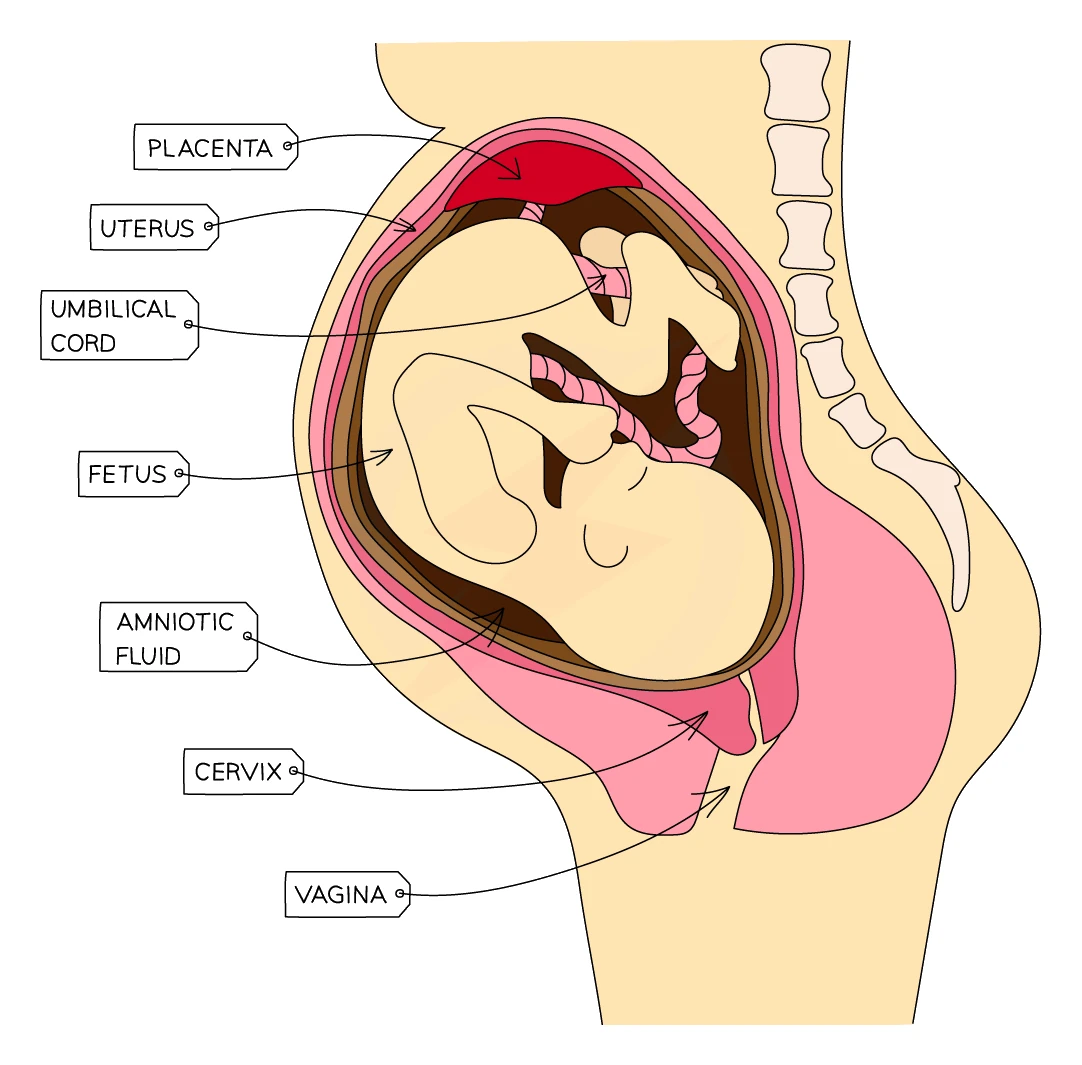
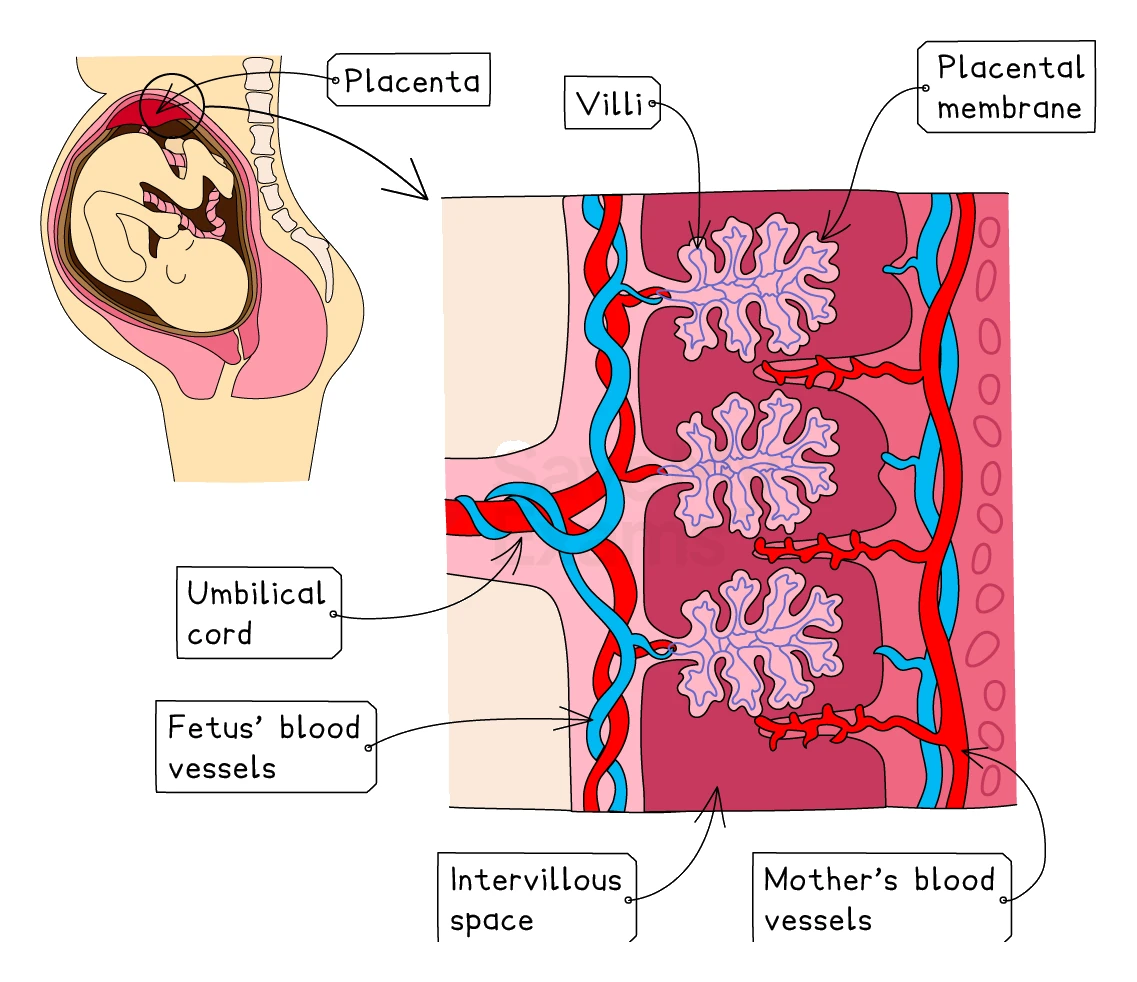
By around eight weeks of pregnancy, a special organ called the has formed at the site where the embryo implanted. The placenta is the interface between the mother and the developing fetus. It is built from the tissue of the embryo and the wall of the uterus.
The placenta connects to the developing fetus by the umbilical cord, which contains:
- Two umbilical arteries carrying deoxygenated blood from the fetus to the placenta
- One umbilical vein carrying oxygenated blood from the placenta to the fetus
Important: the mother's blood and the fetus's blood never mix directly. They are separated by a very thin barrier in the placenta. Substances cross this barrier by diffusion.
What crosses the placenta
The placenta is highly adapted as an exchange surface, with a large surface area and a very thin wall between the two blood supplies.
From mother to fetus (down concentration gradients):
- Oxygen (the fetus needs it for respiration)
- Glucose and other dissolved food molecules
- Amino acids for protein synthesis
- Vitamins and mineral ions
- Antibodies (giving the newborn passive immunity to common pathogens for the first few months)
From fetus to mother (down concentration gradients):
- Carbon dioxide from fetal respiration
- Urea from fetal protein breakdown
What can also cross, including harmful substances
The placenta is not a perfect barrier. Some harmful substances can cross from mother to fetus, with serious consequences:
- Nicotine and other chemicals from smoking restrict the fetus's blood supply, leading to low birth weight
- Alcohol can damage fetal brain development, causing fetal alcohol syndrome
- Some drugs and medicines can cause birth defects (the most famous example is the drug thalidomide in the 1950s and 60s)
- Viruses such as rubella, HIV, and Zika can cross and infect the fetus
This is why pregnant women are advised to avoid smoking, alcohol, certain medicines, and certain infections during pregnancy.
The amniotic fluid
The developing fetus is surrounded by amniotic fluid, a clear liquid contained in the amniotic sac (also called the amniotic membrane). The amniotic fluid:
- Cushions the fetus against mechanical bumps and pressure when the mother moves
- Keeps the temperature stable around the fetus
- Allows the fetus to move freely as it grows, which is important for muscle and skeletal development
- Breaks at the start of labour (the "waters breaking"), helping to lubricate the birth canal