Homeostasis
Structures and Functions in Living Organisms · 4 question types
Glucose is the main fuel for respiration, and every cell in the body needs a constant supply. The brain especially relies on it. The body keeps the blood glucose concentration within a narrow range: roughly 4 to 7 mmol per litre of blood.
Why blood glucose has to stay in range
- Too high a blood glucose pulls water out of cells by osmosis (because the blood is more concentrated than the inside of the cells). Cells become dehydrated and stop working. Sustained high blood glucose damages blood vessels, kidneys, nerves and eyes.
- Too low a blood glucose starves the cells of fuel. The brain is hit first, because it cannot store glucose. Symptoms range from confusion and dizziness to seizures, coma and death.
Two hormones, two opposite jobs
Two hormones from the pancreas work as a pair to keep blood glucose in range:
- Insulin is released when blood glucose is too high. Insulin lowers blood glucose.
- Glucagon is released when blood glucose is too low. Glucagon raises blood glucose.
The pancreas contains specialised endocrine cells that constantly monitor the glucose concentration of the blood flowing through it, releasing the appropriate hormone as conditions change.
When blood glucose rises (after a meal)
After you eat a meal, especially one with lots of carbohydrates, glucose is absorbed from the small intestine and blood glucose climbs. The negative feedback loop kicks in:
- The pancreas detects the rise in blood glucose.
- The pancreas releases the hormone into the blood.
- Insulin travels to the liver and muscle cells, where it triggers two responses:
- Liver and muscle cells take up glucose from the blood
- The glucose is converted into , an insoluble storage molecule, and stored inside the cells
- Blood glucose falls back to normal.
- The pancreas stops releasing insulin.
When blood glucose falls (between meals, or during exercise)
Between meals (or during exercise, where the muscles are using glucose fast), blood glucose can drop too low. The opposite loop runs:
- The pancreas detects the fall in blood glucose.
- The pancreas releases the hormone into the blood.
- Glucagon travels to the liver, where it triggers the reverse of insulin's action:
- The liver breaks down its stored glycogen back into glucose
- The glucose is released into the blood
- Blood glucose rises back to normal.
- The pancreas stops releasing glucagon.
The pair of hormones acts like a thermostat: insulin to cool things off when glucose is high, glucagon to warm things up when glucose is low. Most of the time both hormones are at low levels and only one becomes active when needed.
| Situation | Pancreas releases | Target organs | What happens | Result |
|---|---|---|---|---|
| Blood glucose too high | Insulin | Liver and muscles | Glucose taken up and stored as glycogen | Blood glucose falls to normal |
| Blood glucose too low | Glucagon | Liver | Glycogen broken down back into glucose, released into blood | Blood glucose rises to normal |
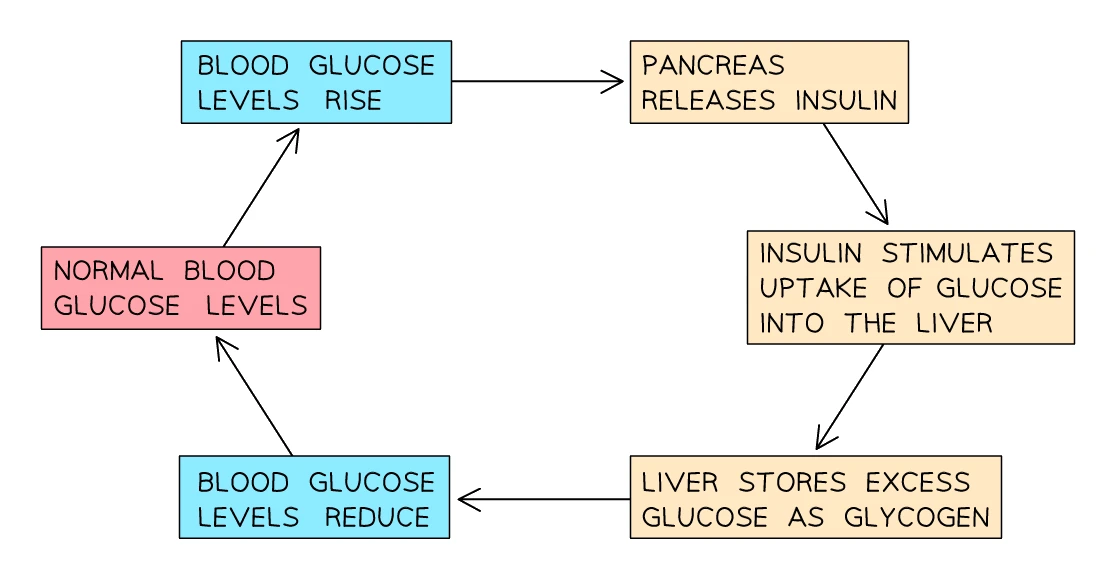
How insulin lowers blood glucose
Explaining insulin's role when blood glucose is high comes up (2 marks), so you need to know: the pancreas releases insulin, which makes the liver (and muscles) convert glucose into glycogen for storage. Say "converts glucose to glycogen" (not "breaks down"), and don't confuse glycogen with glucagon (the opposite hormone).