Ecology & Food Chains
Ecology and the Environment · 8 question types
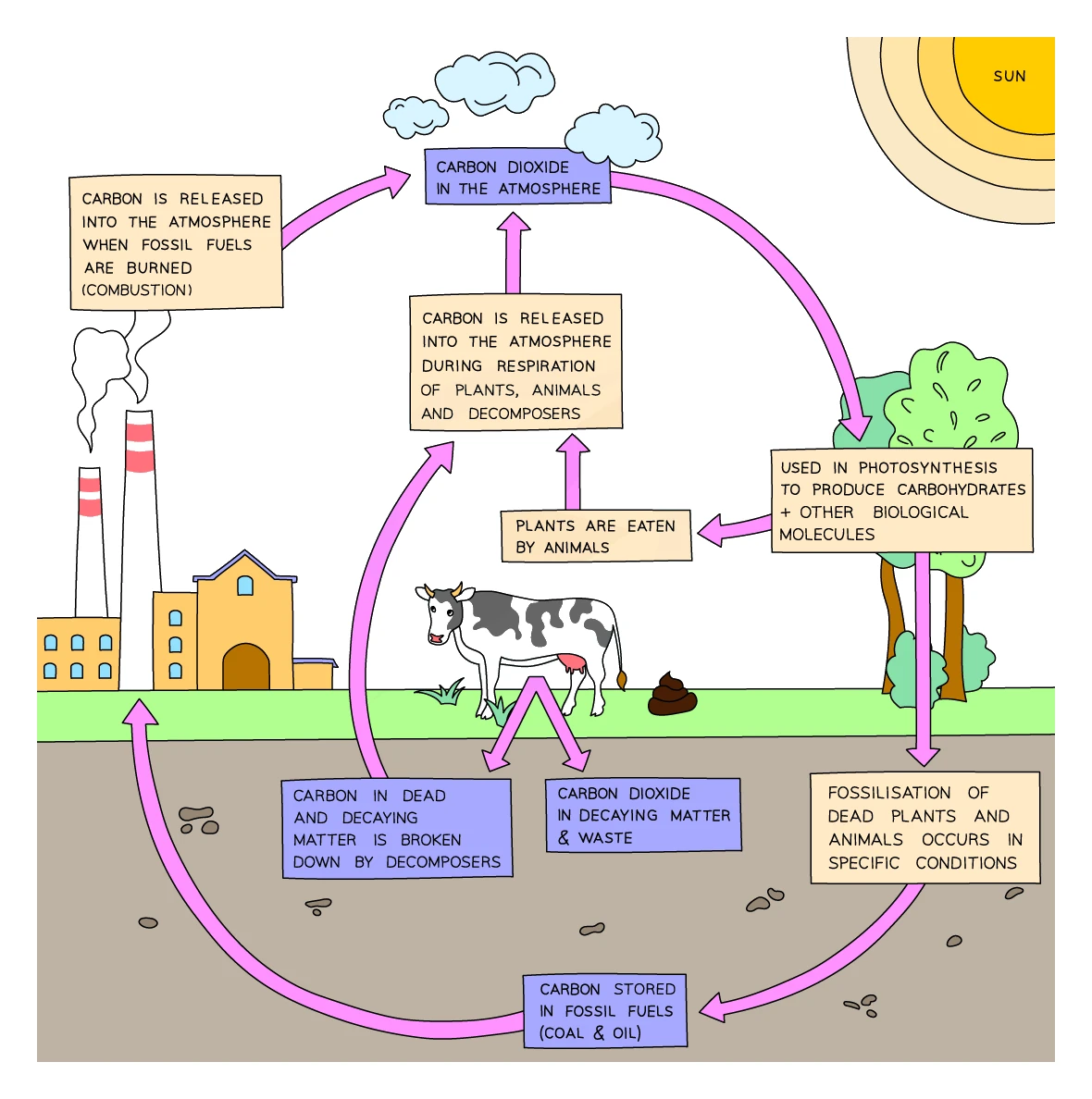
Carbon is the backbone of every biological molecule. Living things constantly move carbon between four major reservoirs: the atmosphere (as CO₂), the bodies of living organisms (as carbohydrates, proteins, lipids, etc.), dead organic matter, and fossil fuels (coal, oil, gas, formed over millions of years from undecomposed organisms).
The four key processes
| Process | What it does | Where it happens |
|---|---|---|
| Photosynthesis | Removes CO₂ from the atmosphere and locks it into glucose (and from there into all the other biological molecules) | In green plants and algae |
| Respiration | Releases CO₂ back into the atmosphere as cells respire | In every living organism, including plants, animals and microorganisms |
| Decomposition | Releases CO₂ from dead organisms and waste material | By bacteria and fungi in the soil |
| Combustion (burning) | Releases CO₂ from fossil fuels or wood by burning | Power stations, vehicles, forest fires |
The full cycle
- Photosynthesis in plants takes CO₂ from the air and uses it to make glucose. Carbon is now inside the plant.
- Plants respire, returning some of the carbon to the atmosphere as CO₂.
- Animals eat plants (or other animals), taking the carbon into their own bodies.
- Animals respire, returning more CO₂ to the atmosphere.
- When plants and animals die, their bodies are broken down by (bacteria and fungi). The decomposers respire too, releasing CO₂.
- If dead organic matter is buried in conditions where decomposers cannot get to it (mud, swamps, deep sediment), the carbon stays locked up. Over millions of years it forms fossil fuels.
- When humans burn fossil fuels (combustion), the carbon that has been locked away for millions of years returns to the atmosphere as CO₂ in a few decades.
Why the carbon cycle matters
For most of Earth's history, the carbon cycle was roughly balanced: photosynthesis removed about as much CO₂ as respiration, decomposition and natural combustion added back. Atmospheric CO₂ levels stayed close to constant.
In the last 250 years, humans have drastically tipped the balance by:
- Burning fossil fuels at a huge rate (releasing fossilised carbon back into the atmosphere)
- Deforestation (which both releases carbon stored in trees and reduces future photosynthesis)
The result is a rise in atmospheric CO₂ from around 280 ppm in 1750 to over 420 ppm today. This extra CO₂ is the main driver of climate change (covered in topic 16).