4PH1
Work, Power & Energy Resources
Energy Resources & Energy Transfers
Definition
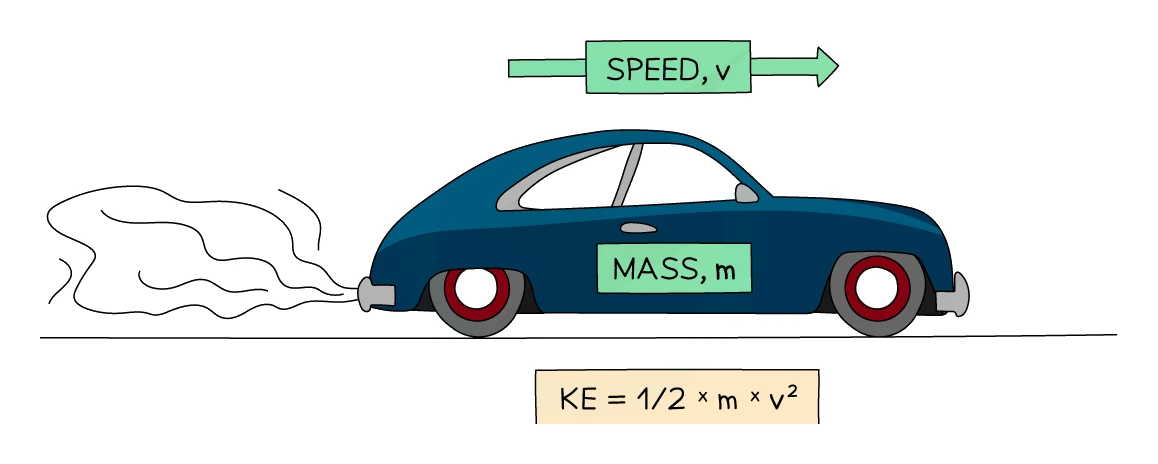
- Kinetic energy (KE) is the energy an object has because of its motion. Any object with a mass and a speed has kinetic energy
The KE equation
KE = ½ × m × v²
- where:
- KE = energy in the kinetic store (J)
- m = mass of the object (kg)
- v = speed of the object (m/s)
- The square on v is the most important feature of this equation:
- doubling the speed quadruples the kinetic energy
- tripling the speed gives nine times the kinetic energy
- the same factor of four shows up in braking-distance rules (topic 02): twice as much kinetic energy needs twice the distance to remove