MathematicsExam code: 0580
Area and Perimeter
Lengths, Areas and Volumes
Adding or subtracting
- A compound shape is built from simpler ones, and there are two ways to handle it
- Split it into rectangles and triangles, find each area, and add them
- Subtract, by taking the whole enclosing rectangle and removing the missing piece
- Subtracting is usually quicker where a corner or a hole has been cut out
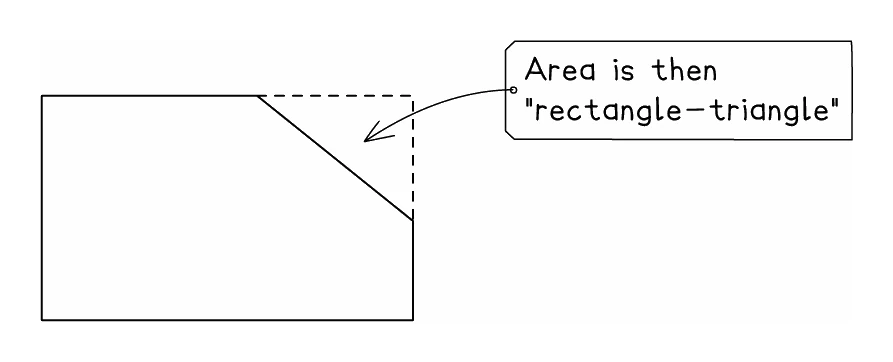
- Sketch the split on the diagram and label each piece, so the working shows where each number came from
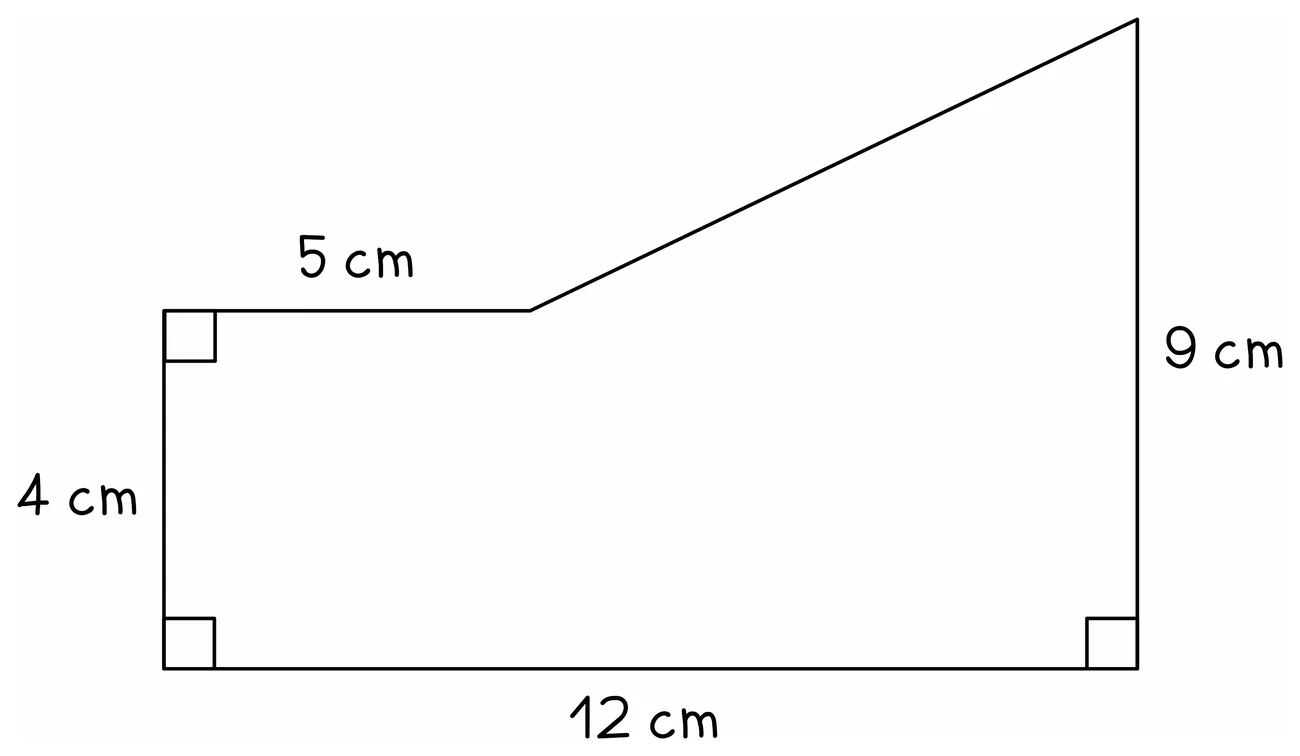
- Check the split covers the shape exactly once, with no overlap and no gap
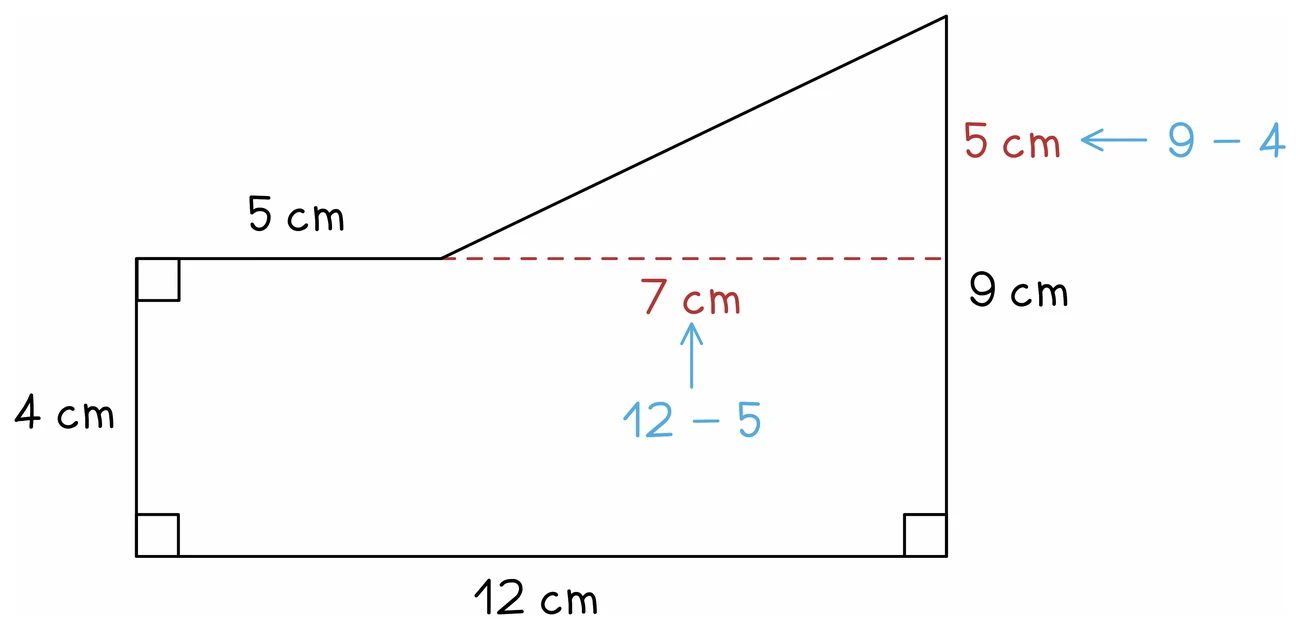
Worked example
The same area two ways
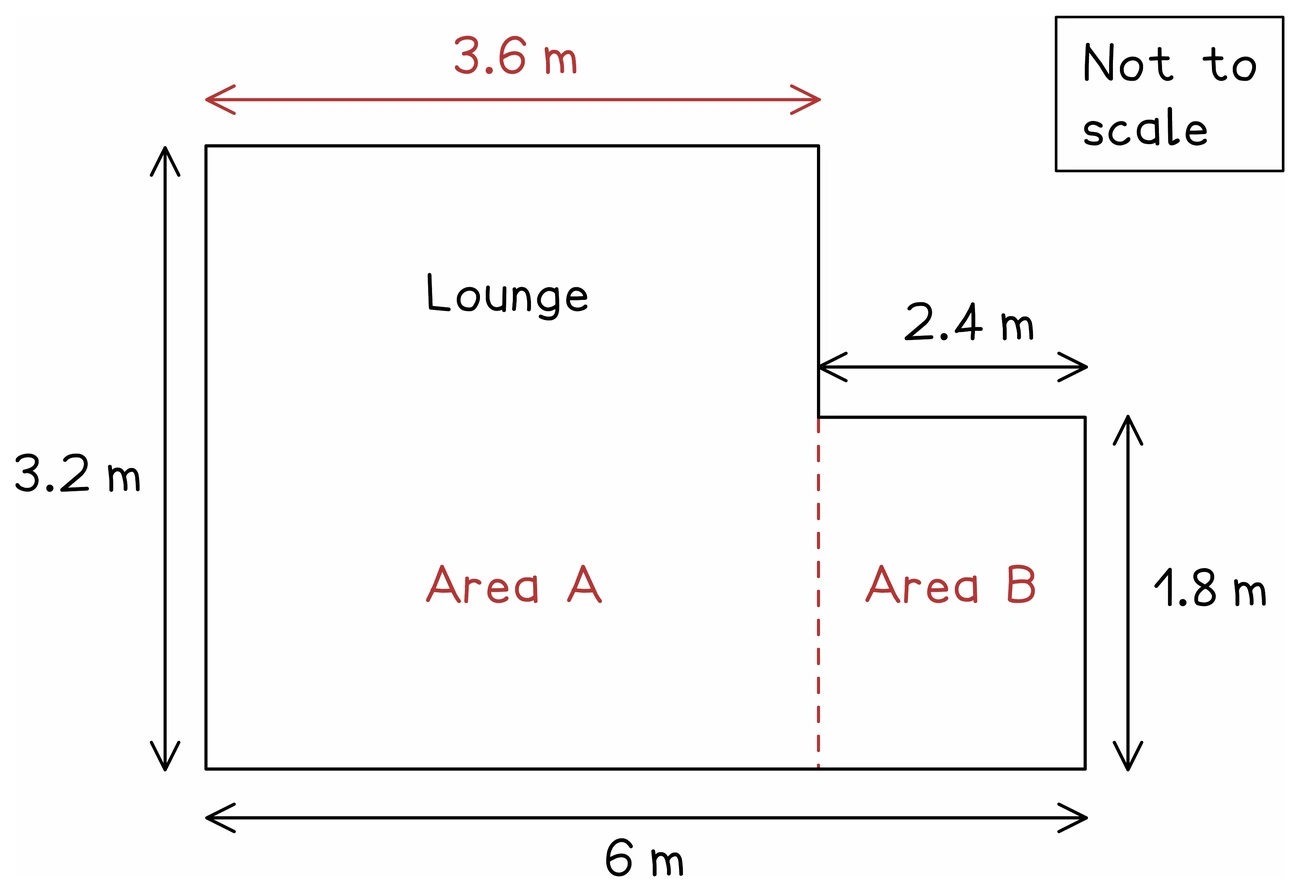
The floor plan of the same L-shaped room is split into two rectangles by the dashed line. Work out the floor area.
Solution:
- Area A is a rectangle 3.6 m by 3.2 m, so its area is 3.6 × 3.2 = 11.52 m²
- Area B is a rectangle 2.4 m by 1.8 m, so its area is 2.4 × 1.8 = 4.32 m²
- Adding: 11.52 + 4.32 = 15.84 m²
- Subtracting gives the same answer, which is a quick check
- The whole enclosing rectangle is 6 × 3.2 = 19.2 m²
- The piece missing from the top right is 2.4 m by 3.2 − 1.8 = 1.4 m, so 2.4 × 1.4 = 3.36 m²
- 19.2 − 3.36 = 15.84 m², as before
Working backwards
- A question may give the area and ask for a missing length, which means substituting into the formula and solving
- The same applies to perimeter, and a shape with an algebraic side turns into an equation
- Check the units the answer needs, converting only at the end
Worked example
An area given, a length wanted
A trapezium has parallel sides of 9 cm and 13 cm and an area of 77 cm². Find the distance between the parallel sides.
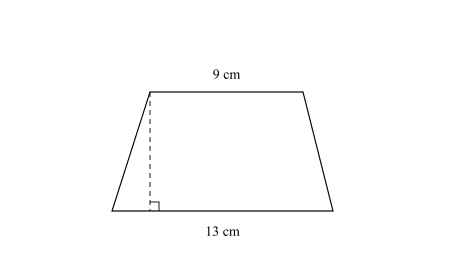
Solution:
- Write the formula first, then substitute what is known
- Area = ½ × (sum of the parallel sides) × distance between them
- 77 = ½ × (9 + 13) × h
- 77 = ½ × 22 × h
- 77 = 11h
- h = 77 ÷ 11 = 7 cm
- Check by substituting back: ½ × 22 × 7 = 77, which matches the area given
- The answer is a length, so it is in cm and not cm²