MathematicsExam code: 0580
Area and Perimeter
Lengths, Areas and Volumes
The four shapes
- Area is the space inside a shape, measured in squared units such as mm², cm² or m²
| Shape | Area |
|---|---|
| Rectangle | length × width |
| Triangle | ½ × base × perpendicular height |
| Parallelogram | base × perpendicular height |
| Trapezium | ½ × (sum of the parallel sides) × distance between them |
- Only the triangle formula is printed in the paper, so the other three have to be known
- Every one of them uses the perpendicular height, measured at right angles to the base (up to the opposite corner of a triangle, or across to the opposite parallel side) rather than along a sloping side
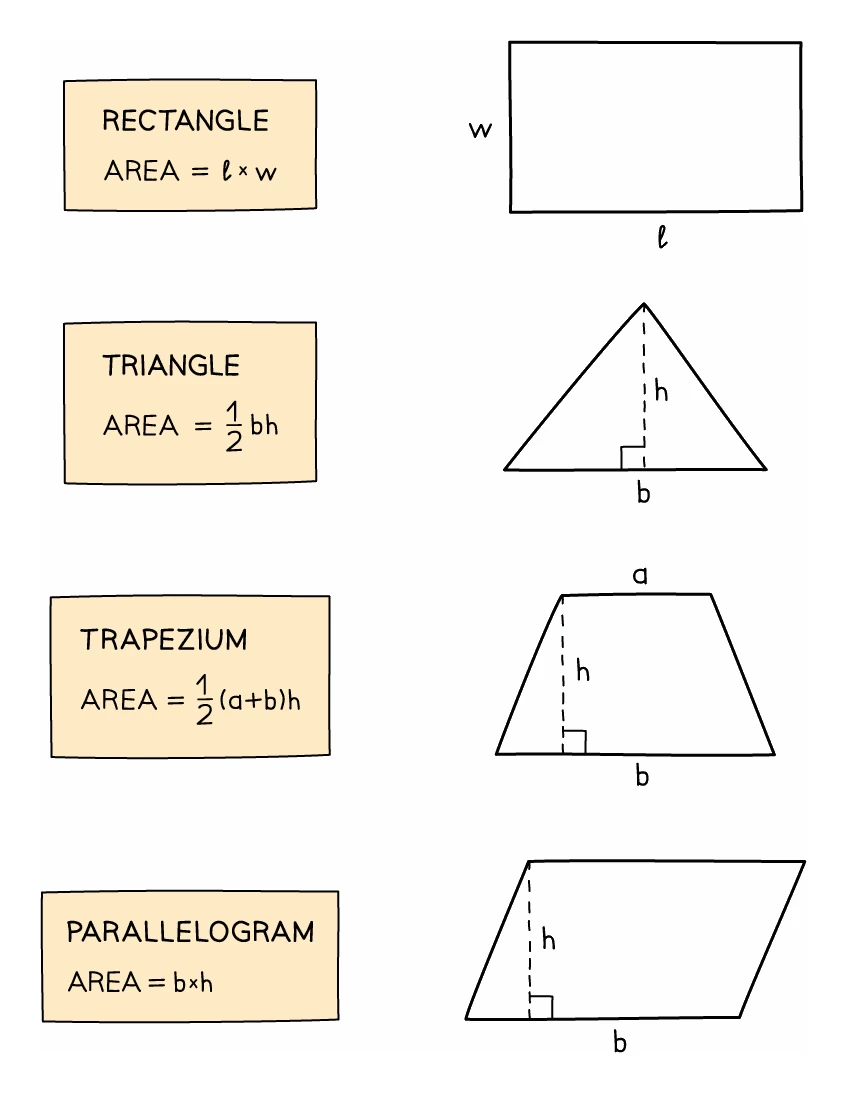
- The trapezium formula needs the two parallel sides identified first, since the other two play no part
- If a formula escapes you, cut the shape into a rectangle plus one or two triangles instead and add those areas: the total is the same
Exam tip
Find the parallel sides before the height
Mark the two parallel sides before you look for the height. A trapezium may be drawn on its side, with the distance between them along the bottom, at right angles to both; the height may also lie outside the shape, or be left for you to work out. The method mark in the schemes uses that perpendicular distance wherever it sits, and a sloping side printed on the diagram is never the height.
Worked example
Three areas from the formulas
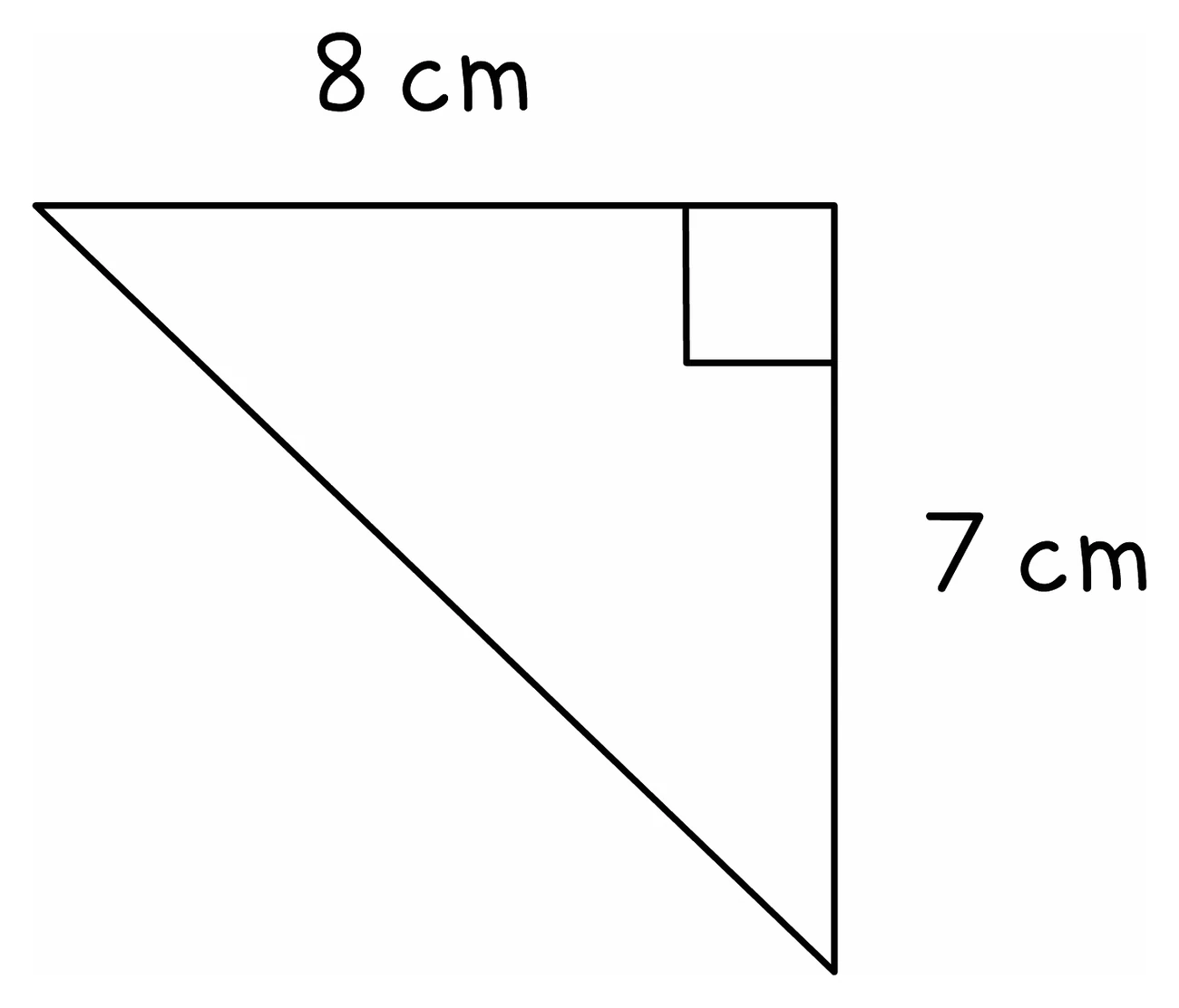
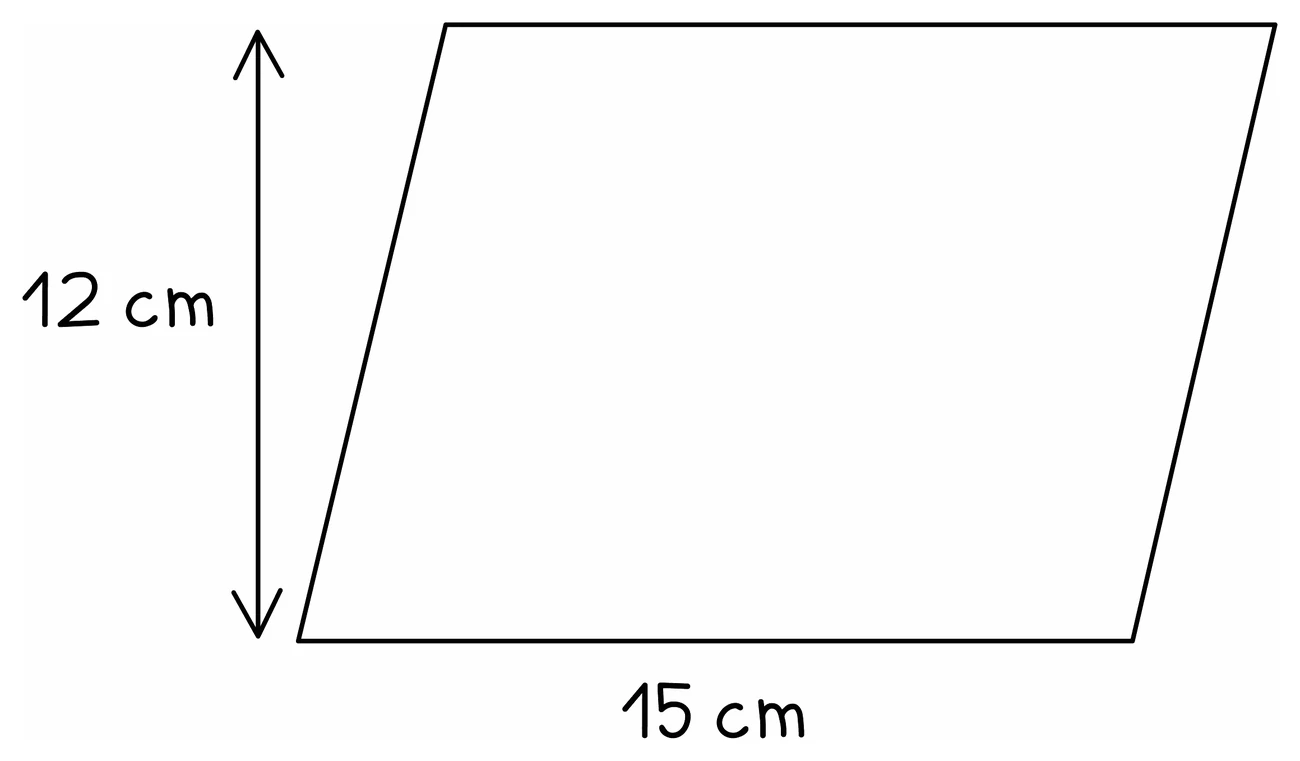
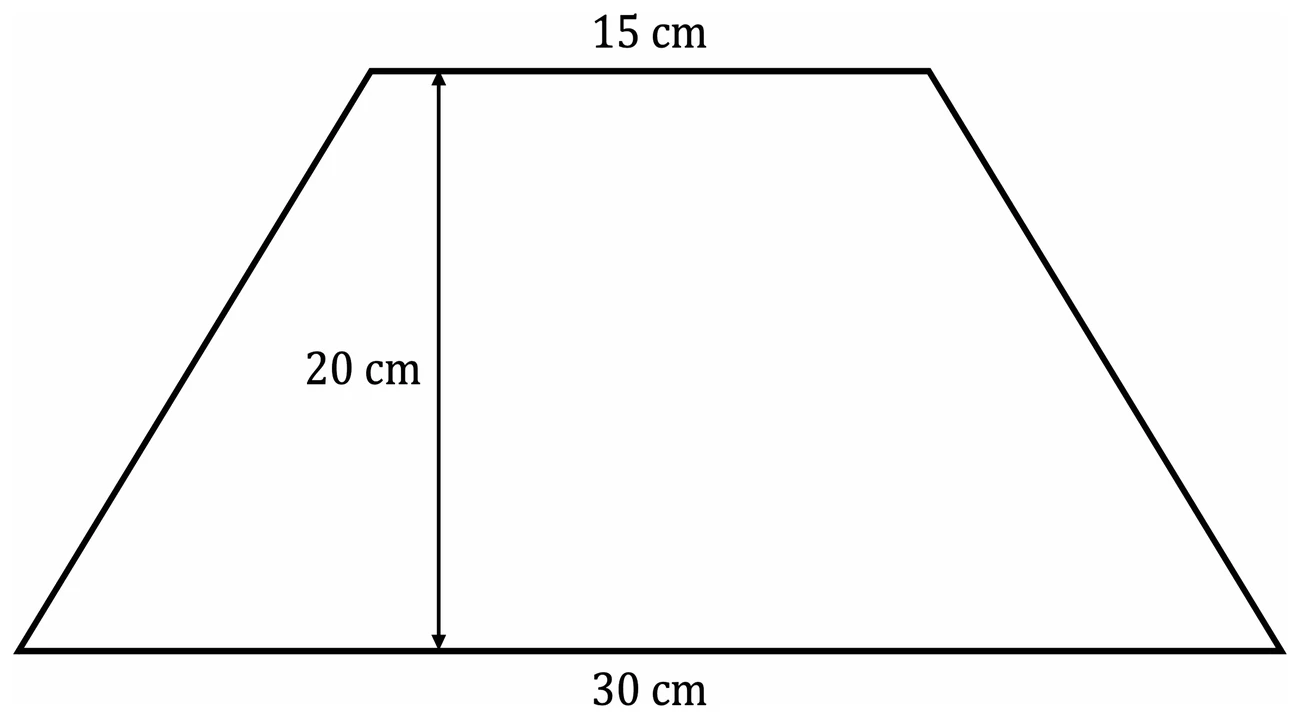
Find the area of each shape.
Solution:
- The triangle is right-angled, so the two sides meeting at the right angle are the base and the perpendicular height
- Triangle: ½ × 8 × 7 = 28 cm²
- On the parallelogram the 12 cm is the perpendicular height, not the sloping side
- Parallelogram: 15 × 12 = 180 cm²
- On the trapezium the parallel sides are 15 cm and 30 cm, and they are 20 cm apart
- Trapezium: ½ × (15 + 30) × 20 = ½ × 45 × 20 = 450 cm²
- Every answer is in cm² because area is measured in squared units
Areas on a grid
- Count the whole squares inside the shape first, marking them off as you go
- Then pair up the part-squares round the edge to make whole ones
- Check what one square stands for: on a 1 cm² grid the count is the area in cm², and if a square stands for any other area, multiply the count by that area