MathematicsExam code: 0580
Angles in Polygons and Parallel Lines
Geometry
The three relationships
- When a straight line crosses a pair of parallel lines, three named relationships appear
- Corresponding angles are equal. They sit in matching positions at the two crossings
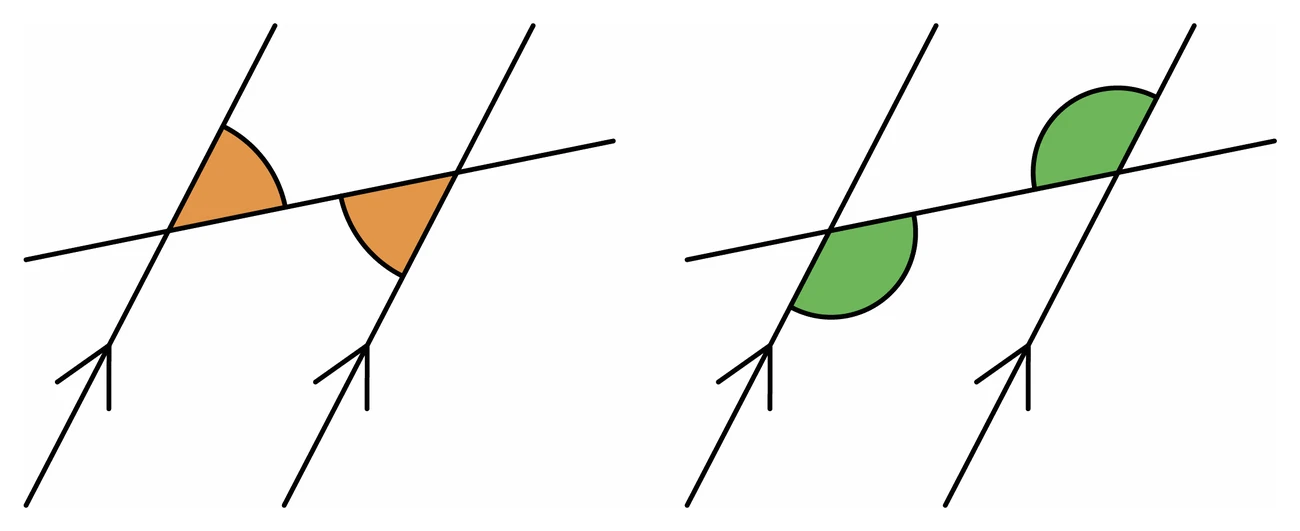
- Alternate angles are equal. They sit on opposite sides of the crossing line, between the parallel lines
- Co-interior angles add to 180°. They sit on the same side of the crossing line, between the parallel lines
- The syllabus also calls co-interior angles supplementary, which means they add to 180°
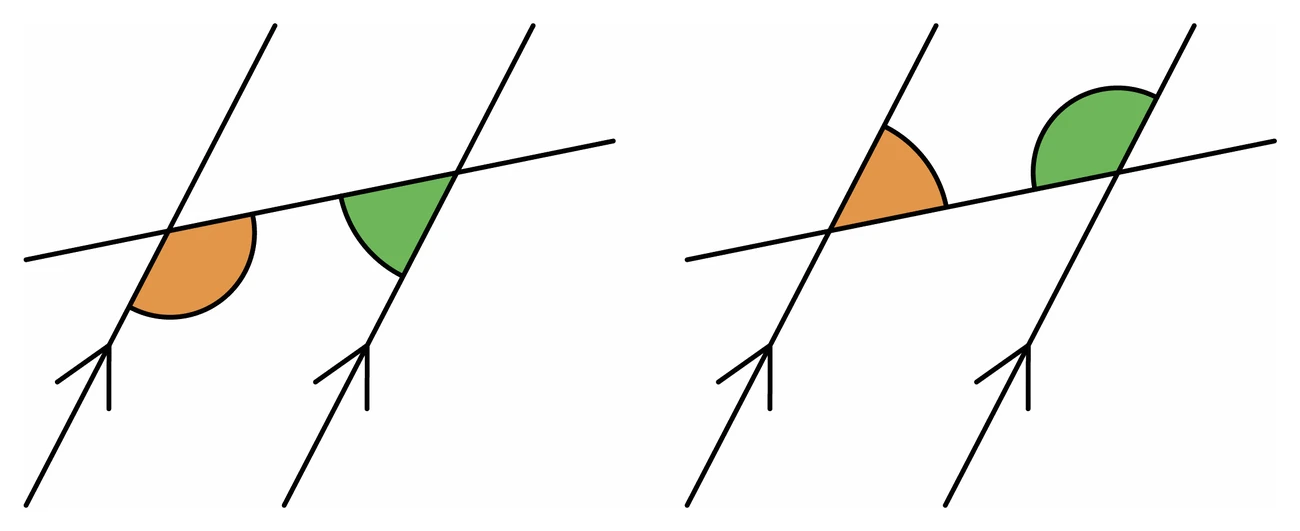
- Vertically opposite angles and angles on a straight line still apply, and combining them with the three above solves almost everything
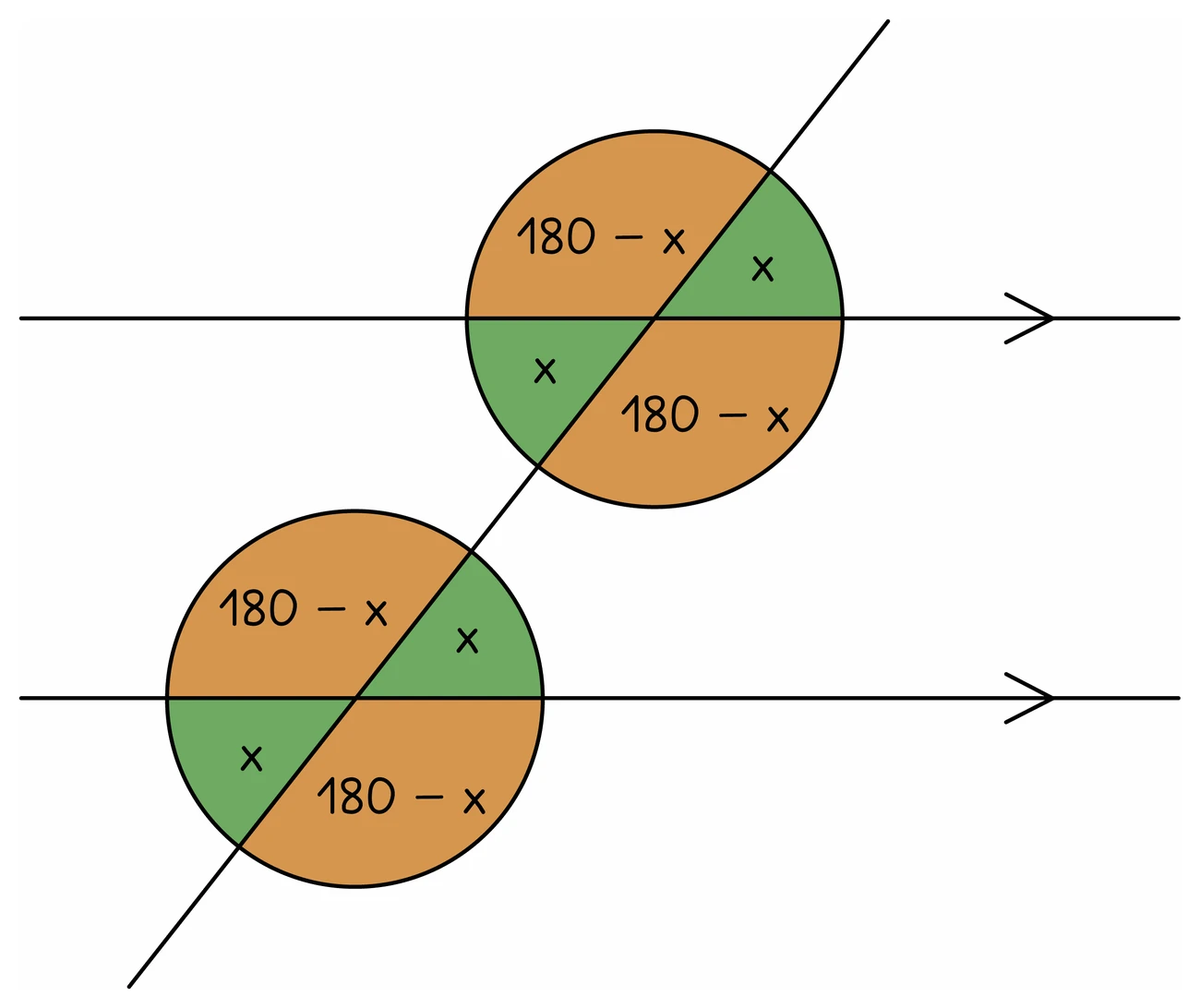
- Arrows on a diagram are what tell you the lines are parallel, so look for them before using any of these
Naming the reason
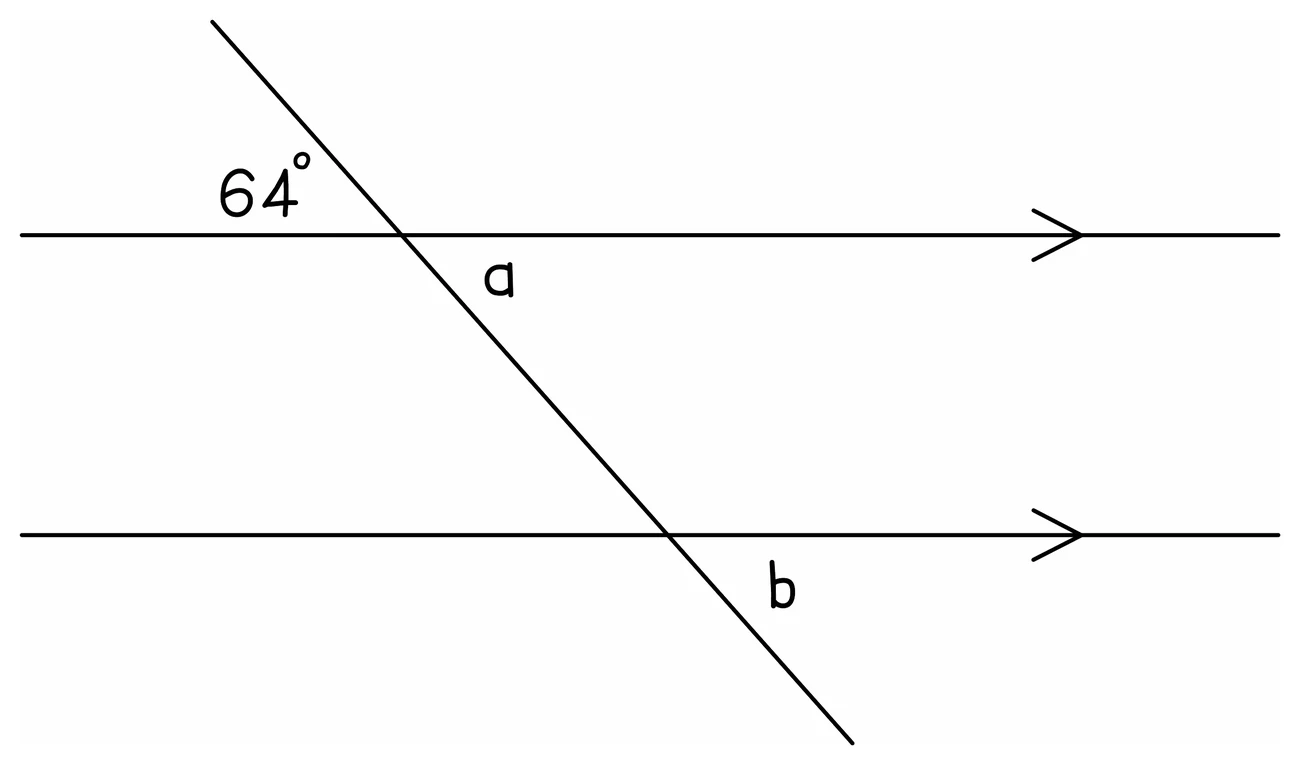
- Questions ask for the angle and a geometrical reason, with a mark for each
- Give the full name: "alternate angles are equal", "corresponding angles are equal", "co-interior angles add to 180°"
- The F, Z and C shapes are useful for spotting the relationship but are not accepted as the reason on their own
- Abbreviating the name loses the mark, so write it out in full
Worked example
Two angles with reasons
A straight line crosses two parallel lines. One of the angles it makes is 118°. Find the angle corresponding to it, and the angle co-interior with that one, giving a reason for each.
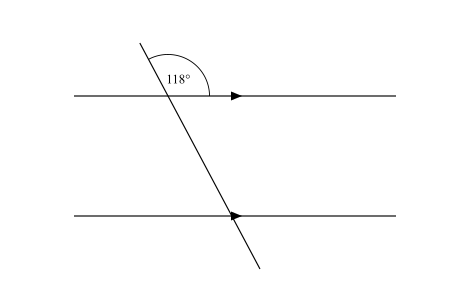
Solution:
- The corresponding angle sits in the matching position at the other crossing: above the lower line, to the right of the crossing line
- Corresponding angles are equal, so that angle is 118°
- It lies between the parallel lines, so it has a co-interior partner: the angle at the upper crossing on the same side of the crossing line, also between the parallel lines
- Co-interior angles add to 180°, so that angle is 180 − 118 = 62°
- Check: the 62° angle and the given 118° lie on a straight line at the upper crossing, and 118 + 62 = 180