Mathematics (Core)Exam code: 0580
Area and Perimeter
Lengths, Areas and Volumes
Adding up the outside
- The perimeter is the total distance round the edge of a shape, so it is a length and its units are mm, cm, m or km
- Find it by adding every side, working round the shape once so nothing is counted twice or missed
- For a regular shape it is the number of sides times the length of one, so a square of side x has perimeter 4x
- A circle's perimeter has its own name, the circumference, and belongs to the circles topic
Missing lengths
- Compound shapes usually leave some sides unlabelled, and they have to be worked out before adding
- On an L-shape the two shorter horizontal sides together equal the long horizontal side opposite, and the same holds vertically
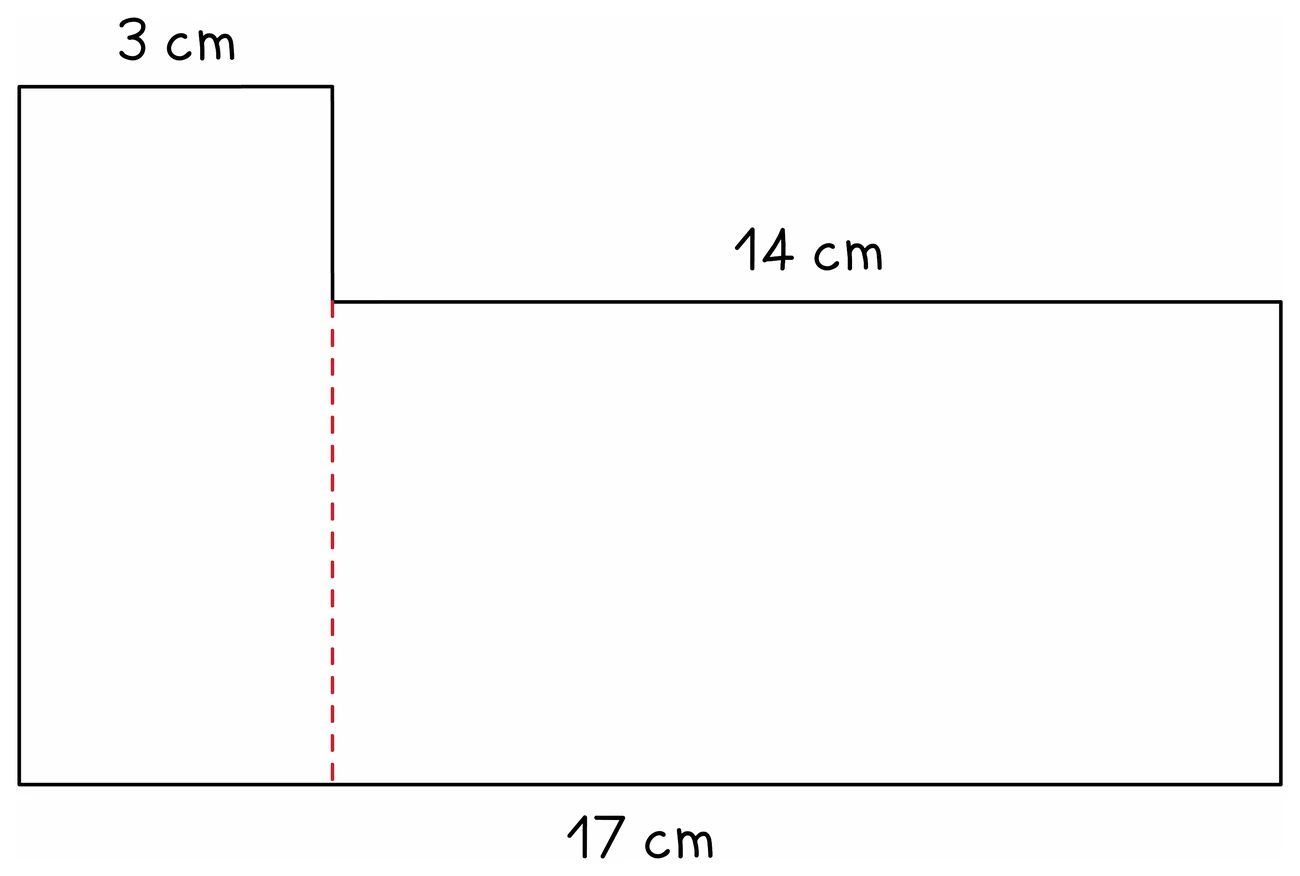
- Dashes on a diagram mark sides that are equal, and the question may state equalities in words instead
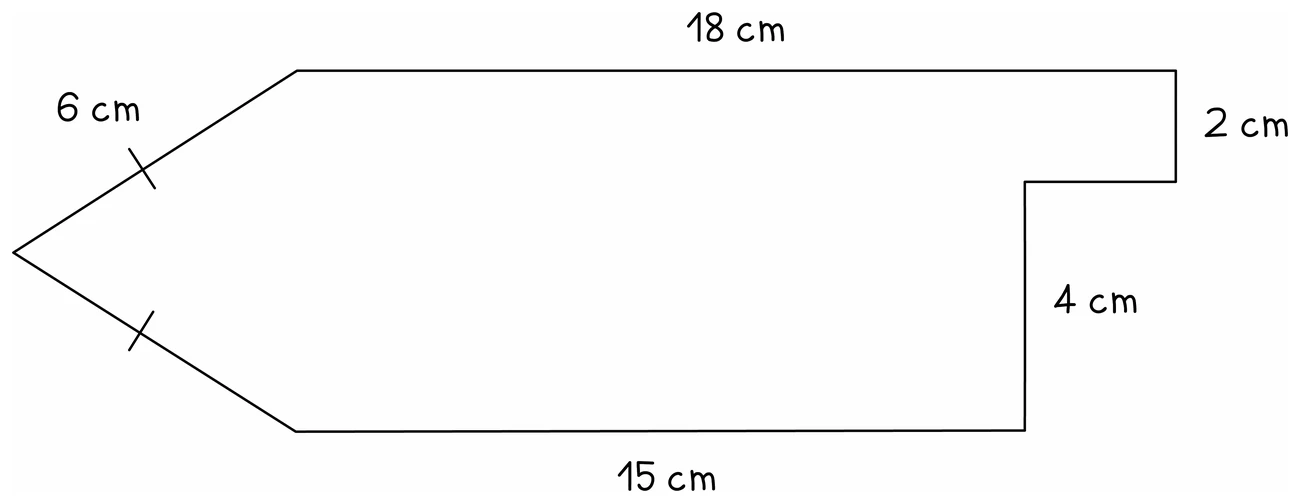
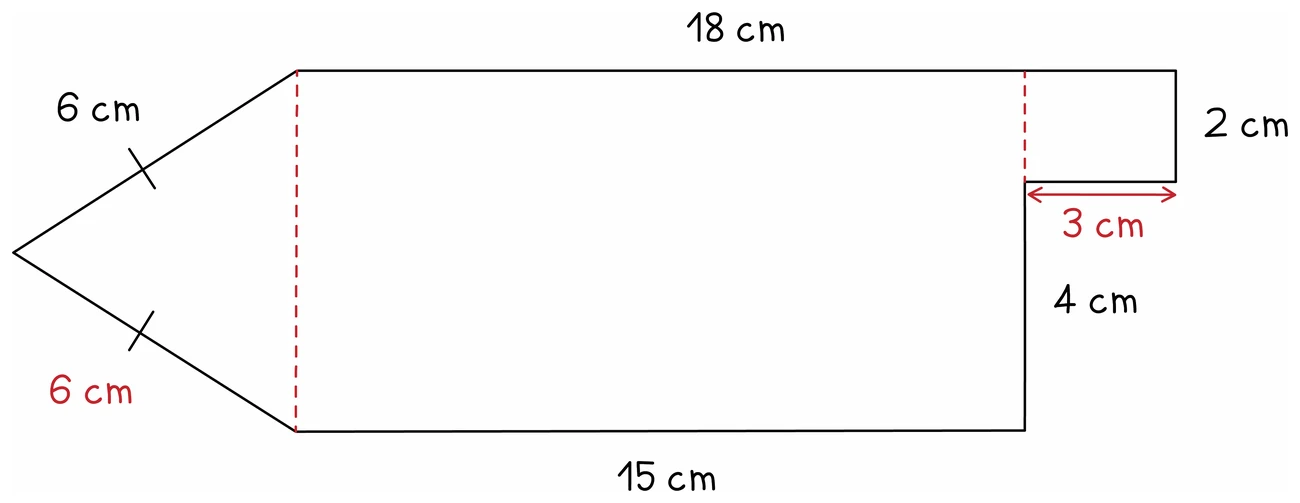
- Pythagoras supplies a sloping side where a right angle is available
Worked example
Perimeter of an L-shaped room
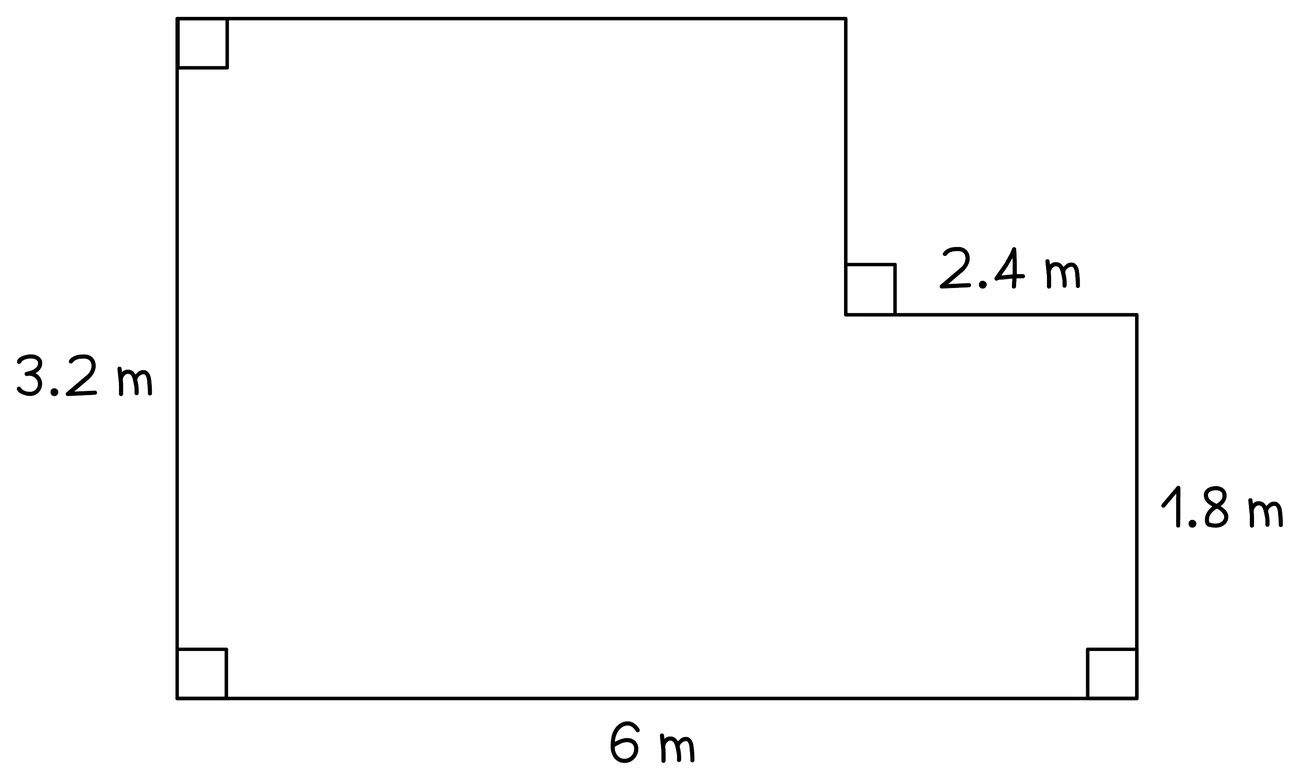
The floor plan below shows a room. All the corners are right angles. Work out the perimeter of the room.
Solution:
- Two sides are unlabelled, so find those first
- The two horizontal sides at the top must add to the 6 m base, so the top edge is 6 − 2.4 = 3.6 m
- The two vertical sides on the right must add to the 3.2 m left side, so the step down is 3.2 − 1.8 = 1.4 m
- Now add every side once, going round the shape
- 3.6 + 1.4 + 2.4 + 1.8 + 6 + 3.2 = 18.4 m
- Perimeter is a length, so the answer is in metres and not square metres