0455
Money & Banking
Microeconomic Decision Makers · 2 question types
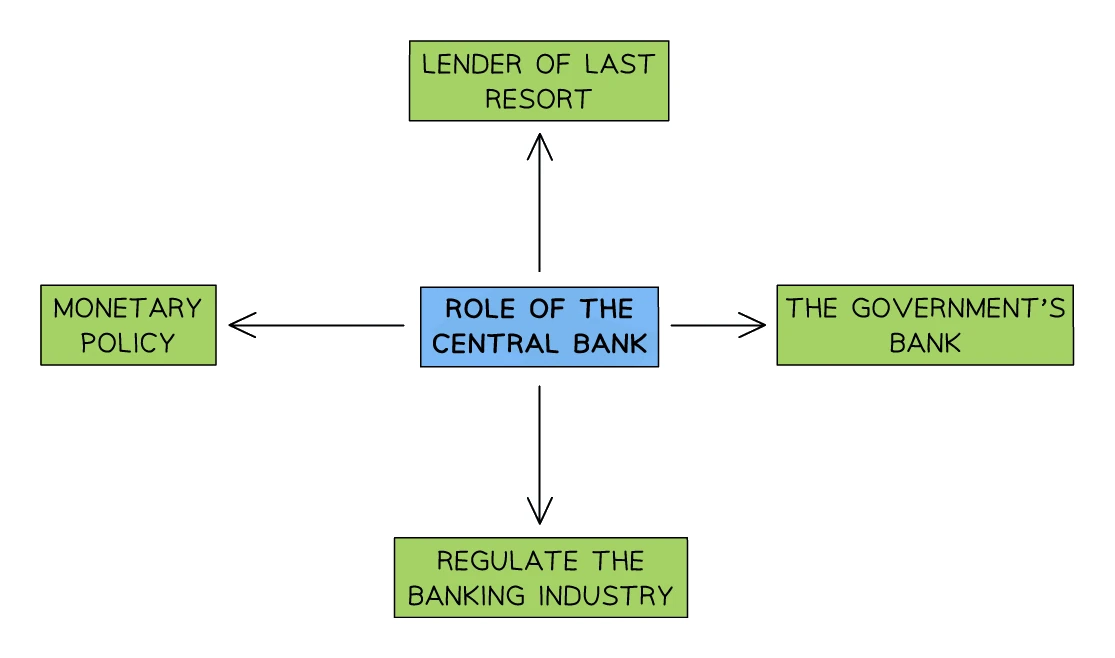
A central bank is the bank that manages the currency and monetary system of a country on behalf of the government. There is normally only one (for example, a national central bank).
The central bank carries out roles that no commercial bank performs.
| Role | What the central bank does |
|---|---|
| Issuing currency | It is responsible for printing notes and minting coins, controlling the money supply. |
| Operating monetary policy | It sets the country's main interest rate to influence borrowing, spending and inflation. |
| Banker to the government | It holds the government's accounts and helps manage government borrowing. |
| Banker to the commercial banks | It holds banks' reserves and acts as lender of last resort, lending to banks in difficulty to keep the financial system stable. |
| Regulating the banking industry | It supervises commercial banks and sets the rules they must follow, protecting depositors and keeping the financial system sound. |
| Managing the exchange rate and reserves | It holds the country's foreign-currency reserves and may buy or sell currency. |