0455
Types of Markets: Competition & Monopoly
Microeconomic Decision Makers · 2 question types
Markets differ in how many firms compete in them, and that single feature shapes the price, the quality, the choice and the profit that consumers and producers end up with. The syllabus compares two ends of the range: a with many firms, and a monopoly with only one. You are not expected to draw diagrams or learn the formal theory of perfect and imperfect competition; the focus is on the practical effects of the number of firms.
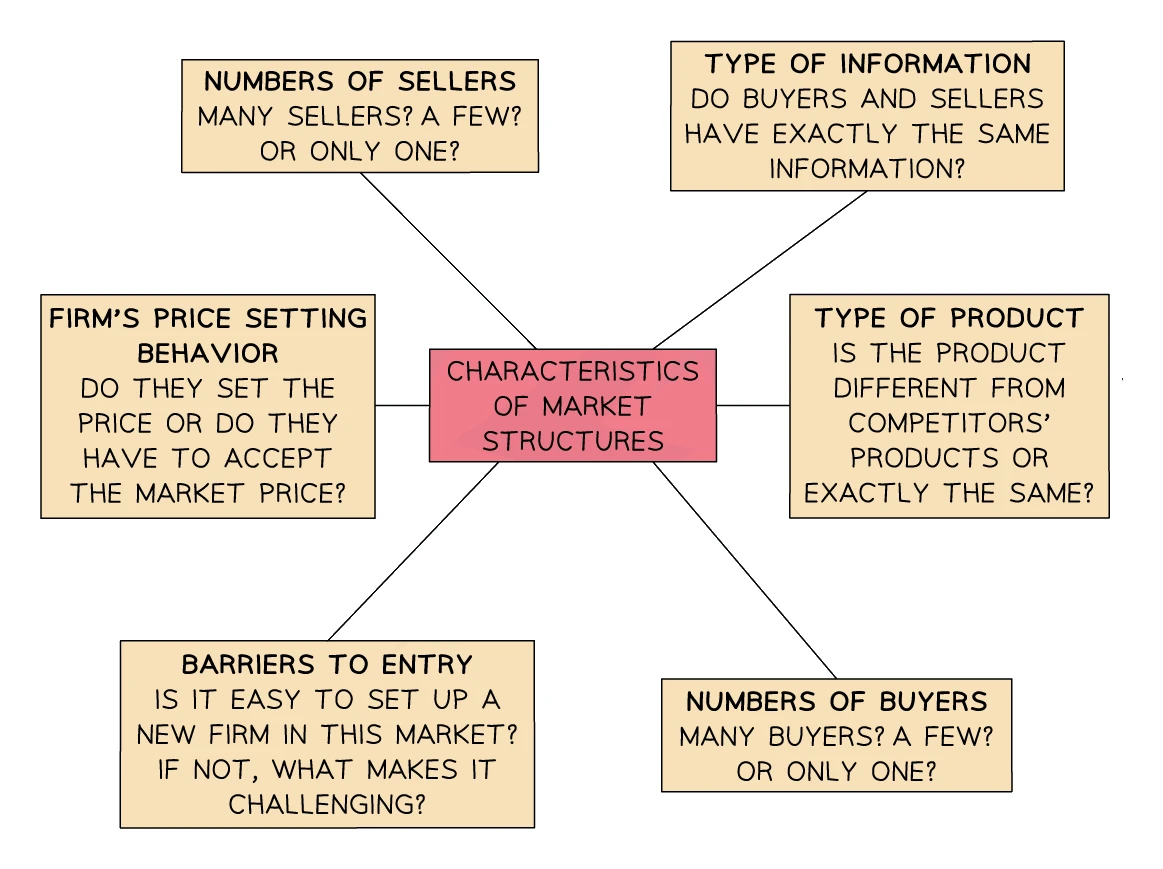
Several features are used to describe and compare market structures: how many sellers there are, whether the product is the same or different, how easy it is for new firms to enter, and whether a firm sets its own price or has to accept the market price.