EconomicsExam code: 0455
Market Failure & Externalities
Allocation of Resources
Two intervention tools that need separate diagrams.
Maximum price (price ceiling)
A maximum price is a legal price cap below the free-market equilibrium. Sellers cannot legally charge more.
- Quantity supplied contracts (less profitable at a lower price).
- Quantity demanded extends (cheaper, so more is wanted).
- The result is a shortage (excess demand) at the legal maximum.
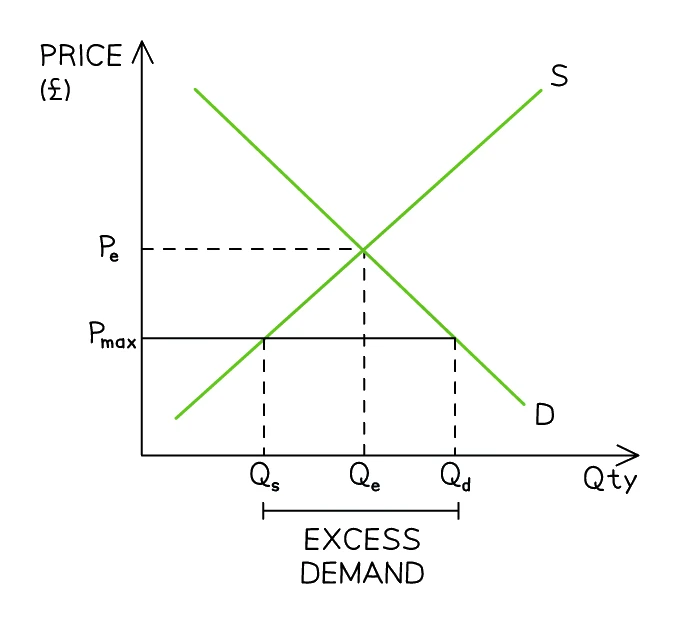
Used to protect consumers in essential markets: rent controls in a housing crisis, price caps on essential medicines, fuel price caps during shortages.
| Advantages | Disadvantages |
|---|---|
| Lower prices protect low-income consumers | Shortages mean some buyers go without |
| Stabilises markets during emergencies | Black markets may emerge (illegal resale at higher prices) |
| Limits exploitation in rental and essential-goods markets | Reduces producer incentive to invest in supply |
Minimum price (price floor)
A minimum price is set above the free-market equilibrium. Sellers cannot legally charge less.
- Quantity supplied extends (more profitable at a higher price).
- Quantity demanded contracts (more expensive, so less is bought).
- The result is a surplus (excess supply) at the legal minimum.
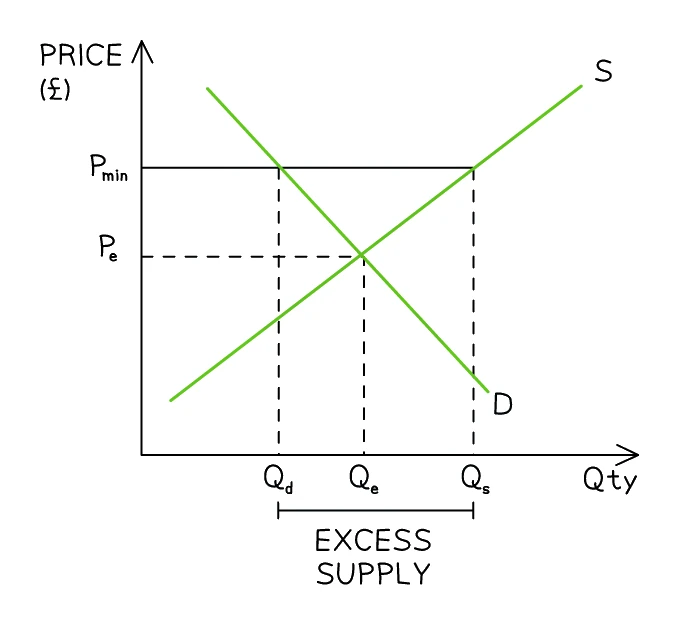
Used to support producers (agricultural floor prices) or to discourage consumption of a demerit good (minimum unit pricing for alcohol). The national minimum wage is a minimum price in the labour market designed to protect workers from low pay.
| Advantages | Disadvantages |
|---|---|
| Producers receive a guaranteed income | Surplus output may need to be bought up by the government |
| Reduces consumption of demerit goods | Encourages over-production and waste |
| Minimum wage raises pay of the lowest paid | Higher costs may lead firms to lay off workers |