0984
Pseudocode and Flowcharts
Algorithm Design and Problem Solving · 4 question types
Algorithms and How We Describe Them
An algorithm is a precise, step-by-step set of instructions that solves a specific problem or carries out a specific task.
An algorithm can be described in three different ways, all of which appear in exam papers:
| Notation | What it is |
|---|---|
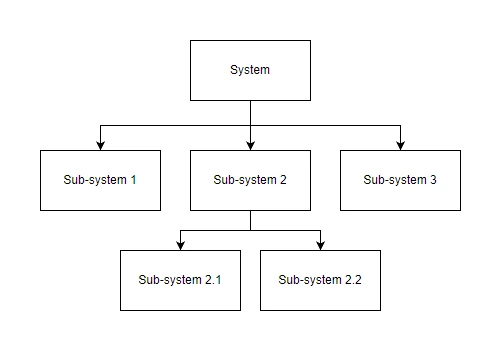
| Structure diagram | A top-down hierarchy showing how a big problem is decomposed into smaller sub-problems (and they in turn into smaller ones) |
| Flowchart | A diagram of boxes and arrows showing the order in which steps are carried out, including decisions and loops |
| Pseudocode | A text-based notation that looks like a programming language but is not tied to any specific one |
Each notation has its own strengths: flowcharts are visual and good for showing branching; pseudocode is compact and easy to translate into real code; structure diagrams help during the design stage. Pseudocode is the most heavily examined of the three.
A structure diagram breaks a system top-down into sub-systems, and those into smaller sub-systems again: