Internet and Networking
Internet and Its Uses · 4 question types
A protocol is a set of rules that govern how devices on a network communicate with each other.
Without a protocol, two computers could send data but neither would understand what the other was sending. Protocols define the format of packets, the order of messages, error handling, and many other details.
The CIE syllabus names two protocols you should know: HTTP and HTTPS.
The internet vs the World Wide Web — match-the-term questions
What comes up: a table asks you to match terms to descriptions; you must supply either "World Wide Web" as a term or its description as a missing entry.
Write: The World Wide Web (WWW) is the collective name for all the web pages available — it is a service accessed over the internet using HTTP. The internet is the global infrastructure of interconnected networks (the hardware and connections) that the WWW and other services run on top of.
Watch out: these two are not the same thing. The internet is the physical/logical network; the WWW is a service that uses it. Writing "the internet" where the answer is "World Wide Web" (or defining the WWW as "the internet") is a common zero-mark response.
HTTP and HTTPS
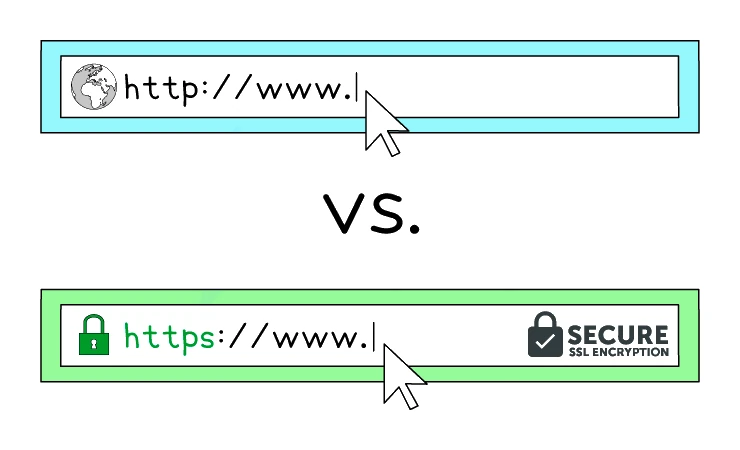
HTTP (Hypertext Transfer Protocol) is the protocol used by web browsers to request web pages from web servers and receive the response.
- HTTP defines how the browser asks for a page (a
GETrequest) and how the server replies (with the HTML content). - HTTP is not encrypted: any data sent through it can be read by anyone who intercepts the traffic.
HTTPS (Hypertext Transfer Protocol Secure) is HTTP with encryption added on top, using TLS/SSL.
- HTTPS works the same way as HTTP but the data is encrypted in transit.
- A passive eavesdropper sees only ciphertext.
- All modern websites use HTTPS, particularly any site that handles passwords, payments or personal information.
The lock icon in the browser's address bar indicates HTTPS is in use.
The protocols at a glance
| Protocol | Used for |
|---|---|
| HTTP | Web browsing (unencrypted) |
| HTTPS | Web browsing with encryption |
Why protocols matter
Protocols are what make the internet work as one giant network rather than many incompatible private systems. A web browser written in California can read a website hosted in Singapore because both ends speak the same HTTPS protocol. The two sides do not need to know anything about each other except that they both follow the same agreed rules.