MathematicsExam code: 0580
Conditional Probability
Probability
Narrowing the total
- Identify the condition first and shade or ring the region it describes
- Count how many are in that region: this becomes the denominator
- Then count how many of those also satisfy the thing being asked for: this becomes the numerator
- The overall total is not used at all, which is exactly what makes it conditional
- The same method works on a two-way table, where the condition picks out one row or one column and the total for that row or column is the denominator
Worked example
A conditional probability from a Venn diagram
Of 40 people, 22 own a car, 16 own a bicycle and 9 own both. One person is chosen at random. Find the probability that a person who owns a car also owns a bicycle, and the probability that a person who owns a bicycle also owns a car.
Solution:
- Fill the overlap first: 9 own both
- Car only = 22 − 9 = 13, and bicycle only = 16 − 9 = 7
- Those regions hold 13 + 9 + 7 = 29, so 40 − 29 = 11 own neither
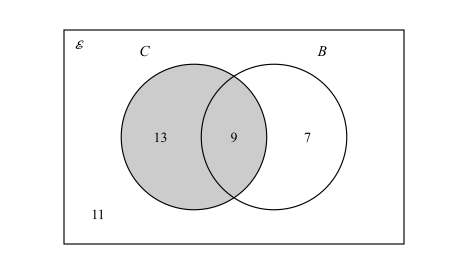
- For the first part the condition is owning a car, so the total is the 22 car owners, not 40
- Of those 22, the ones who also own a bicycle are the 9 in the overlap
- P(bicycle, given car) = 9/22
- For the second part the condition is owning a bicycle, so the total is now 16
- P(car, given bicycle) = 9/16
- The two answers differ, which shows the order of the condition matters