MathematicsExam code: 0580
Basic Probability
Probability
Sample space diagrams
- Where two things happen together, such as two dice or a dice and a coin, a table lays out every combination
- Put one experiment's outcomes along the top and the other's down the side, then fill in the result of each pair
- The number of cells is the total number of outcomes, and counting the ones that satisfy the event gives the numerator
- Two ordinary dice give 6 × 6 = 36 outcomes, and a systematic table makes them impossible to miscount
- A total of 9 arises from (3, 6), (4, 5), (5, 4) and (6, 3), so its probability is 4 ÷ 36 = 1/9
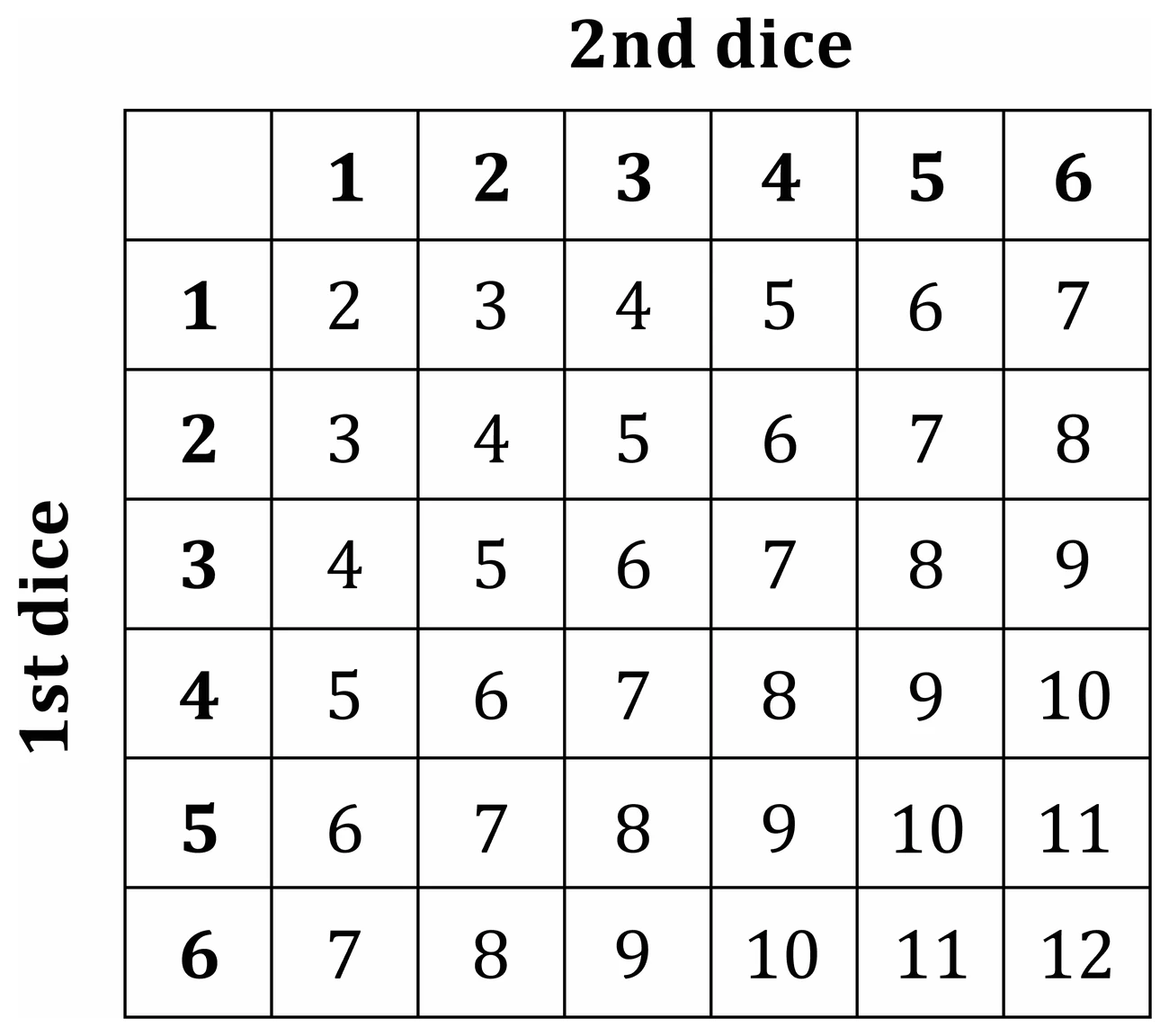
- Even if the dice look identical, they are two separate dice, so (3, 6) and (6, 3) are different outcomes and both are counted
- Filling the whole table before counting is faster than trying to spot the successes directly
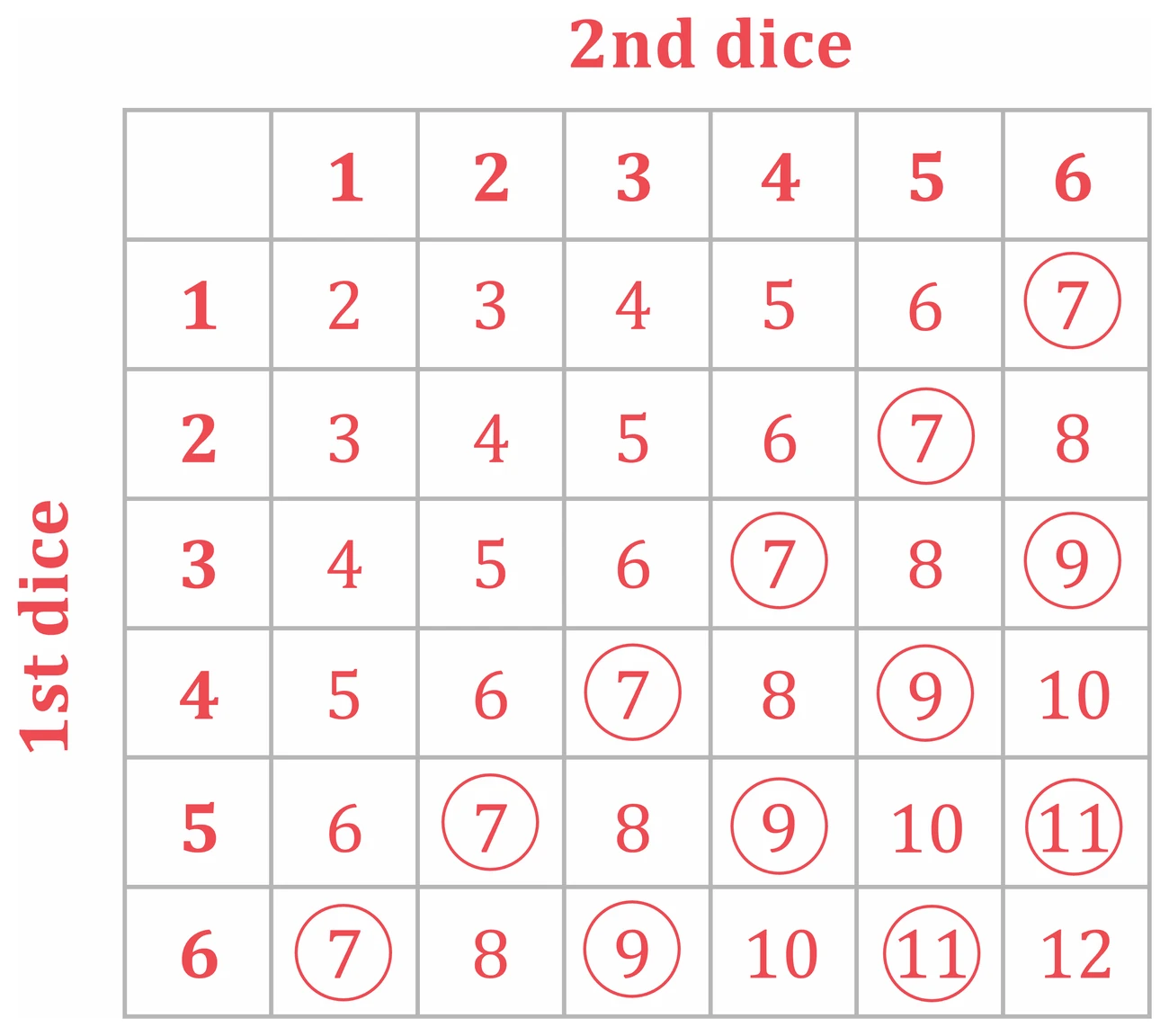
Worked example
Reading a probability off a sample space
Two ordinary dice are rolled and their scores added. Find the probability that the total is 10 or more.
Solution:
- Each die has 6 faces, so the sample space has 6 × 6 = 36 equally likely outcomes
- List the pairs giving a total of 10 or more, taking them in order so none is missed
- Total 10: (4, 6), (5, 5), (6, 4)
- Total 11: (5, 6), (6, 5)
- Total 12: (6, 6)
- That is 6 successful outcomes out of 36
- P(total ⩾ 10) = 6/36 = 1/6
- Even if the dice look identical, they are two separate dice, so (4, 6) and (6, 4) are two different outcomes, not one