Mathematics (Core)Exam code: 0580
Transformations
Transformations
Doing one
- An enlargement resizes the shape by a scale factor from a fixed centre of enlargement
- Each vertex moves along the line from the centre through it, ending scale-factor times as far from the centre
- Multiply each distance from the centre, both across and up, by the scale factor
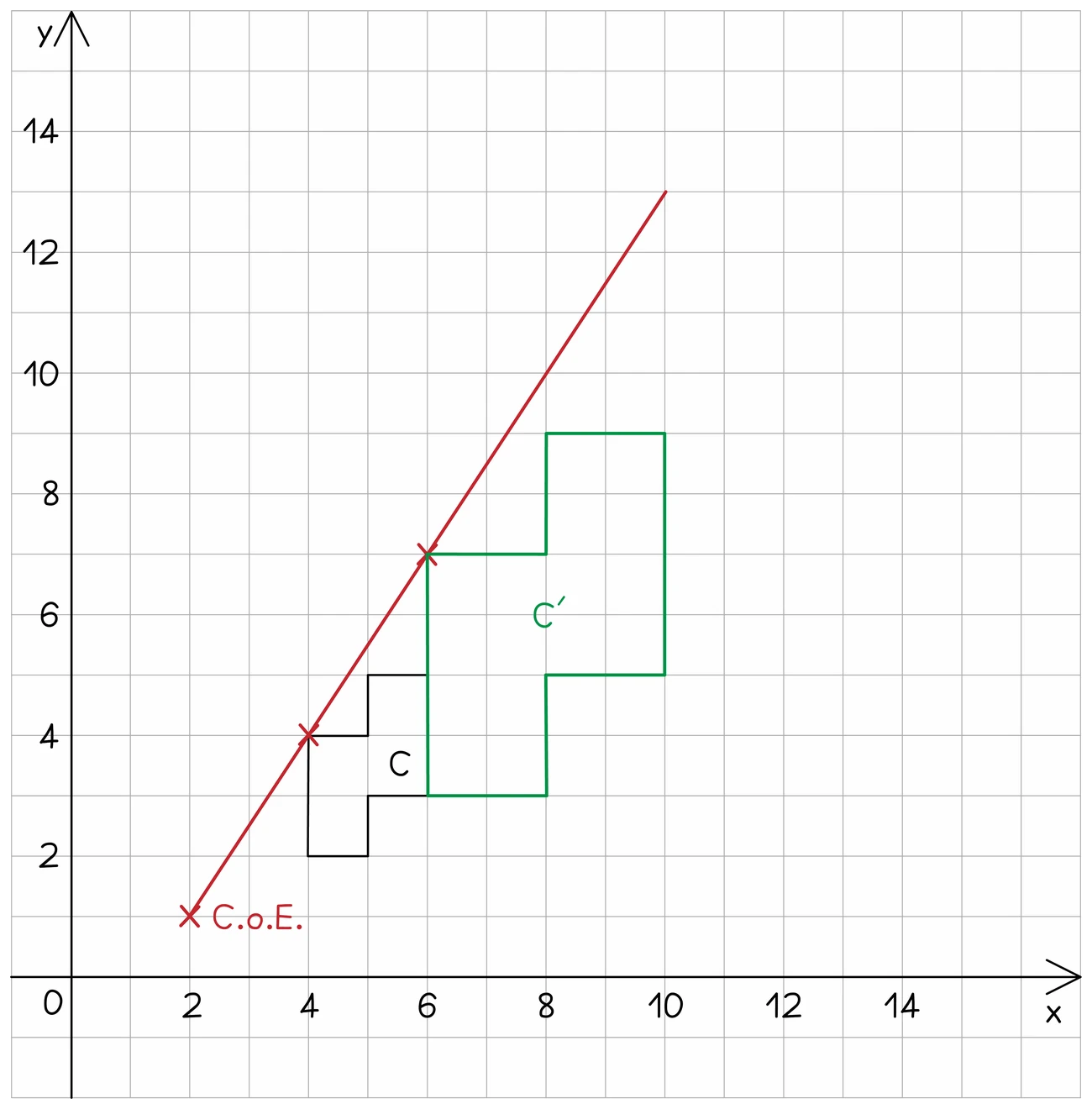
- A scale factor between 0 and 1 makes the image smaller, even though it is still called an enlargement
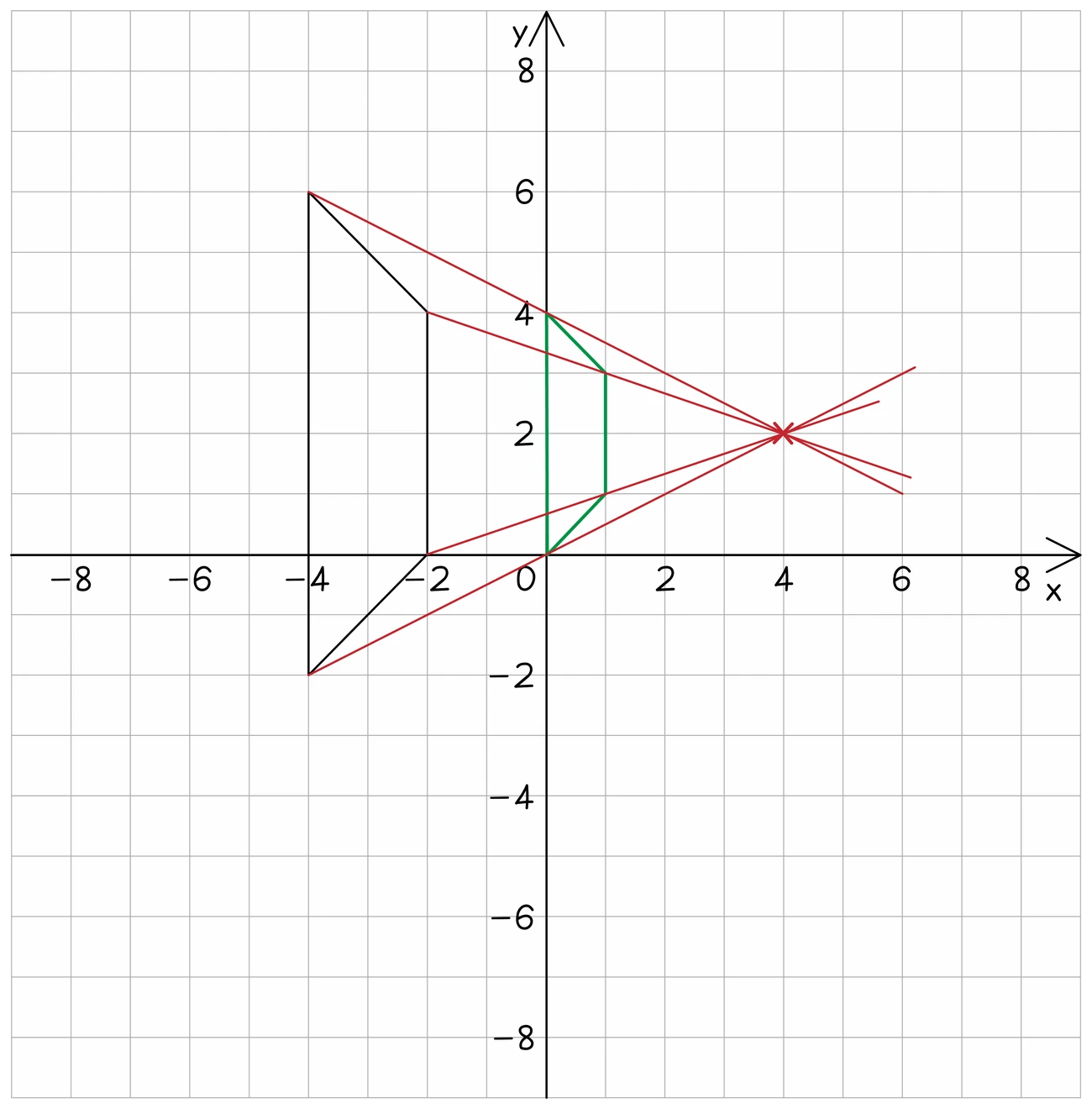
- Every length multiplies by the scale factor, so the image is similar to the object rather than congruent
Describing one
- Say enlargement, then give the scale factor, then the centre as coordinates
- Find the centre by drawing a line through each pair of corresponding vertices and seeing where they all cross
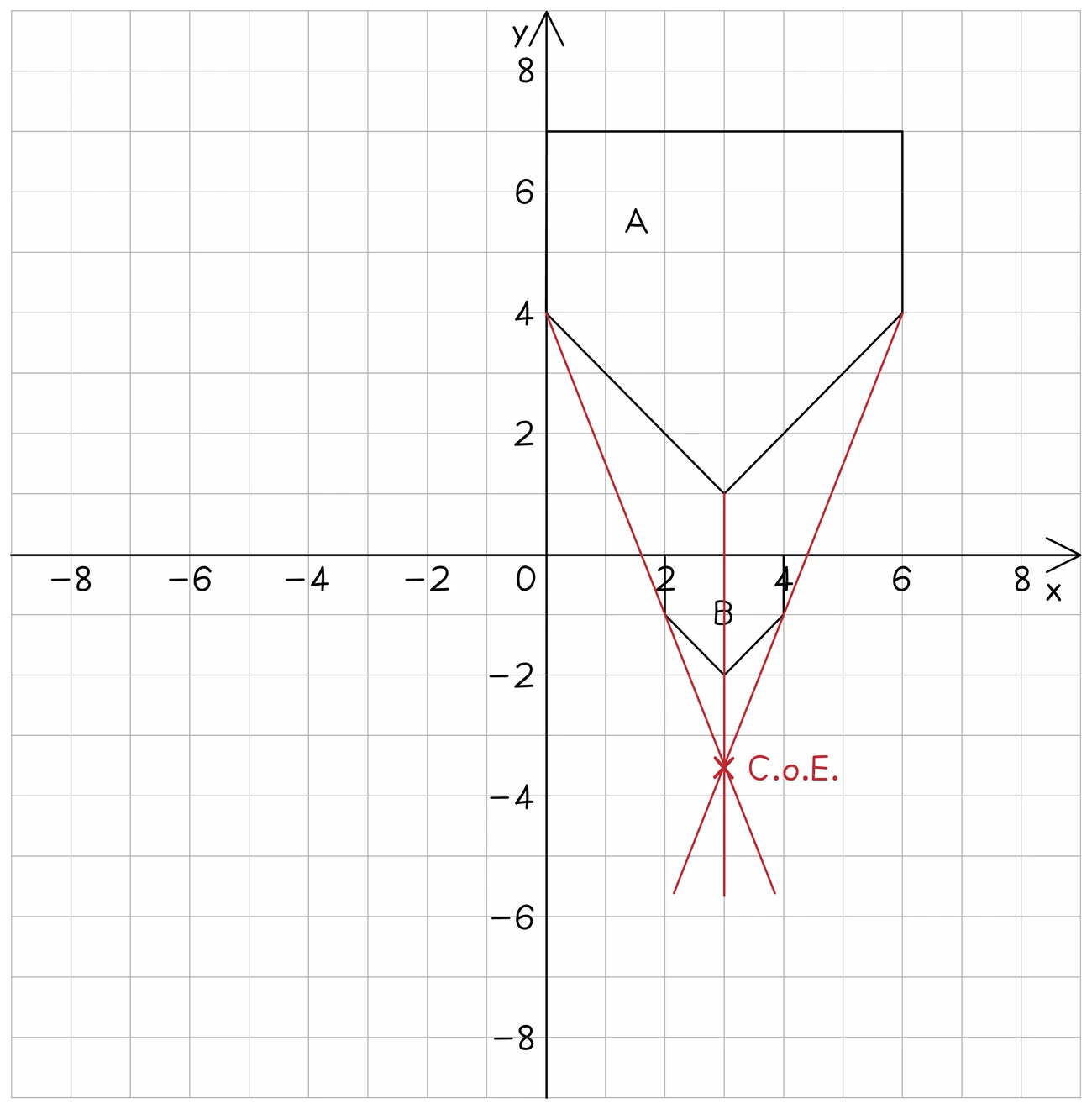
- Find the scale factor by dividing an image length by the matching object length
Worked example
Describing an enlargement
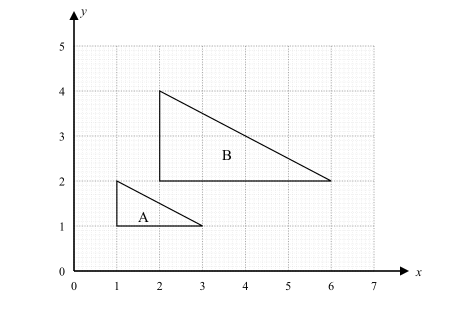
Triangle A has vertices (1, 1), (3, 1) and (1, 2). Triangle B has vertices (2, 2), (6, 2) and (2, 4). Describe fully the single transformation that maps A onto B.
Solution:
- B is bigger than A, so the only candidate is an enlargement: the other three keep the size the same
- Compare a pair of matching sides: A has a base from (1, 1) to (3, 1), which is 2 units, and B has a base from (2, 2) to (6, 2), which is 4 units
- Scale factor = 4 ÷ 2 = 2
- Draw a line through (1, 1) and (2, 2), another through (3, 1) and (6, 2), and a third through (1, 2) and (2, 4)
- All three meet at the origin, so that is the centre
- The full description is an enlargement, scale factor 2, centre (0, 0)
- Check: each vertex of B is exactly twice as far from the origin as the matching vertex of A