Mathematics (Core)Exam code: 0580
Symmetry and Shapes
Geometry
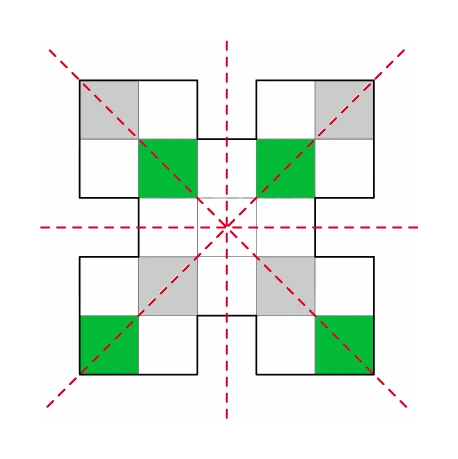
Mirror lines
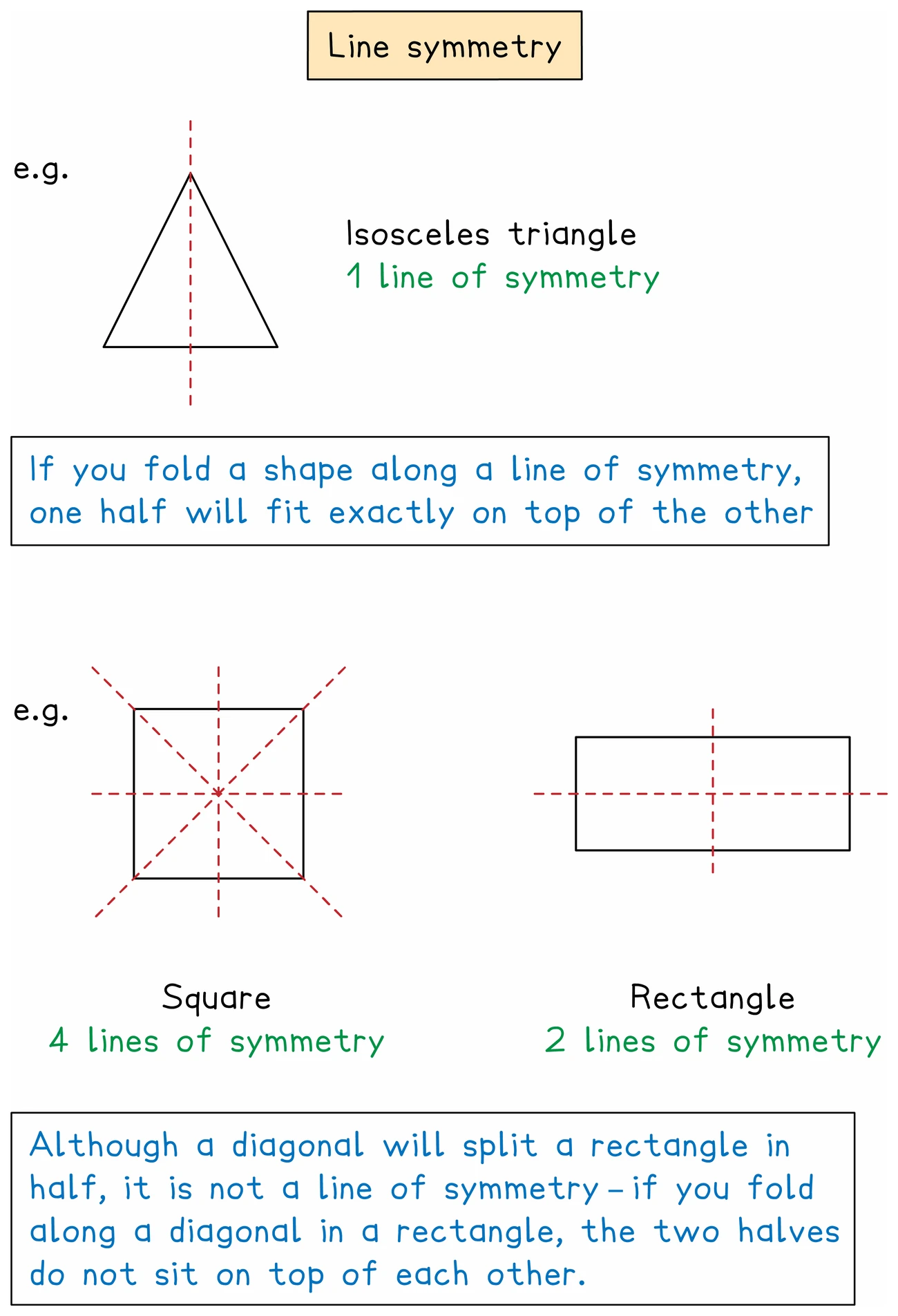
- A line of symmetry is a line across a shape such that folding along it makes the two halves match exactly
- Each half is the mirror image of the other, so a shape can be completed from half of it and the line
- Diagonal lines of symmetry are easy to miss, and turning the page helps
- You may use tracing paper in the examination, and it is the quickest way to test a line you are unsure of
- Questions ask you to draw all the lines of symmetry or to shade squares to make a pattern symmetrical, so check horizontal, vertical and both diagonals every time
- A rectangle has 2, a square has 4, and a regular polygon with n sides has n
Exam tip
A wrong extra line costs a mark
Drawing all the lines of symmetry is worth two marks, and the second mark needs every line with no wrong ones. All the right lines plus one wrong line scores one mark, and so does a set with one line missing. So test each line with tracing paper before you draw it, and draw only the lines that pass: a guess that fails costs as much as a line left out.
Worked example
Finding every line of symmetry
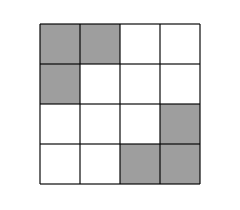
A pattern is drawn on a 4 by 4 grid of squares. In the top-left corner, the corner square and the two squares touching it are shaded. The same three squares are shaded in the bottom-right corner. Draw all the lines of symmetry of the pattern.
Solution:
- A square grid has four lines to test: the vertical and horizontal lines through the centre, and the two diagonals
- The vertical line would reflect the top-left group onto the top-right corner, which is empty, so it is not a line of symmetry
- The horizontal line would reflect the top-left group onto the bottom-left corner, also empty, so it is not one either
- The diagonal from top-left to bottom-right passes through both corner squares, and the two squares beside each corner swap places across it, so it is a line of symmetry
- The other diagonal reflects the top-left group onto the bottom-right group square for square, so it is a line of symmetry too
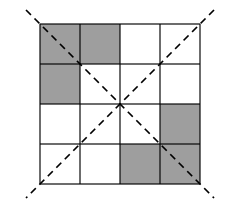
- The pattern has 2 lines of symmetry: the two diagonals