Globalisation & Trade Restrictions
International Trade & Globalisation · 2 question types
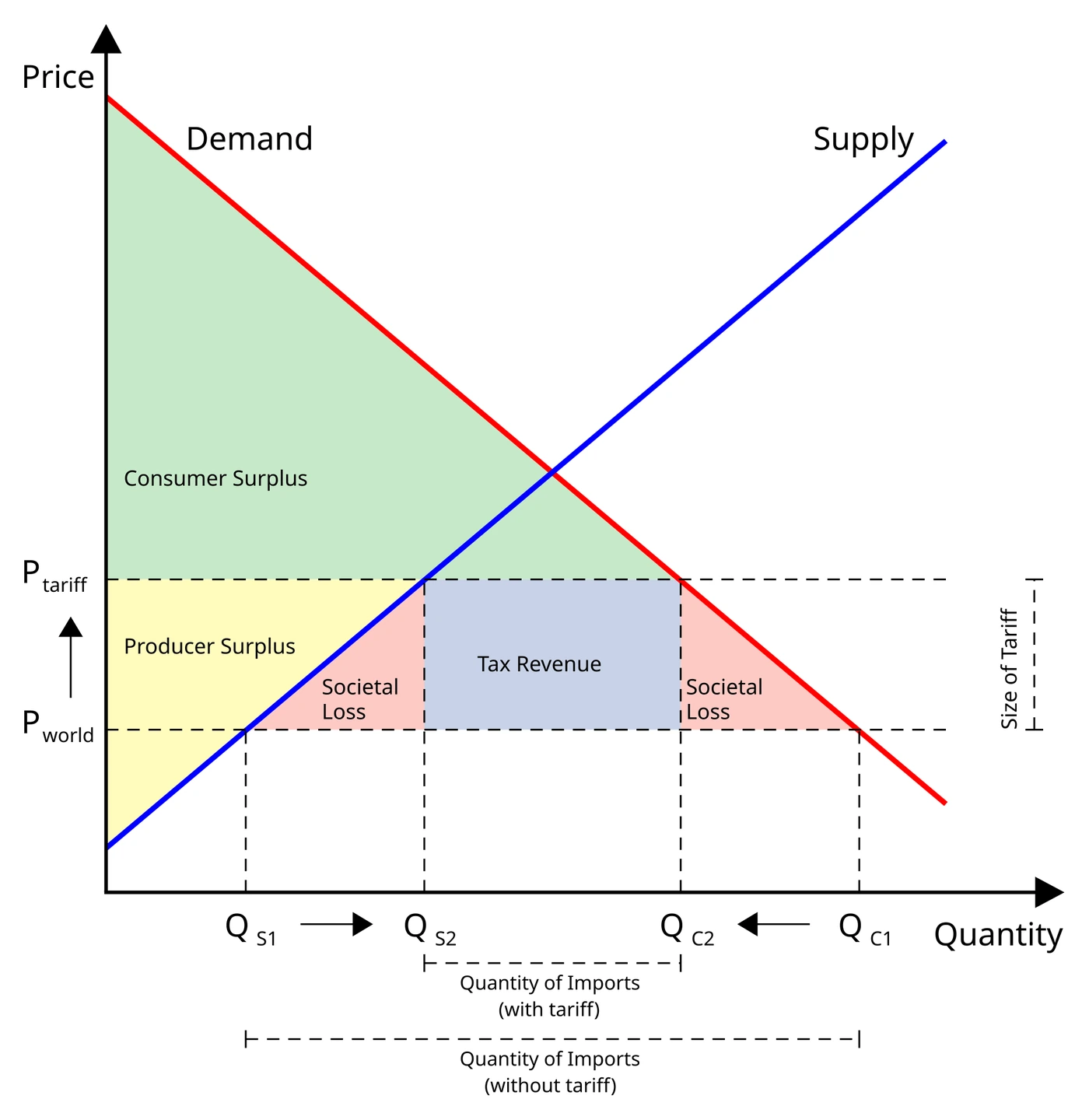
Despite the gains from free trade, governments often restrict imports to shelter domestic industries. The main tools are:
- (import duty). A tax added to the price of imported goods. It makes imports dearer, so consumers switch to domestic substitutes, and it raises revenue for the government.
- . A physical limit on the quantity of a good that may be imported in a period. It caps imports directly and gives domestic producers a larger share of the market, but it raises no revenue for the government.
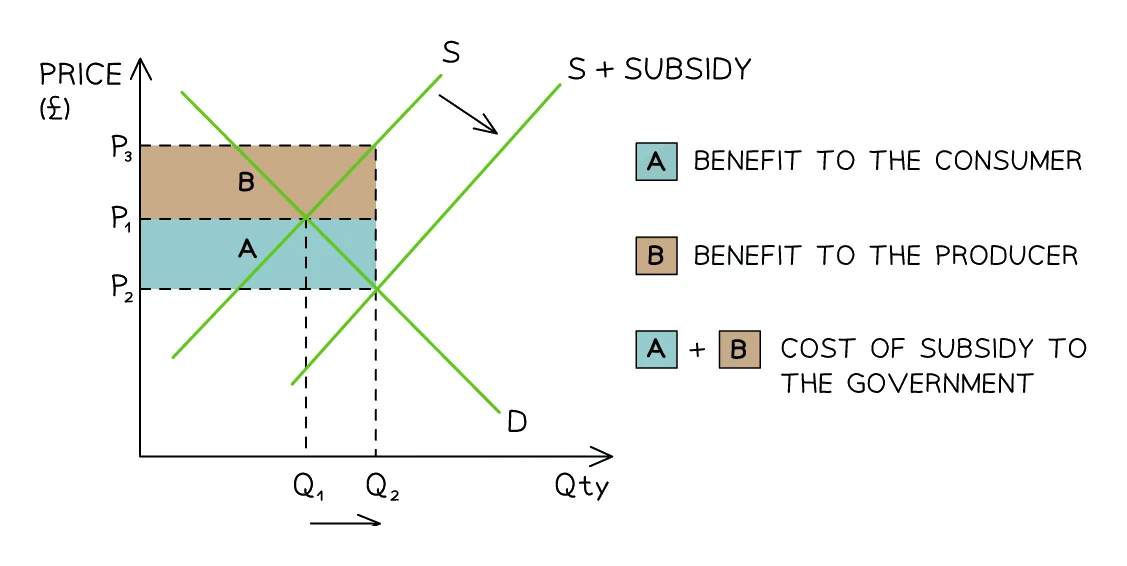
- Subsidy to domestic producers. A government payment that lowers domestic firms' costs, letting them undercut imports. Domestic output rises, but the subsidy is a cost to the government.
- . A complete ban on imports of a good, or on trade with a particular country, usually for political or health reasons.
A subsidy to domestic producers shifts supply to the right, from S to S + subsidy, lowering the market price from P1 to P2 and raising quantity from Q1 to Q2. This lets domestic firms undercut imports, but the area A + B (the fall in price to consumers plus the higher price received by producers) is the cost of the subsidy to the government.
Difference between a tariff and a quota (2 marks)
What comes up: a 2-mark question distinguishing two methods of protection, most often a tariff from a quota.
Write (two marks): (1) A tariff is a tax placed on imported goods, which raises their price (1). (2) A quota is a physical limit on the quantity of a good that may be imported (1). A useful extra contrast: a tariff raises revenue for the government, whereas a quota does not.
Watch out: do not say a quota is "a tax on imports"; that is the tariff. The quota restricts quantity, not price directly.