0455
Exchange Rates
International Trade & Globalisation · 4 question types
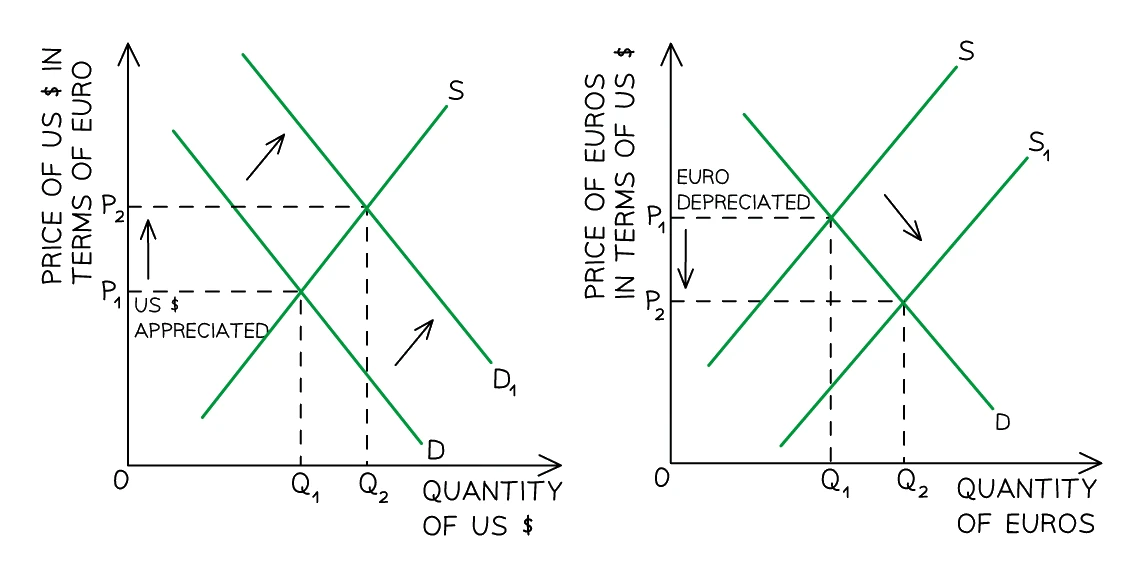
A floating exchange rate is determined by market forces: the demand for and the supply of the currency on the foreign exchange market. The government does not target a particular rate.
How the rate is set:
- Demand for the currency comes from foreigners who want to buy this country's exports, invest in it, or send money into it. To do any of these they must first buy the currency.
- Supply of the currency comes from domestic residents who want foreign currency, to pay for imports, to invest abroad, or to travel.
- The equilibrium exchange rate is the rate at which the demand for the currency equals the supply of it. If demand rises above supply, the rate is bid up; if supply exceeds demand, the rate falls, until the two are equal again.
An appreciation is a rise in the value of a floating currency caused by market forces. A depreciation is a fall in its value caused by market forces.
Examples of floating currencies include the US dollar, the UK pound, the euro and the Japanese yen.