4BI1
Human Impact on the Environment
Ecology and the Environment · 8 question types
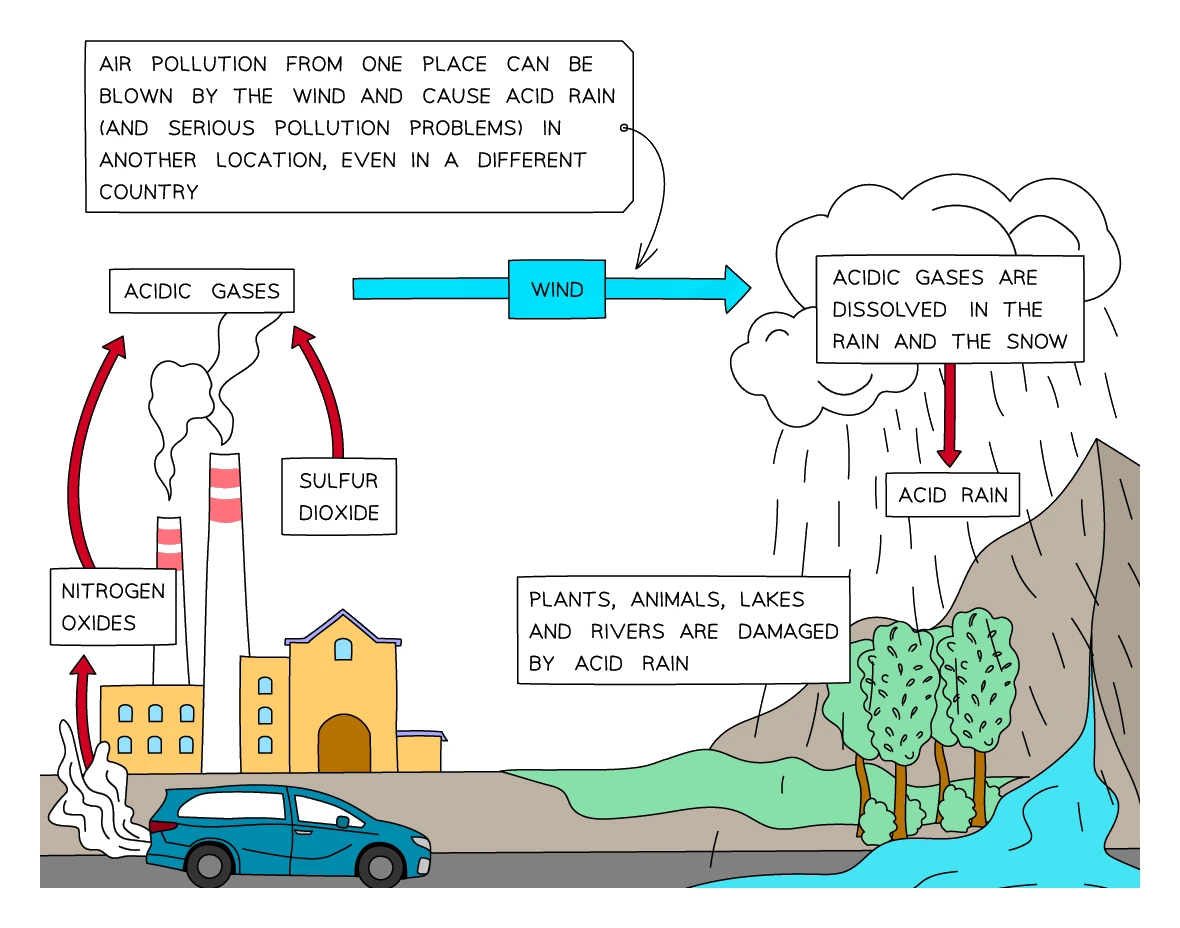
Acid rain is rain with a lower pH than normal (typically below pH 5). It is caused mainly by and released by burning fossil fuels.
How acid rain forms
- Power stations and vehicles release sulfur dioxide (SO₂) and nitrogen oxides (NOₓ) into the atmosphere.
- In the atmosphere, these gases react with water vapour in clouds.
- Sulfur dioxide reacts to form sulfuric acid (H₂SO₄). Nitrogen oxides react to form nitric acid (HNO₃).
- These dissolved acids fall back to earth in rain, snow, fog or dew. The result is acid precipitation (acid rain).
Effects on living things
On trees and other plants:
- Damages the waxy cuticle on leaves, making them more vulnerable to disease and to drying out
- Leaches important mineral ions (especially magnesium, calcium and potassium) out of the soil
- Releases toxic ions (especially aluminium) that were previously locked into the soil
- Result: trees grow more slowly, lose leaves, and eventually die. Vast areas of forest in Europe, North America and China have been damaged
On aquatic ecosystems (lakes and streams):
- Lowers the pH of the water
- Fish eggs cannot hatch below pH 5
- Adult fish struggle to breathe; many species cannot survive below pH 4.5
- Invertebrates (mayflies, snails) die off too
- Eventually the lake becomes a "dead zone" with almost no aquatic life
- Famous example: many lakes in Scandinavia and eastern Canada were left almost fishless in the 1970s and 80s
On buildings and statues:
- Sulfuric and nitric acid react with limestone, marble and concrete, dissolving them slowly
- Historic buildings (e.g. medieval cathedrals, statues) gradually lose their detail
What has been done
Modern regulation has helped. Most coal-fired power stations now have flue-gas desulfurisation units that remove SO₂ from exhaust before it reaches the atmosphere. Vehicle exhausts have catalytic converters that reduce NOₓ emissions. Switching to renewable energy (wind, solar, nuclear) removes the source entirely. Acid rain is much less of a problem in Europe than it was in 1980, but it remains a serious issue in fast-industrialising countries.