Price Elasticity of Demand (PED)
Allocation of Resources
Demand can be sorted into five categories based on |PED|. All five are named in the 2027-2029 syllabus (2.6.2), so you need to be able to interpret a PED value in each category and draw the matching demand curve. The two extremes are limiting cases rather than everyday examples, but they are examinable.
| Category | Value of |PED| | What it means | Typical example |
|---|---|---|---|
| Perfectly inelastic | 0 | Qd does not change at all when price changes | A life-saving heart transplant (a limiting case: demand is close to perfectly inelastic) |
| Relatively inelastic | 0 < |PED| < 1 | %ΔQd is smaller than %ΔP | Essential medicines, basic food, addictive products |
| Unitary (unit) elastic | |PED| = 1 | %ΔQd equals %ΔP | Knife-edge case; total revenue does not change |
| Relatively elastic | |PED| > 1 | %ΔQd is larger than %ΔP | Luxury goods, branded products with many substitutes |
| Perfectly elastic | ∞ | Any price rise wipes out demand entirely | One seller of an identical product in a highly competitive market (a limiting case) |
Each category can be drawn as a demand curve; the steeper the curve, the more inelastic demand is.
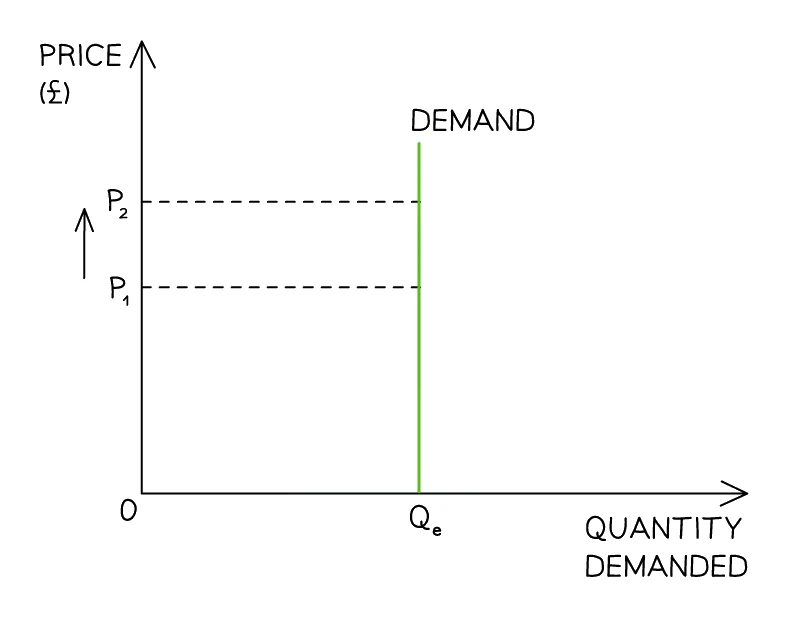
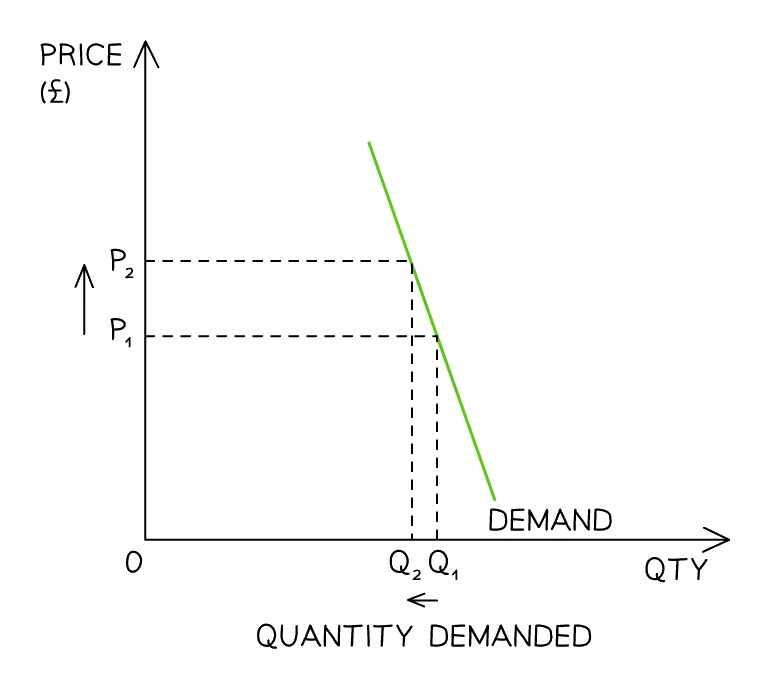
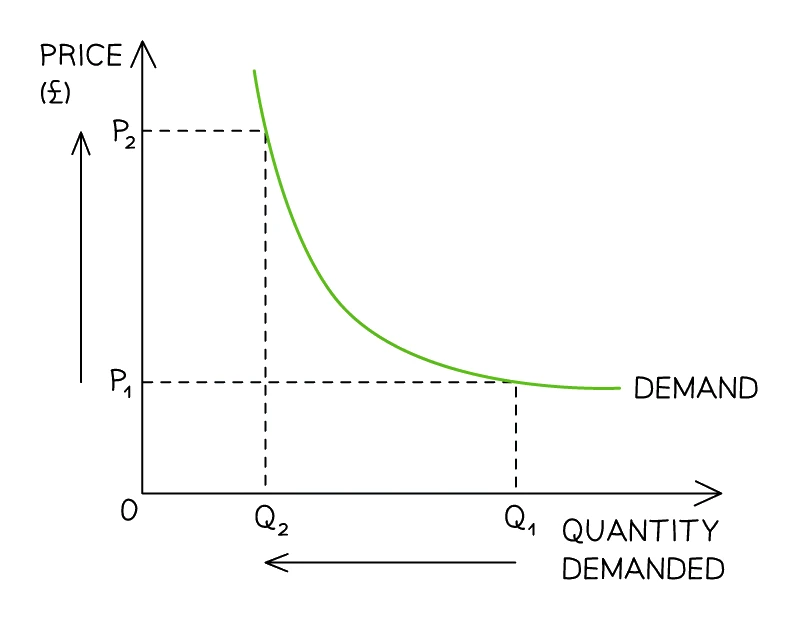
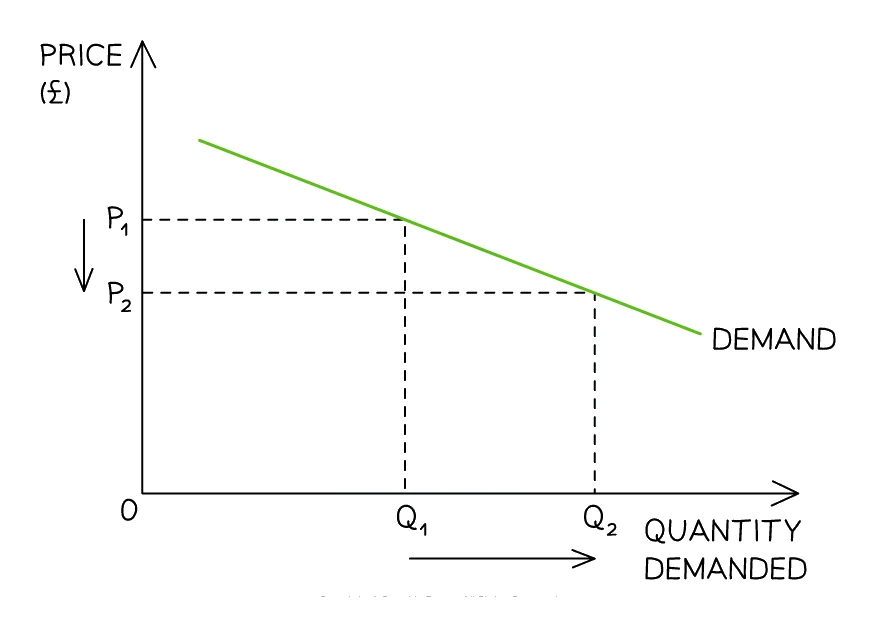
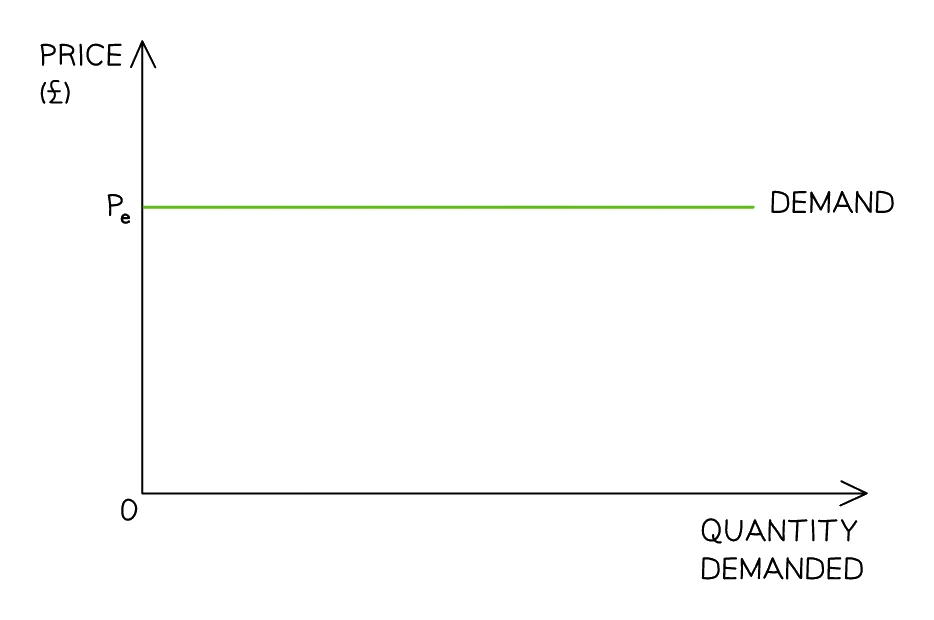
The full interpretation ladder, which is what a question means when it asks what a PED value tells you:
|PED| = 0: perfectly inelastic, drawn as a vertical demand curve.0 < |PED| < 1: inelastic, so quantity demanded responds less than proportionately to the price change.|PED| = 1: unitary elastic, so total revenue is unchanged when price changes.|PED| > 1: elastic, so quantity demanded responds more than proportionately.|PED| = ∞: perfectly elastic, drawn as a horizontal demand curve.
Most calculation questions land in the inelastic and elastic bands, so the quickest check is whether the value is below or above 1, but you are expected to recognise and use all five.
Exam tip
Interpreting a PED value
What comes up: a question gives a PED value (e.g. −2.0, −0.3, 1) and asks what it tells us about demand or revenue.
Write: (1) compare the absolute value to 1: if |PED| > 1 the percentage change in quantity demanded is larger than the percentage change in price, so demand is price-elastic; if |PED| < 1, the percentage change in quantity demanded is smaller, so demand is price-inelastic; if |PED| = 1 it is unitary elastic and total revenue is unchanged. (2) Connect to revenue: a firm with inelastic demand can raise price to increase total revenue; a firm with elastic demand would lose revenue by raising price.
Watch out: PED for a normal good is always negative (price and quantity move in opposite directions), but the elastic/inelastic classification is based on the absolute value — |PED| = 2 is more elastic than |PED| = 0.5, regardless of the minus sign. Do not write "PED is −0.5 so it is elastic because the value is small."