Macroeconomic Aims
Government and the Macroeconomy · 4 question types
1. Economic growth
Economic growth is a sustained increase in (the total output of the economy, adjusted for inflation) over time.
Two key features:
- "Real" GDP, not nominal. Nominal GDP can rise just because prices are higher (i.e. inflation). Real GDP measures genuine increases in output.
- Sustained, not a one-off jump. A single year of fast growth followed by a recession is not really "economic growth".
Most developed economies aim for around 2–3% per year. That rate is fast enough to raise incomes but slow enough not to trigger excess demand-pull inflation.
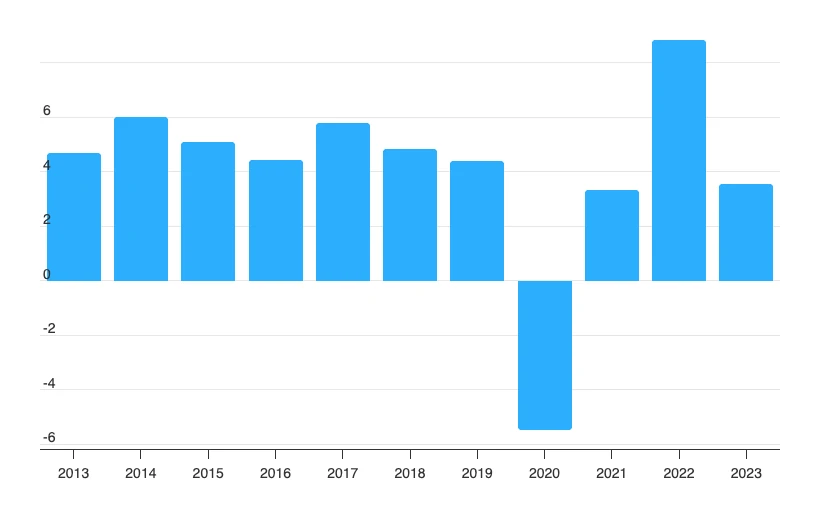
A definition that just says "increase in GDP" loses the mark. Examiners want real GDP. Without "real", the answer could be describing inflation rather than growth.
How economic growth is measured (Explain, 2 marks)
What comes up: "Explain how economic growth is measured."
Write (two marks): (1) it is measured using real GDP (not nominal GDP); (2) specifically the change in a country's total output / national income / expenditure in real terms over time.
Watch out: the mark scheme does not accept GDP per head as a substitute for GDP here. GDP per head measures living standards, not economic growth itself. You must say "real GDP" or "real national output/income" to secure both marks.
2. Low (stable) inflation
Inflation is a sustained rise in the general price level in the economy. The aim of "low inflation" means keeping the inflation rate low and predictable.
Most central banks target around 2% , measured by the Consumer Price Index (CPI) (covered in topic 13).
A low and stable rate matters for two reasons.
- Predictable inflation lets households and firms plan ahead. They know roughly what their wages, prices and savings will be worth in a year's time.
- Very low inflation (close to 0%) leaves no safety margin above deflation (a sustained fall in the general price level), so governments set the criterion as a low positive rate rather than zero.
The aim is low and stable, not zero. Zero or negative inflation is not the target.
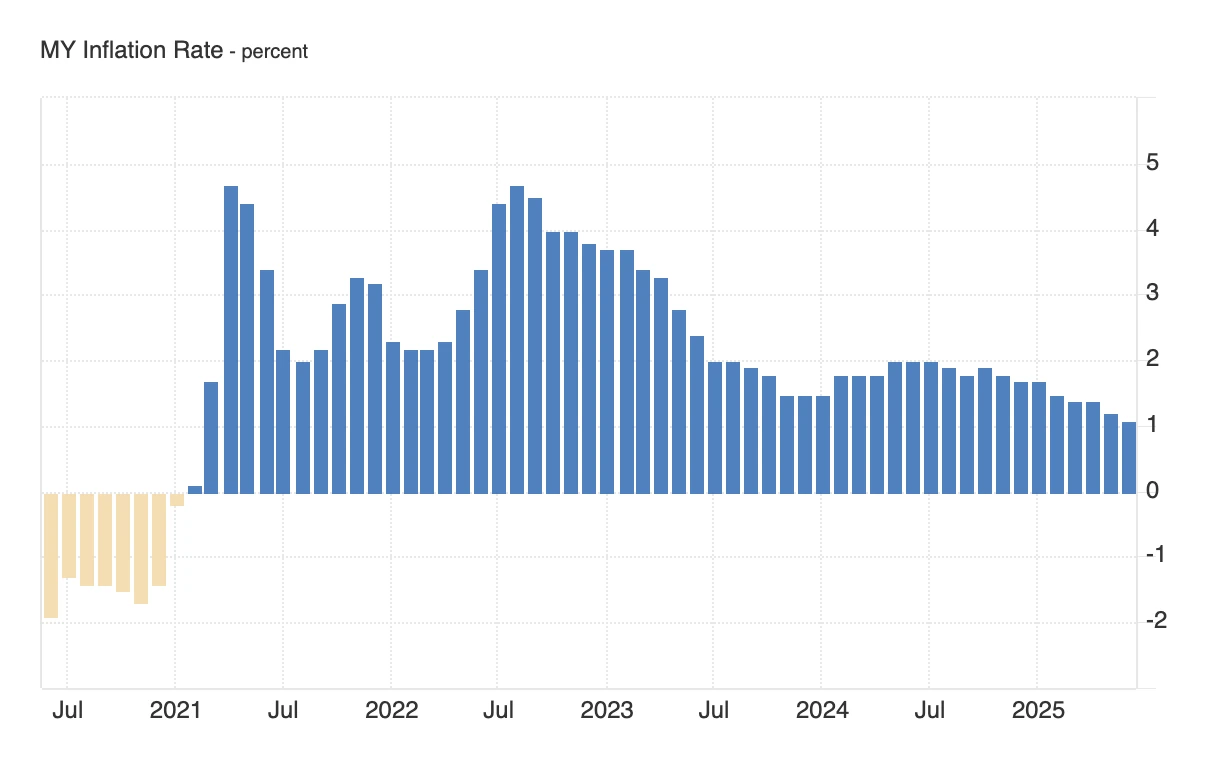
Why governments aim for stable prices (Analyse, 6 marks)
What comes up: "Analyse the reasons why governments aim for stable prices."
Write: aim for around six distinct mark-scoring points, each pairing a reason with its consequence. Credited chains include: (1) stable prices give consumers confidence to spend because they know goods will remain affordable; (2) stable prices attract investment and MNCs because firms can plan future costs and revenues with certainty; (3) avoiding high inflation keeps export prices internationally competitive, supporting the balance of payments; (4) avoiding inflation prevents a random redistribution of income where lenders and savers lose out while borrowers gain; (5) avoiding high inflation protects the real value of wages and fixed incomes, so the purchasing power and living standards of consumers and workers are not eroded; (6) low and stable prices reduce menu costs (the expense firms incur repricing products) and shoe-leather costs (the time and money spent seeking the best prices).
Watch out: the question asks why governments aim for stable prices, so the answer must explain the consequences of instability (inflation) or the benefits of stability. Listing only a definition of inflation earns no marks.
3. Low unemployment / full employment
Unemployment means people who are willing and able to work but cannot find a job. The aim is to keep unemployment as low as possible while accepting that some unemployment is unavoidable.
does not mean 0% unemployment. It means everyone willing and able to work at the going wage rate has a job, apart from some unavoidable frictional (people between jobs), which in practice leaves a measured rate of around 3–5% in a developed economy.
Different countries have different effective targets:
- A large, slowly-growing economy may consider 5–6% unemployment normal.
- A small, dynamic economy like Singapore may target under 2%.
Within the headline figure, governments often look at sub-groups as well: youth unemployment, long-term unemployment, regional unemployment, and unemployment by ethnicity or gender. A 5% national rate can hide a 20% youth rate, which is a separate policy problem.
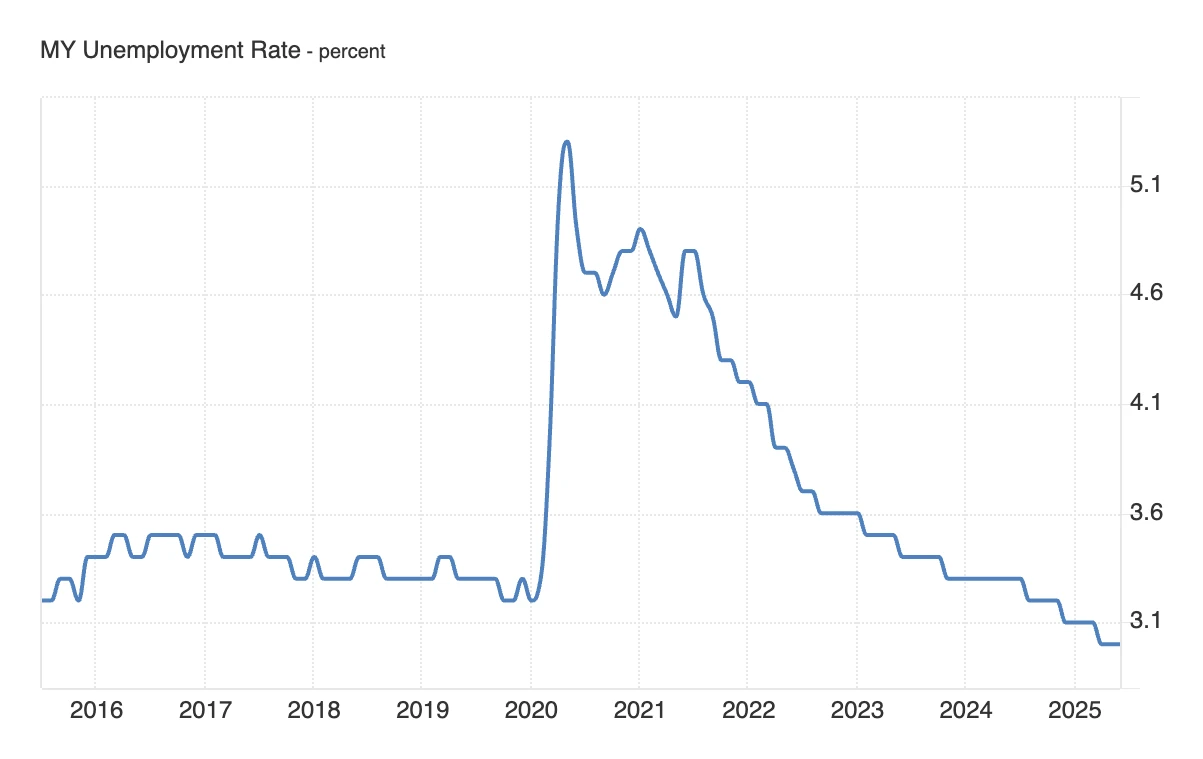
Unemployment and full employment
Defining unemployment or full employment comes up (2 marks), so you need to know: unemployment = people willing and able to work but without a job; full employment does not mean 0% — some frictional unemployment always remains. "Everyone has a job" / "unemployment = 0%" is wrong.
4. Balance-of-payments equilibrium
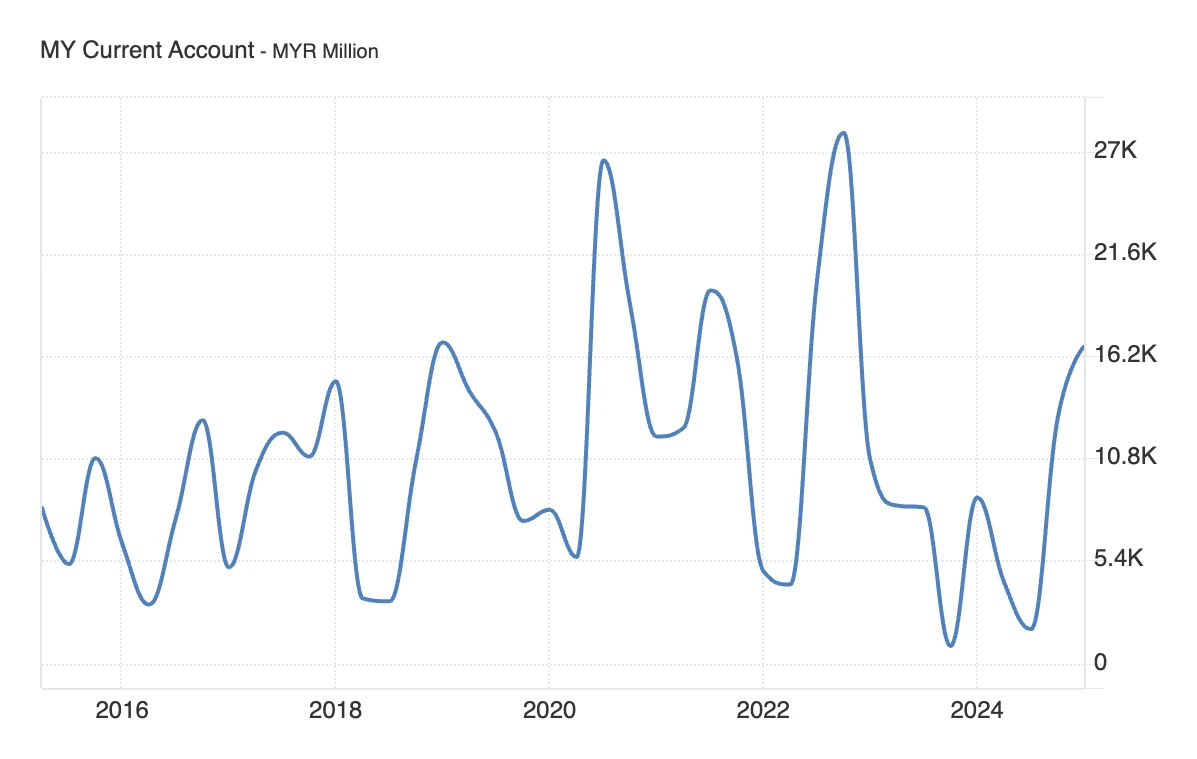
The balance of payments is a country's record of all financial transactions with other countries. The most-watched part is the current account, which mainly tracks exports and imports of goods and services. The aim of "BoP equilibrium" is to avoid a large, persistent current-account deficit or surplus.
A current-account deficit means imports exceed exports; a surplus means exports exceed imports. Either can become a problem if it gets too large and runs on too long.
- A persistent deficit means the country is consuming more than it produces and must finance the gap by borrowing from abroad or running down foreign-currency reserves. Eventually the currency may depreciate sharply or the country may face a balance-of-payments crisis.
- A persistent surplus means the country is producing more than it consumes; it may face foreign exchange-rate pressure and accusations of unfair trade from partners. (Surpluses are usually less worrying than deficits.)
The target is rough balance over the medium term: roughly Exports ≈ Imports for the current account.
5. Equitable distribution of income
Equitable distribution means a fair (less unequal) spread of income across the population, achieved largely through taxation, welfare and public-service spending.
"Equitable" does not mean "equal". A market economy will always produce some income inequality (skilled workers earn more than unskilled; capital owners earn more than wage-only workers). The aim is to reduce the gap between richest and poorest so that:
- Fewer people live in poverty.
- Access to merit goods (education, healthcare) is available to all, not just those who can pay.
- Social cohesion is maintained.
Common policy tools: progressive income tax (higher earners pay a higher rate), welfare payments (unemployment benefit, child benefit, pensions), state provision of merit goods (free schooling and healthcare).
6. Environmental sustainability
Environmental sustainability means meeting present needs without damaging the environment in ways that reduce the ability of future generations to meet their own needs. The aim is to limit pollution and the depletion of finite resources as the economy grows.
Rapid output growth often comes with environmental costs: air and water pollution, deforestation, carbon emissions and the using-up of non-renewable resources. A government that cares only about fast growth may store up long-term damage, so sustainability has become an explicit aim in its own right.
Common policy tools: taxes on pollution (for example a carbon tax), subsidies for clean technology and renewable energy, regulation (emissions limits, bans on harmful practices) and investment in public transport to cut emissions.