Economic Growth & Recession
Government and the Macroeconomy · 2 question types
A recession is a period of falling , usually defined as two consecutive quarters (six months) of negative growth. It is the opposite of economic growth.
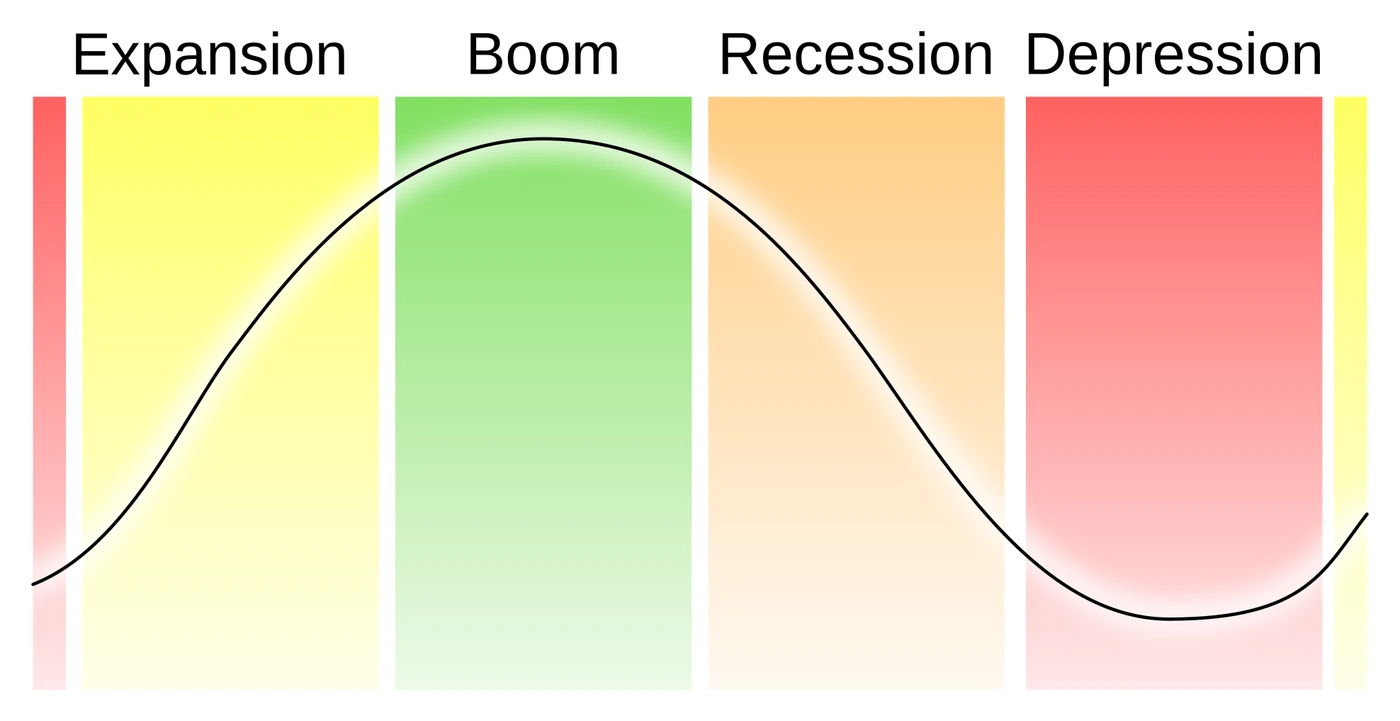
Causes of recession
Mirror the causes of growth. A recession can be caused by:
- A fall in total (aggregate) demand, when consumers and firms spend less (often because confidence has dropped, interest rates have risen, or a global downturn has cut export demand). Firms sell less, cut output and lay off workers.
- A fall in the quantity of resources, for example a shrinking workforce or the loss of capital and infrastructure through war or disaster.
- A fall in the quality of resources, for example if a lack of investment in training or technology leaves workers and machinery less productive.
Consequences of recession
A recession harms several groups at once:
- Consumers face higher unemployment, lower incomes and falling living standards; some are pushed into poverty.
- Workers lose jobs as firms cut back, and those still in work may see wages frozen or cut.
- Producers and firms sell less, earn lower profits, and some shut down; many cut investment because confidence is low.
- The government collects less tax revenue while spending more on unemployment benefits, which pushes the budget toward deficit and may force cuts elsewhere.
In a deep recession these effects feed on each other: lower demand causes job losses, the newly unemployed spend less, demand falls further, and more jobs are lost. This downward spiral is what makes a serious recession hard to escape without policy action.
Explain two disadvantages of a recession (4 marks)
What comes up: a 4-mark question asking for two consequences (disadvantages) of a recession, each identified and explained.
Write: chain two of the following, each as identification (1) plus explanation (1). (1) Lower output / GDP (1) which lowers living standards and raises poverty (1). (2) Higher unemployment (1) which raises the cost of unemployment benefits for the government (1). (3) Lower investment (1) caused by a fall in business confidence (1). (4) Lower tax revenue (1) which can push the government into a budget deficit (1).
Watch out: make sure each point goes two steps. "Higher unemployment" on its own is one mark; you need the consequence (lost benefits, lower incomes) for the second.