Digital Currency
Internet and Its Uses
A blockchain is a digital ledger of every transaction in a currency, organised as a chain of blocks linked by cryptographic hashes, with copies stored across many computers in a decentralised network.
Three big ideas in that definition:
- A ledger: a record of who owns what and who sent what to whom.
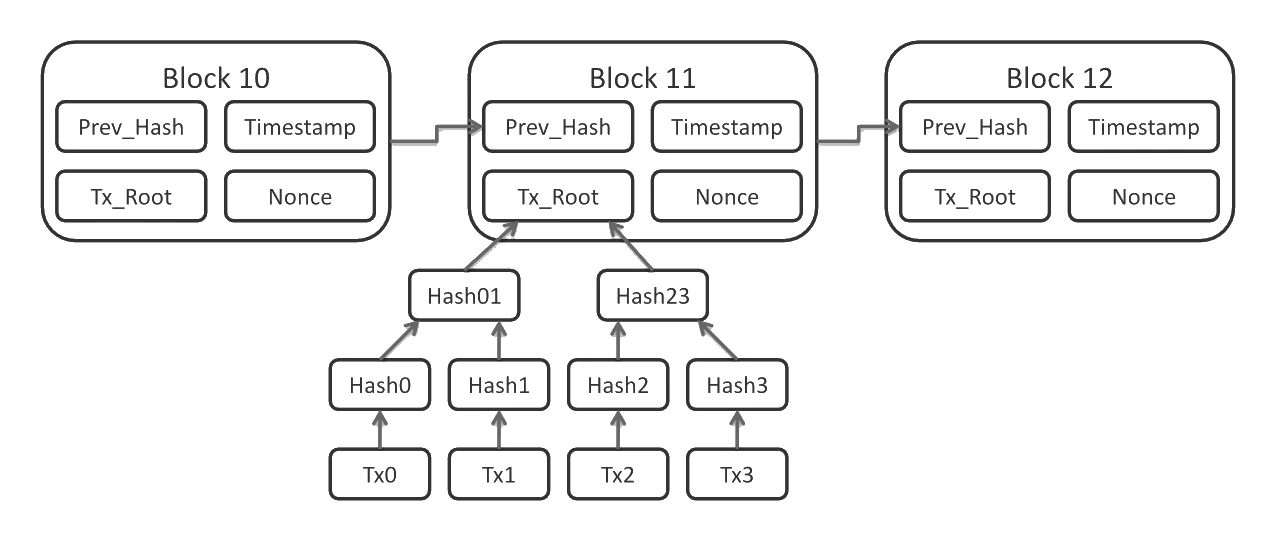
- A chain of blocks: transactions are grouped into "blocks" and each block links to the previous one through a hash, so the whole history is connected in order.
- Distributed across many computers: no single computer holds "the" blockchain; many computers (nodes) keep copies and agree on the same version.
What is inside a block?
Each block typically contains five things:
| Field | What it holds |
|---|---|
| Block number | The position of this block in the chain (the first block is block 0, the genesis block) |
| Transactions | A list of new transactions being recorded in this block (who sent how much to whom, when) |
| Timestamp | The exact time the block was added |
| Hash of the previous block | The cryptographic fingerprint of the block before this one, linking the chain backwards in time |
| This block's own hash | A cryptographic fingerprint summarising all the data in this block |
What a hash is
A hash is the fixed-length cryptographic fingerprint of some data, produced by a one-way function. Even a tiny change in the data produces a completely different hash.
Two important properties of a hash:
- Deterministic: the same input always produces the same hash.
- Sensitive to change: changing even one character in the input produces an utterly different output. This is what makes hashes useful for spotting tampering.
How blocks form a chain
Each block stores the of the previous block in its own header. This is the "link" in the chain:
Block 0          Block 1          Block 2          Block 3
[ hash: H0 ]     [ hash: H1 ]     [ hash: H2 ]     [ hash: H3 ]
                 [ prev: H0 ]     [ prev: H1 ]     [ prev: H2 ]
[ data ]         [ data ]         [ data ]         [ data ]
The first block (block 0) is special and is called the genesis block; it has no previous block, so its prev field is zero or empty.
When a new block is added, the network calculates the hash of the latest block and stores it as the new block's prev. The chain grows one block at a time.
Common exam question
How blockchain tracks digital currency transactions
Question: Name the process that tracks digital currency through a digital ledger, fill the gaps in a description of it, or draw and annotate a diagram of a payment (1–4 marks).
Asked in 3 of the 17 papers, as a one-mark name, a four-mark gap-fill and a four-mark diagram; the specimen paper also asks for a two-mark description. The name is blockchain: a digital ledger that tracks each transaction as a new record with a time-stamp, linked to the record before it. Records already in the chain cannot be altered, only new ones added, so every transaction can be traced. The gap-fill credited "blockchains", "time-stamp" and "traced"; "datachains" and "transaction-chains" were near-misses, so read each term back into its sentence.
The diagram earns one mark for each correct stage you label: the customer's device encrypts the payment data and sends it to a digital ledger; the payment is recorded there with a digital signature and a time-stamp; the transaction is stored in a block that carries its own hash; and the full block is added to the blockchain on every device.