BiologyExam code: 4BI1
Selective Breeding
Use of Biological Resources
Common goals for animal breeding
| Goal | Examples |
|---|---|
| Higher meat yield | Cattle, sheep, pigs, chickens bred for fast growth and large body size |
| Higher milk yield | Dairy cows (Holstein-Friesians produce 30+ litres of milk per day) |
| Higher egg production | Laying hens (produce around 300 eggs per year, vs ~50 for wild birds) |
| Quality of wool | Sheep (Merino wool is fine and soft thanks to centuries of selection) |
| Quality of meat | Marbled beef (Wagyu cattle), tender lamb |
| Speed | Racehorses (Thoroughbreds) |
| Temperament | Domestic dogs (gentle, trainable) |
| Appearance | Show dogs, cats, horses, pigeons |
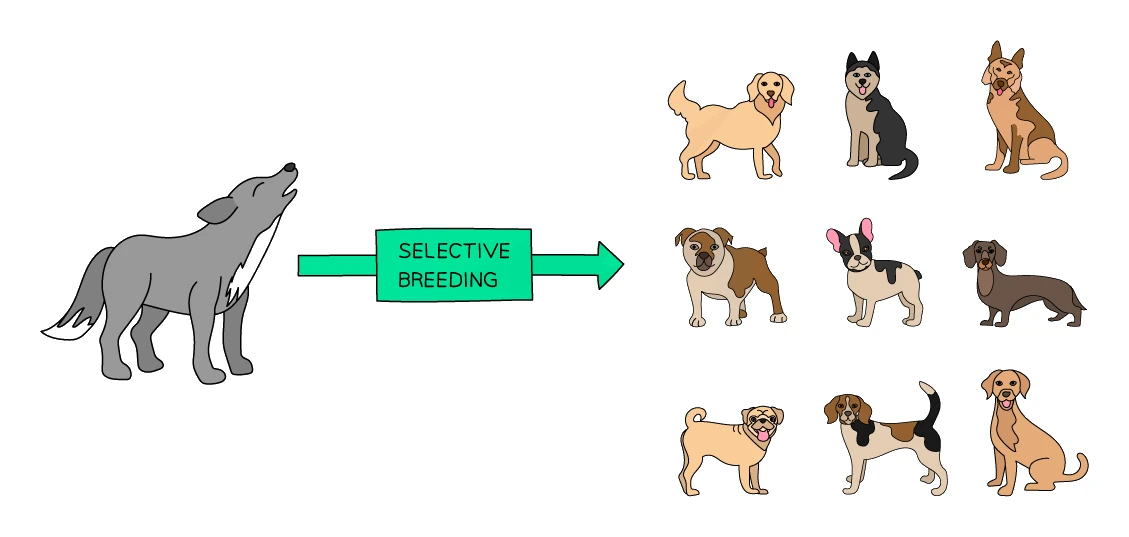
Domestic dogs: a striking example
Every breed of domestic dog, from a Chihuahua to a Great Dane, is descended from grey wolves about 15 000 years ago. Yet they have been bred into wildly different shapes, sizes, coat types and behaviours:
- Sheep dogs (Border Collies) bred for herding intelligence and obedience
- Greyhounds and whippets bred for speed (long legs, deep chest, low body fat)
- Retrievers bred for soft mouth (carrying birds without damaging them) and obedience
- Bulldogs bred for short snouts and stocky build (originally for bull-baiting)
- Toy (Chihuahua, Pomeranian) bred small for companion animals
All breeds can still interbreed and produce fertile offspring, so they are still one species: Canis familiaris.
Fish farming and selective breeding
Farmed fish (salmon, trout, tilapia, carp) are selectively bred too, for:
- Fast growth rate
- Disease resistance
- Tolerance to crowding
- Better feed conversion
The use of selective breeding alongside controlled water quality, feeding and disease control allows fish farms to produce far more fish per cubic metre than wild populations could ever sustain. Fish farming is covered in more detail in topic 16 (Human Impact on the Environment).