4BI1
Food Production
Use of Biological Resources · 3 question types
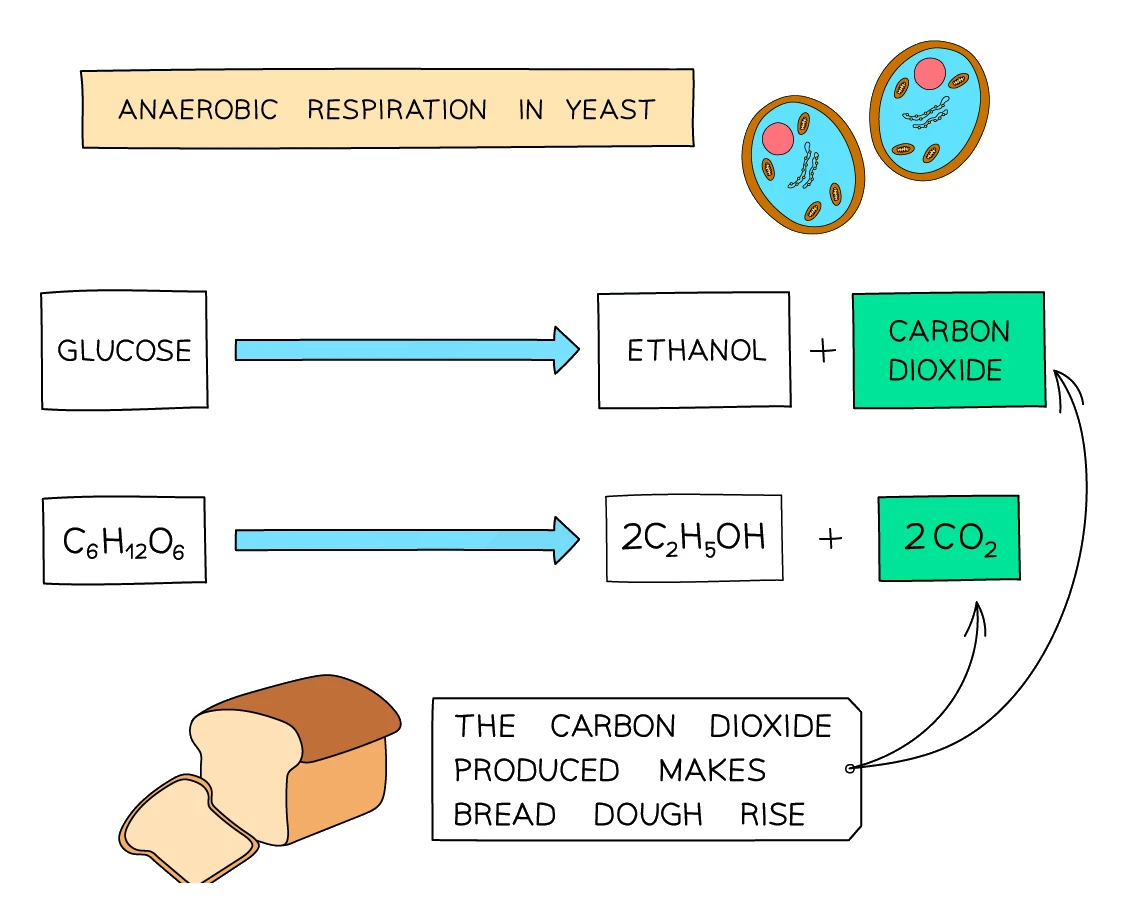
Yeast is a single-celled fungus. In bread-making it is mixed with flour, water and sugar to form a dough, and it respires the sugars.
- Yeast carries out anaerobic respiration (fermentation) in the dough, where oxygen soon runs low:
glucose → ethanol + carbon dioxide (+ energy)
- The carbon dioxide produced is trapped as bubbles in the stretchy dough, making it rise so the baked bread is light and full of holes.
- The small amount of ethanol (and any remaining gas) is driven off during baking in the hot oven, so the finished bread contains essentially no alcohol.
- Warmth speeds the yeast's respiration, which is why dough is left to rise in a warm place; too hot, though, and the yeast's enzymes denature and it stops working.
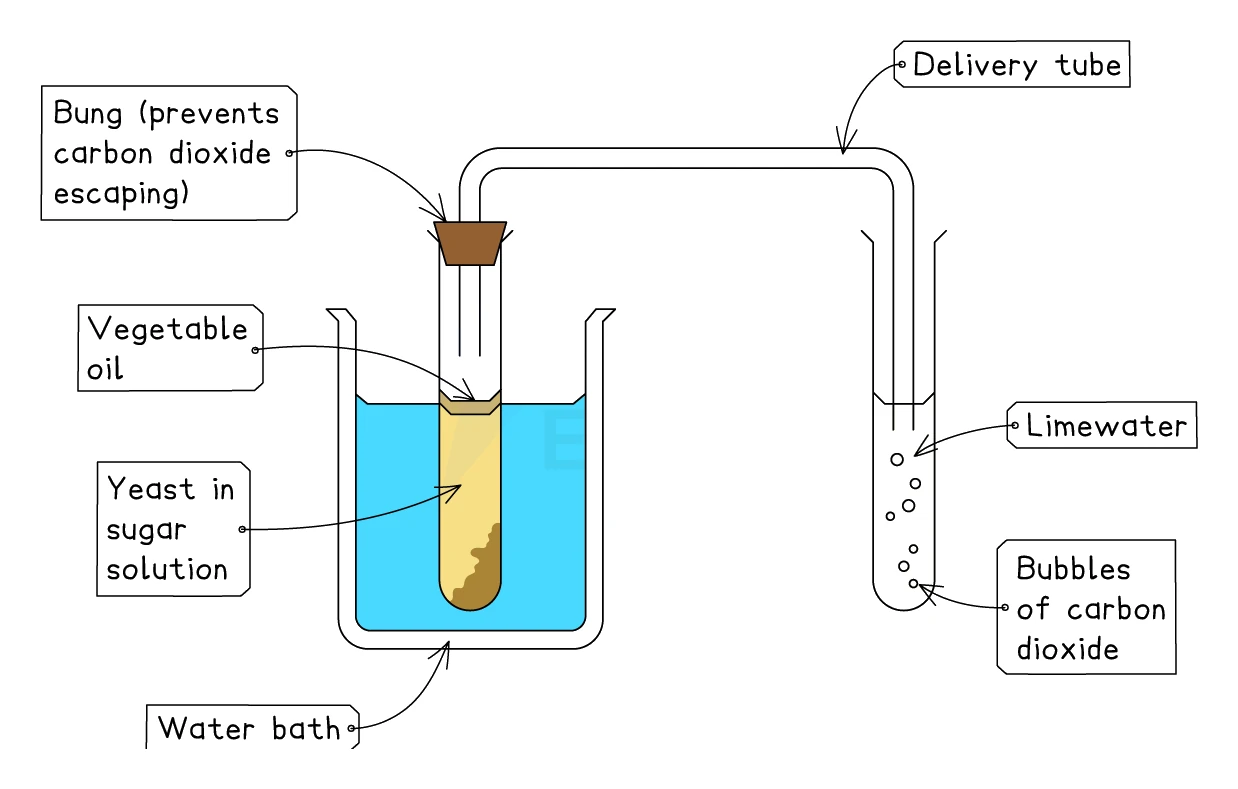
Core practical: anaerobic respiration in yeast under different conditions
The rate of anaerobic respiration in yeast can be measured by how fast it releases carbon dioxide.
- Mix with a glucose solution that has been boiled and cooled (boiling drives off dissolved oxygen so respiration is anaerobic).
- Put the mixture in a tube and seal it; let the carbon dioxide it makes pass through a delivery tube into a counting setup. The CO₂ can be counted as bubbles per minute through limewater, or its effect followed using hydrogencarbonate indicator (which turns from orange/red towards yellow as CO₂ builds up).
- A layer of oil on top of the yeast–glucose mixture keeps air out and confirms the respiration is anaerobic.
- To test the effect of temperature, run identical tubes in water baths at a range of temperatures (for example 10, 20, 30, 40 and 50 °C) and count the bubbles produced per minute in each.
- Keep everything else the same (same volume and concentration of yeast and glucose, same time), and use a control with no yeast to show the CO₂ comes from the yeast.
Result: the rate rises with temperature up to an optimum (around 35–40 °C) as the yeast's enzymes work faster, then falls at higher temperatures as those enzymes denature. The same method can compare different sugars or different glucose concentrations.