Characteristics of Living Organisms
The Nature and Variety of Living Organisms · 5 question types
What a pathogen is
A pathogen is an organism that causes disease in another organism (the host)
- Not every microbe is a pathogen; most bacteria and fungi are harmless or even helpful. Only the small subset that cause disease are pathogens
- Pathogens can be bacteria, fungi or protoctists, and also include viruses:
- Bacteria, e.g. Pneumococcus
- Fungi, e.g. some Mucor species, athlete's foot
- Protoctists, e.g. Plasmodium falciparum (malaria)
- Viruses: TMV, HIV, influenza, coronaviruses
- Plants and most animals are not pathogens (with rare exceptions like parasitic worms in animals)
Pathogenic bacteria
- Bacterial pathogens cause disease either by directly damaging host cells or by producing toxins that poison the body
- Pneumococcus is a spherical bacterium that infects the lungs and causes pneumonia. The air sacs (alveoli) fill with fluid, making gas exchange difficult; the patient develops a heavy cough, runs a high temperature, and struggles to breathe
- Pathogenic bacteria can be killed by antibiotics (drugs that target features of bacterial cells, such as their cell walls or ribosomes, without harming the human cells of the patient)
Pathogenic fungi
- The vast majority of fungal diseases attack plants rather than animals. Wheat rust, potato blight and a long list of other crop diseases are caused by fungi
- Mucor: some species of this bread-mould fungus are pathogenic, though most are harmless decomposers
- In humans, athlete's foot and ringworm are fungal infections of the skin
Pathogenic protoctists
- Plasmodium falciparum is a protoctist that causes the most severe form of malaria in humans
- It is spread between humans by the bite of an infected female Anopheles mosquito (the mosquito is the "vector")
- Once inside the body, Plasmodium attacks red blood cells and the liver
- Symptoms: cycles of fever, chills, sweating and fatigue, often life-threatening if not treated
Viruses
- Viruses are not living organisms. They fail seven of the eight MRS C GREN criteria. They can reproduce, but only by hijacking a host cell's machinery; they cannot do it on their own
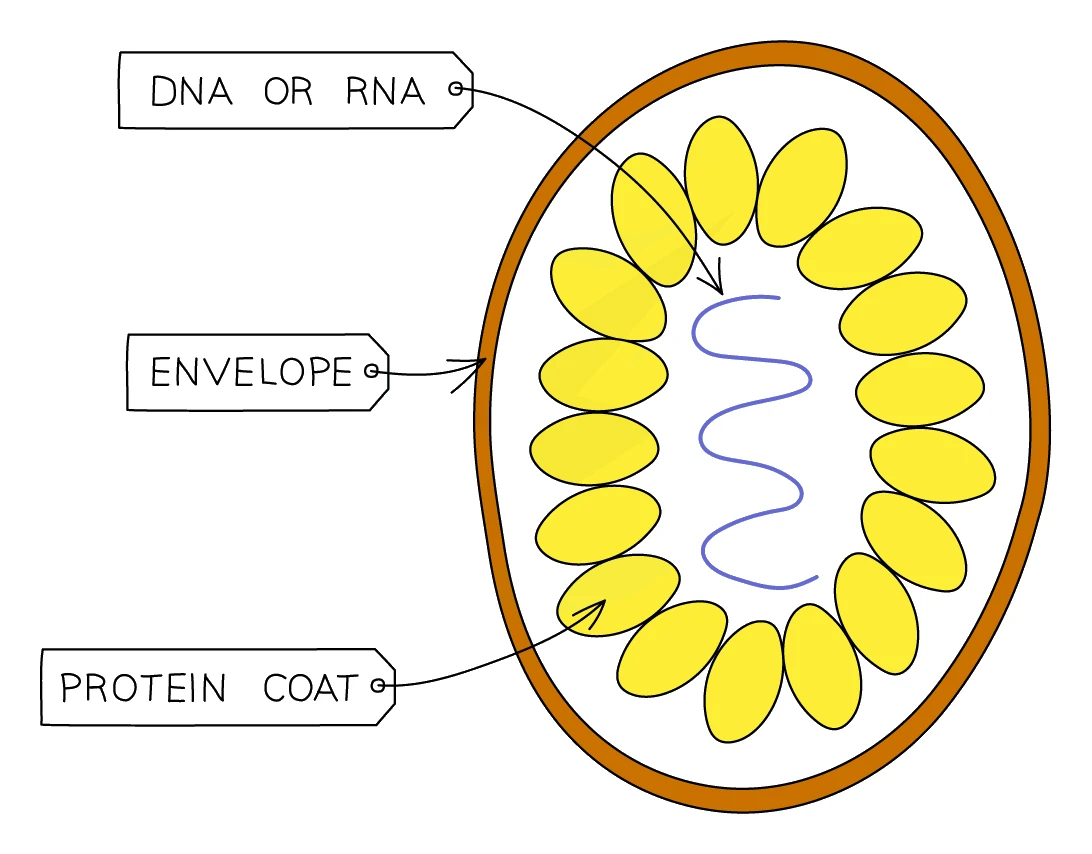
- All viruses share these features:
- They are tiny, much smaller than bacteria (typically 20–300 nm)
- No cellular structure: no cytoplasm, no nucleus, no organelles
- A protein coat (the ) surrounding a core of genetic material
- The genetic material is either DNA or RNA, never both
- Obligate parasites: they can only reproduce inside a living host cell
- Viruses can attack every kind of living thing, from animals and plants through to fungi, protoctists and even bacteria (bacteria-attacking viruses are called bacteriophages)
Why viruses are not considered living organisms
What comes up: a 1-mark question asking you to give one reason why viruses are not classed as living organisms.
Write: any one of the following is credited: viruses do not grow; do not respire; are not sensitive to their surroundings; do not move; do not excrete; cannot reproduce independently (they require a host cell's machinery to replicate). Each of these is a life process that viruses cannot perform on their own.
Watch out: the mark scheme ignores answers that say only "they need another living organism to survive" without naming a specific missing life process. Name the missing process explicitly (e.g. "viruses cannot reproduce independently").
Key viral diseases to know
Tobacco mosaic virus (TMV): a plant virus
- Was the first virus ever isolated (by scientists in the 1930s)
- Infects around 150 species of plants, including tobacco, tomato and cucumber
- Symptom: a distinctive mosaic-like pattern of pale and dark patches on the leaves. The virus damages the chloroplasts, so the leaves cannot photosynthesise properly
- The plant grows poorly and crop yields fall
- The virus can survive in soil for around 50 years, making it very hard to eliminate
- There is no treatment. Control relies on good field hygiene and on growing TMV-resistant strains of crops
Human Immunodeficiency Virus (HIV): leads to AIDS
- HIV attacks white blood cells of the immune system. After many years (often a decade or more) the immune system is so weakened that the patient cannot fight off other infections. This late stage is called AIDS (Acquired Immune Deficiency Syndrome)
- Routes of HIV transmission:
- Unprotected sexual contact with an infected partner
- Exchange of bodily fluids carrying the virus, particularly blood (for example when drug users share needles or when contaminated blood is given in a transfusion)
- Mother to baby: across the placenta during pregnancy, during birth, or via breast milk during feeding
- There is no cure for HIV, but antiretroviral drugs taken early in the infection can hold the virus in check and prevent the progression to AIDS
- Prevention: condom use, sterile needles, screening of donated blood, antiretroviral treatment of HIV-positive pregnant mothers
Influenza virus: causes flu
- Infects cells lining the airways of the respiratory system
- Symptoms: high fever, body aches, fatigue, coughing, often lasting one to two weeks
- Highly infectious, spread through tiny droplets coughed and sneezed into the air, or by touching contaminated surfaces
- The virus mutates rapidly, which is why a fresh flu vaccine has to be developed every year