1. Lines and angles
Describing lines
- A line segment is the part of a line between two named points, so the segment from A to B is written AB
- Two lines are parallel when they run in the same direction and never meet, and arrows on a diagram mark them as such
- Two lines are perpendicular when they meet at a right angle, shown by a small square in the corner
- Equal lengths are marked with matching dashes: one dash for one pair, two dashes for a different pair
- Never judge a diagram by eye, since most are printed "NOT TO SCALE" and the markings carry the information
- A bisector of an angle cuts it into two equal parts
Naming angles by size
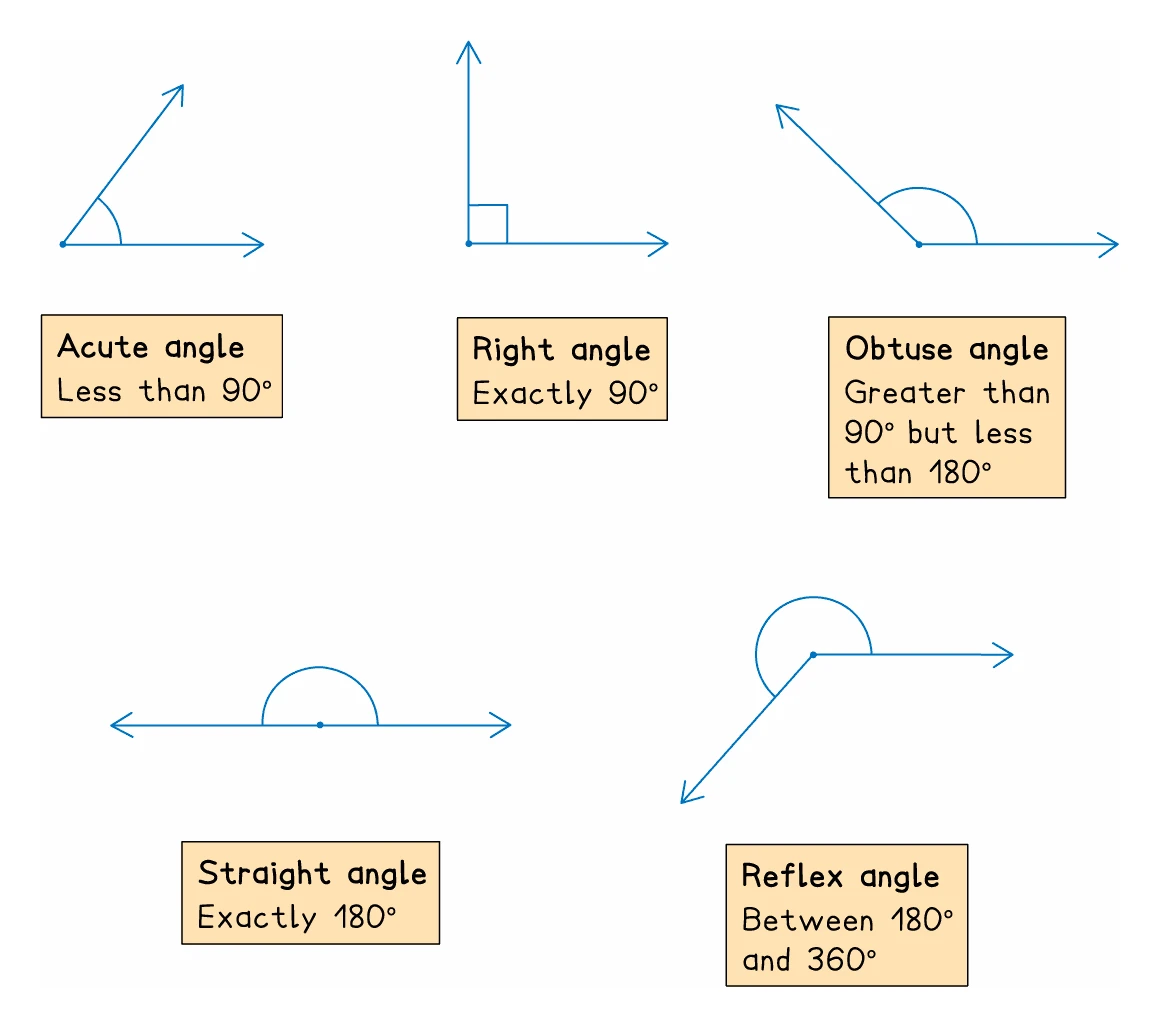
| Name | Size |
|---|---|
| Acute | less than 90° |
| Right angle | exactly 90° |
| Obtuse | between 90° and 180° |
| Straight angle | exactly 180° |
| Reflex | between 180° and 360° |
- Angles on a straight line add to 180°, and angles meeting at a point add to 360°
- Two angles adding to 180° are supplementary, and two adding to 90° are complementary
- Interior angles are inside a shape and exterior angles lie between one side and the extension of the next
- Three-letter notation names an angle by the point at its vertex in the middle, so angle ABC has its vertex at B
2. Triangles and quadrilaterals
Types of triangle
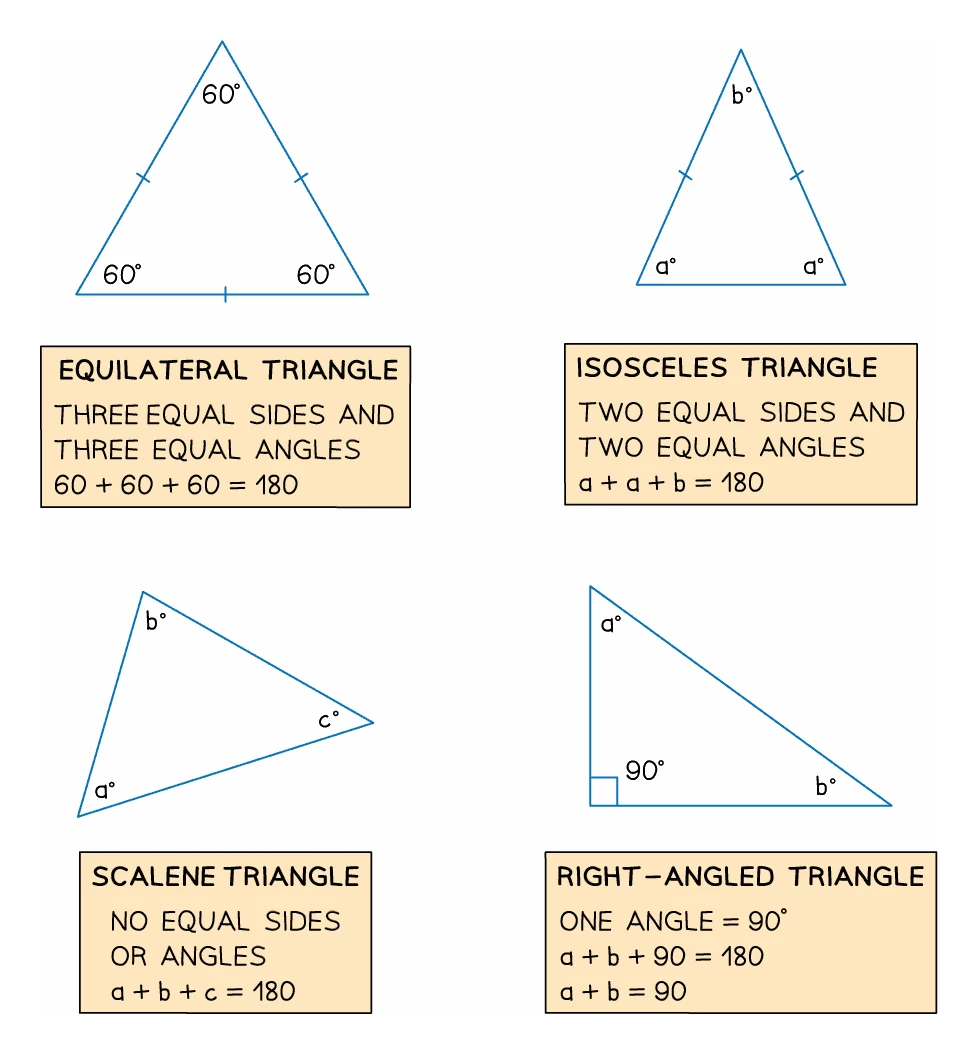
- Equilateral: three equal sides and three angles of 60°, with three lines of symmetry
- Isosceles: two equal sides and the two angles opposite them equal, with one line of symmetry
- Scalene: all three sides different and all three angles different, with no line of symmetry
- Right-angled: contains one angle of 90°, and it may also be isosceles or scalene
- A question giving the sides as equal expects the name, so mark equal sides on the diagram before deciding
The six special quadrilaterals
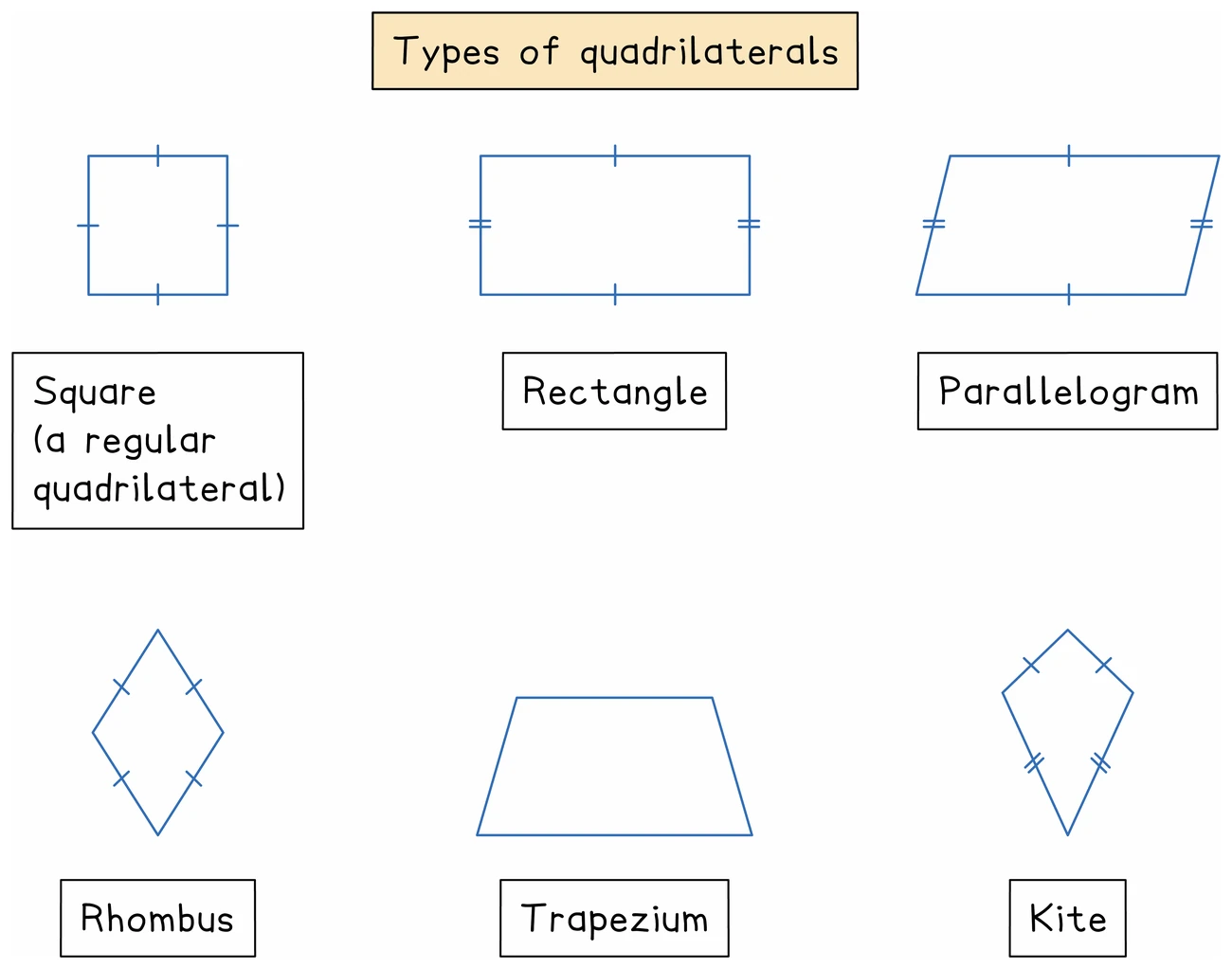
| Shape | Sides | Angles | Diagonals | Symmetry |
|---|---|---|---|---|
| Square | 4 equal, 2 pairs parallel | all 90° | bisect each other, equal, perpendicular | 4 lines, order 4 |
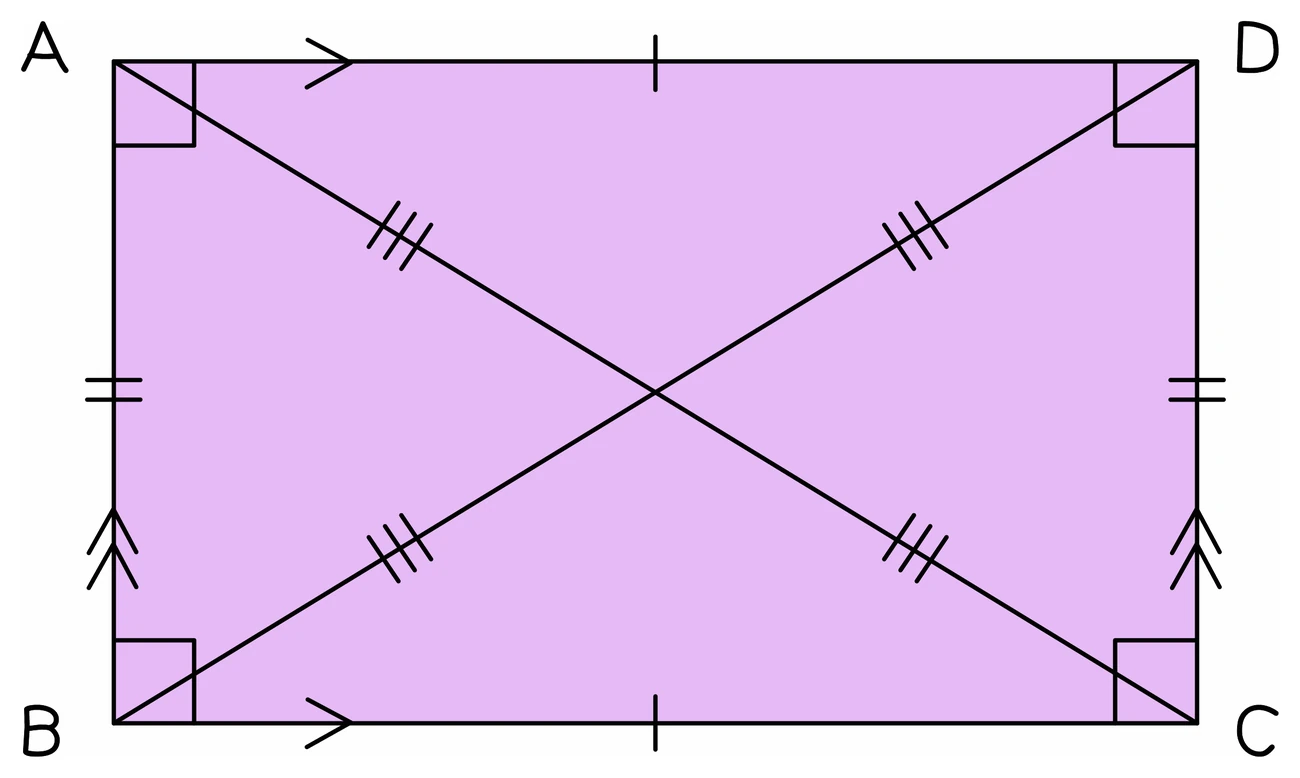
| Rectangle | 2 pairs equal and parallel | all 90° | bisect each other, equal | 2 lines, order 2 |
| Rhombus | 4 equal, 2 pairs parallel | opposite angles equal | bisect each other, perpendicular | 2 lines, order 2 |
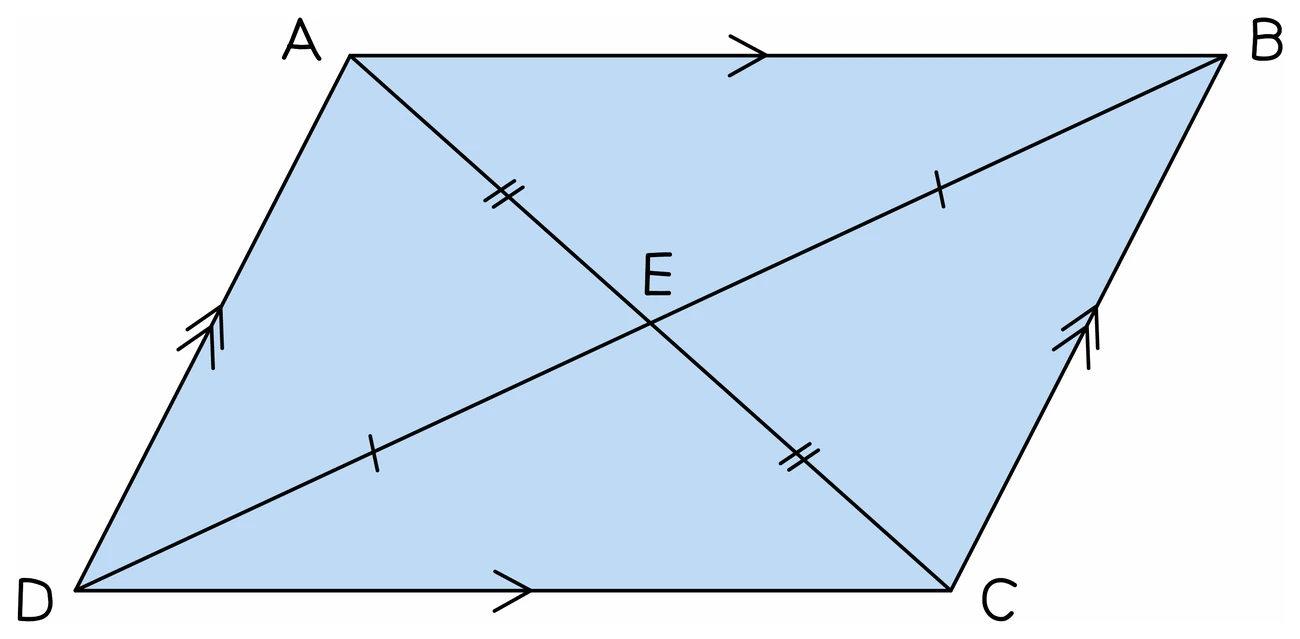
| Parallelogram | 2 pairs equal and parallel | opposite angles equal | bisect each other | no lines, order 2 |
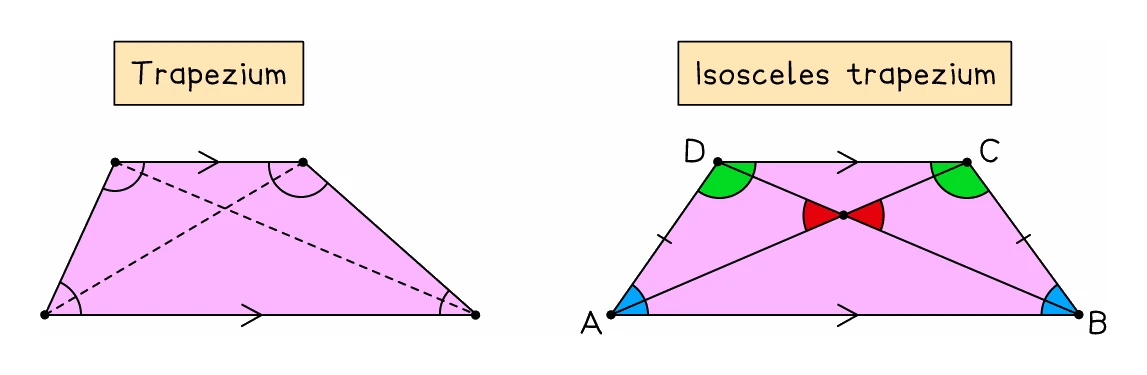
| Trapezium | exactly one pair parallel | two pairs adding to 180° | do not bisect | none, order 1 |
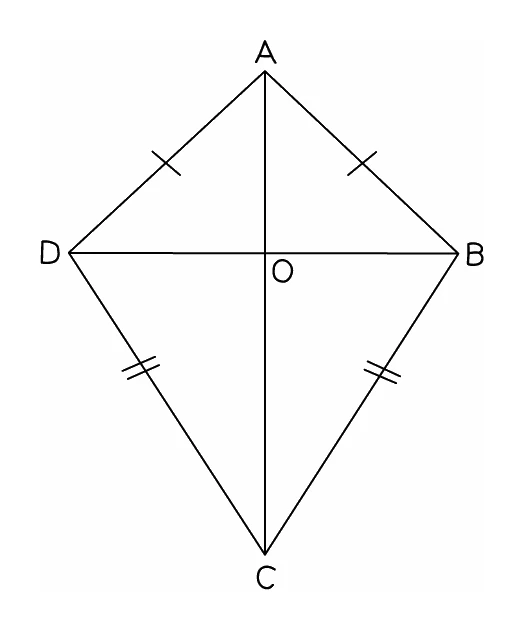
| Kite | 2 pairs of equal adjacent sides | one pair of opposite angles equal | one bisects the other, perpendicular | 1 line, order 1 |
- A square is a rectangle with all sides equal, and a rhombus is a parallelogram with all sides equal
- An isosceles trapezium adds one line of symmetry, equal non-parallel sides and equal diagonals
- Questions describe a shape by its properties and ask for its name, so read every property before answering
- One line of symmetry and diagonals crossing at right angles describes a kite
- Four equal sides, two lines of symmetry and rotational symmetry of order 2 describes a rhombus, since a square would have four lines
Worked example
Naming a quadrilateral from its properties
In a quadrilateral the equal sides occur in two pairs that meet at a corner, no side is parallel to any other, and there is exactly one line of symmetry. Write down its mathematical name.
Solution:
- Work through the six special quadrilaterals against each property in turn
- "No parallel sides" rules out the square, rectangle, rhombus, parallelogram and trapezium, since every one of those has at least one parallel pair
- The remaining shape is the kite, so check the other two properties against it
- A kite is built from equal sides that sit next to one another rather than opposite, which matches
- A kite has exactly one line of symmetry, the diagonal through the two corners where each pair of equal sides meets, which also matches
- The quadrilateral is a kite
3. Polygons
Naming by the number of sides
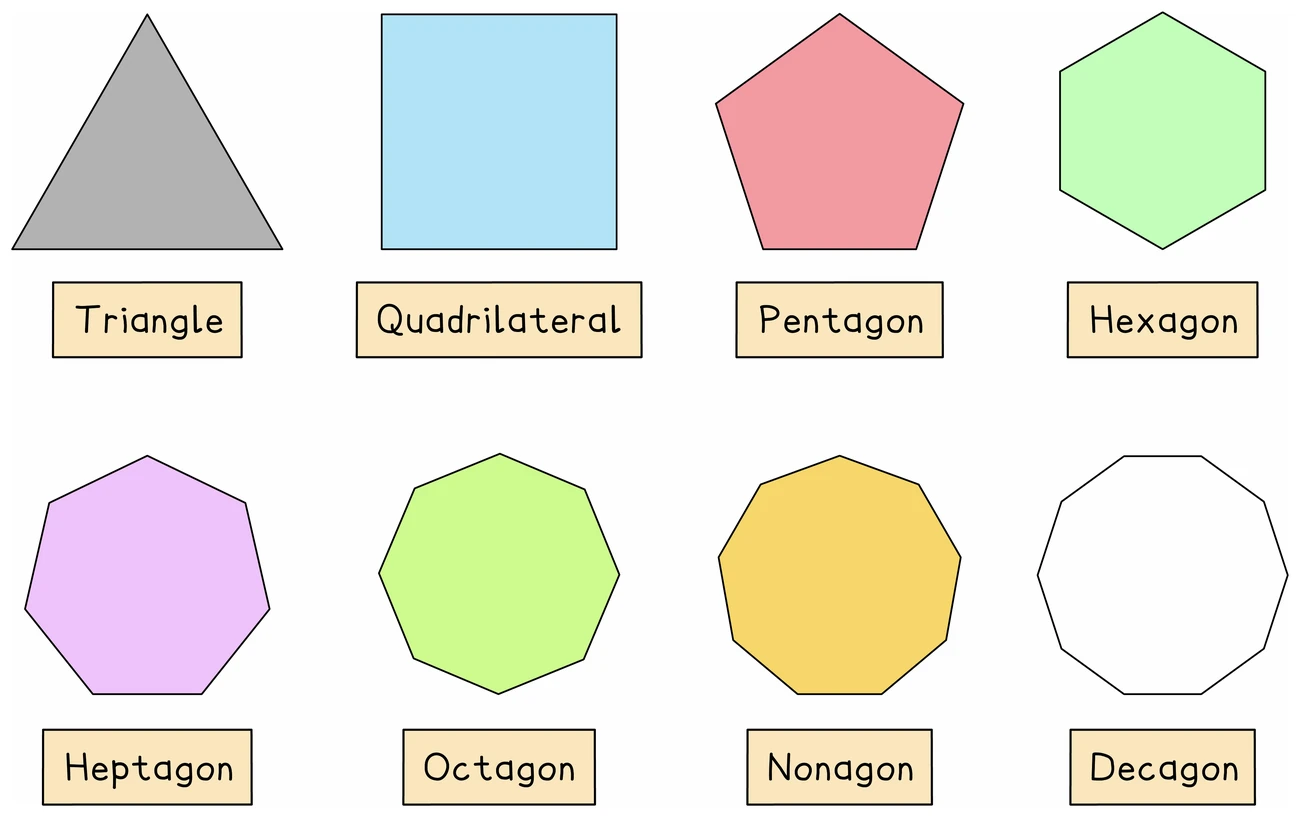
- Any flat shape bounded by straight sides is a polygon, and its name comes from how many sides it has
| Sides | Name |
|---|---|
| 3 | triangle |
| 4 | quadrilateral |
| 5 | pentagon |
| 6 | hexagon |
| 8 | octagon |
| 10 | decagon |
- The syllabus names these six, so a seven- or nine-sided figure is not required by name
- A regular polygon has every side the same length and every angle the same size
- An irregular polygon has sides or angles that differ, and the word "regular" in a question is never decorative
- The angles topic covers polygon angle calculations in full; the example below shows the quickest route for a regular polygon
Worked example
Angles of a regular polygon
A regular polygon has 24 sides. Find its exterior angle and its interior angle.
Solution:
- The exterior angles of any polygon add to 360°, however many sides it has
- The polygon is regular, so all 24 exterior angles are equal
- Exterior angle = 360 ÷ 24 = 15°
- An interior angle and its exterior angle lie on a straight line, so they add to 180°
- Interior angle = 180 − 15 = 165°
- The longer route gives the same answer: (24 − 2) × 180 = 3960°, and 3960 ÷ 24 = 165°
- The exterior route is a division and a subtraction, while the angle-sum route needs three operations, which is why it is worth doing first
4. The parts of a circle
The terms to know
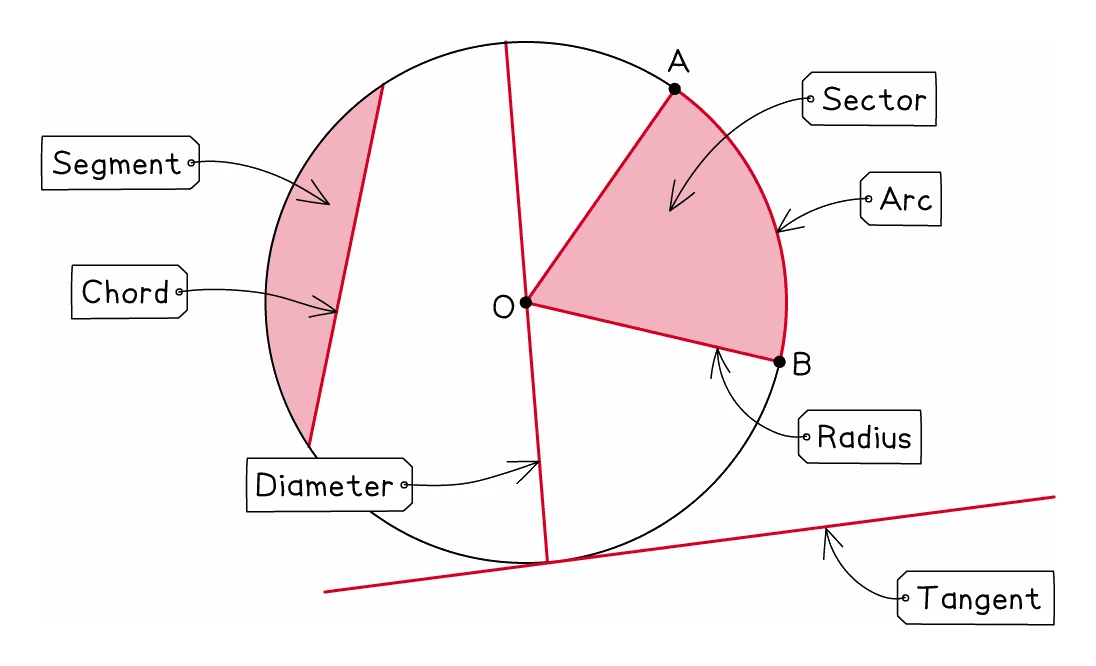
- Centre: the point every part of the circle is the same distance from
- Radius: a line from the centre to the edge; the plural is radii
- Diameter: a line right across through the centre, equal to twice the radius
- Circumference: the distance all the way round the edge
- Chord: a straight line joining two points on the circumference; a chord through the centre is a diameter
- Arc: part of the circumference
- Sector: the slice between two radii and an arc
- Segment: the region cut off between a chord and an arc
- Tangent: a straight line touching the circle at exactly one point
- Semicircle: half a circle, cut off by a diameter
- Confusing the radius with the diameter is a frequent error in circle calculations, so check which one a question gives
5. Solids and nets
Naming solids
- A prism has the same cross-section all the way along, and it is named after that cross-section
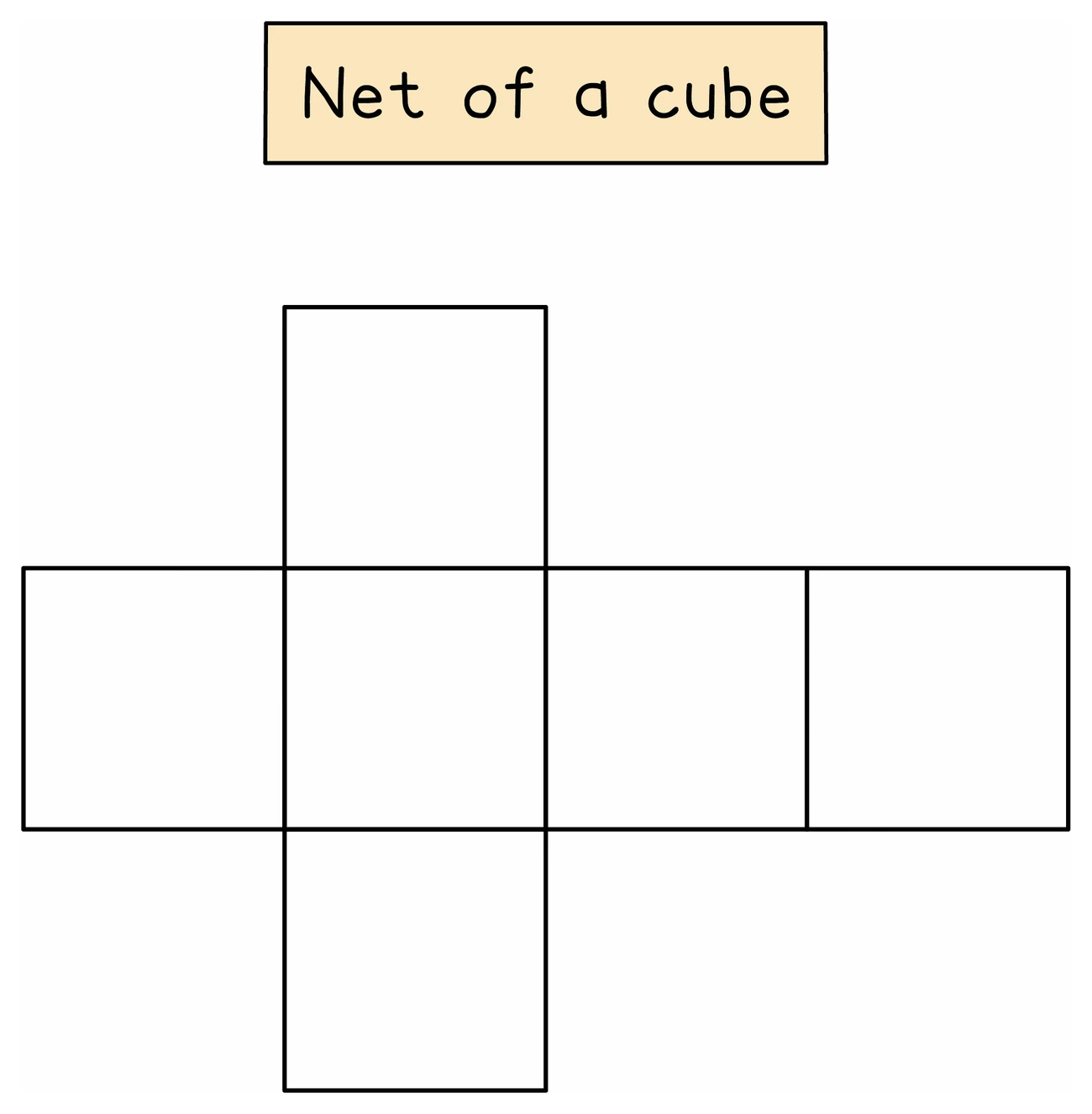
- A cube has a square cross-section and a cuboid a rectangular one
- A triangular prism and a hexagonal prism are named the same way
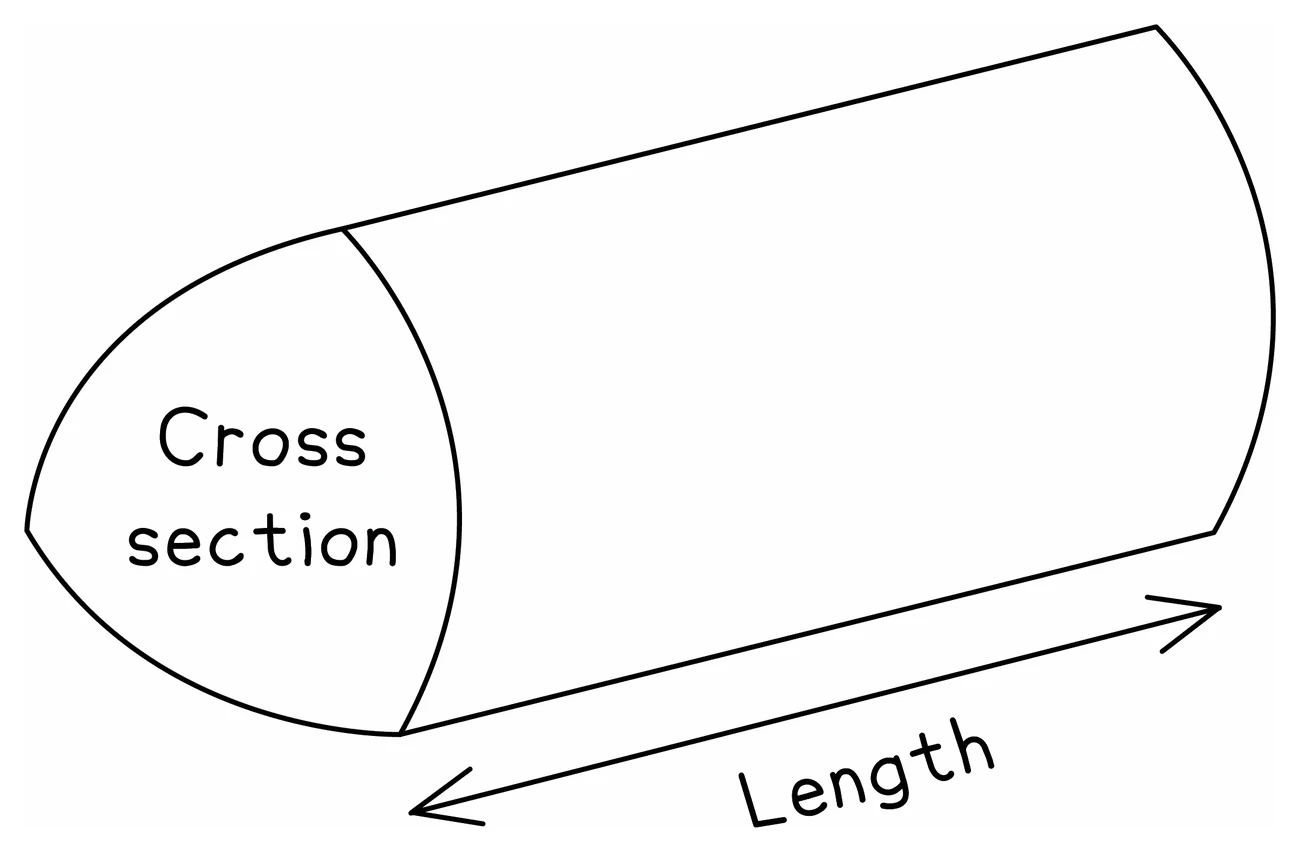
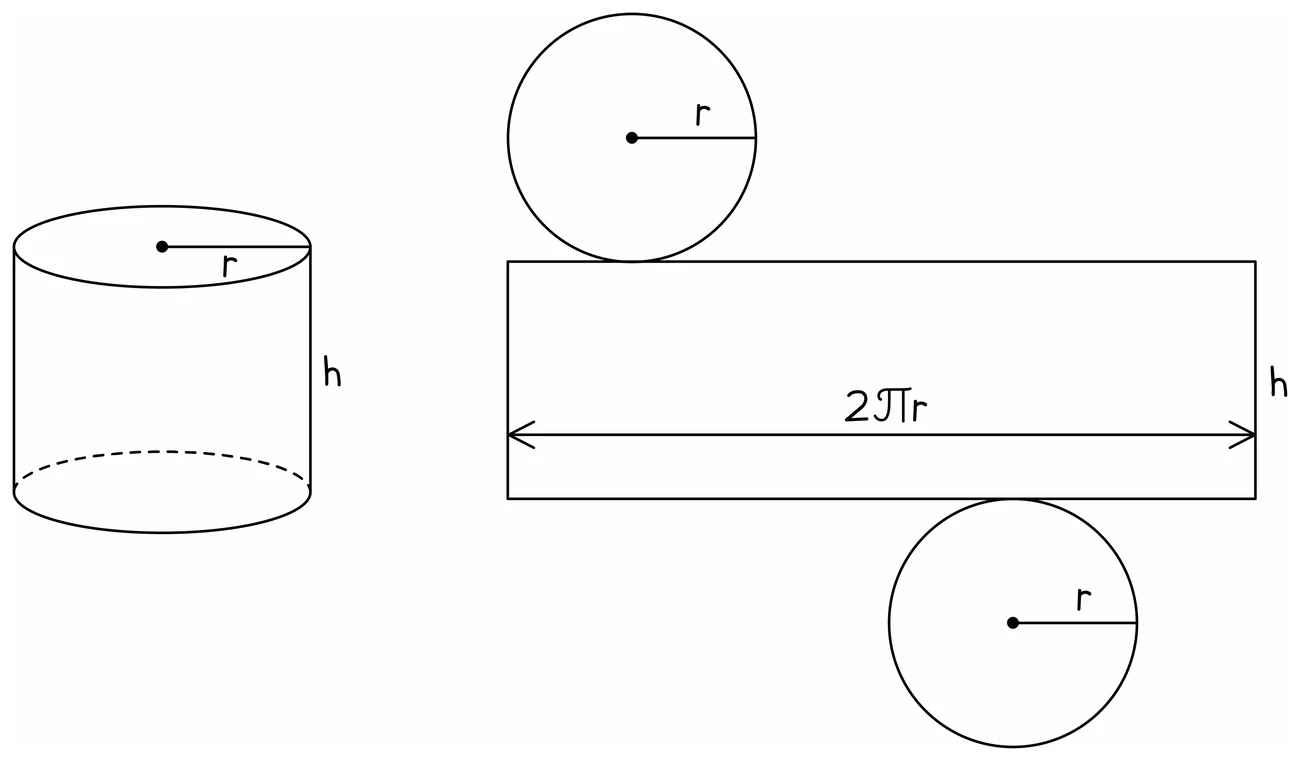
- A cylinder behaves like a prism whose cross-section is a circle
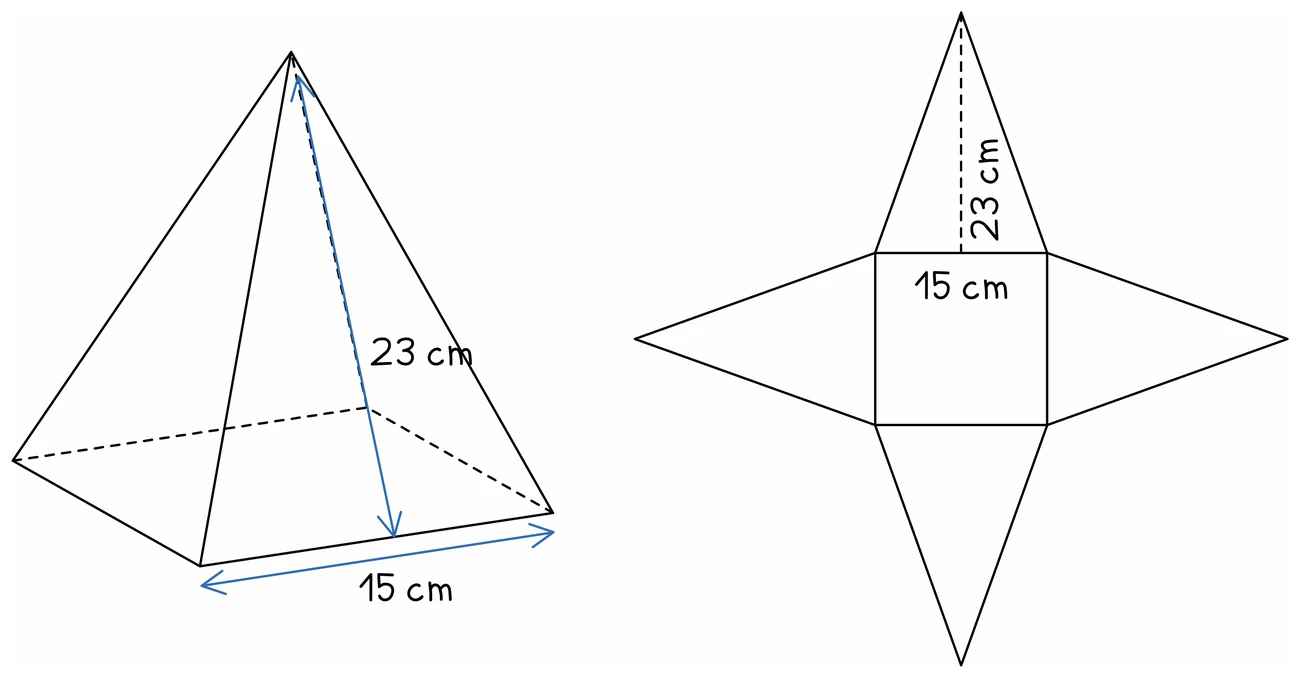
- A pyramid stands on a base, with triangular sides rising to meet at a single point above it, and takes its name from that base
- A pyramid on a triangular base is a tetrahedron
- A cone is like a pyramid on a circular base, and a sphere is a ball
Faces, edges and vertices
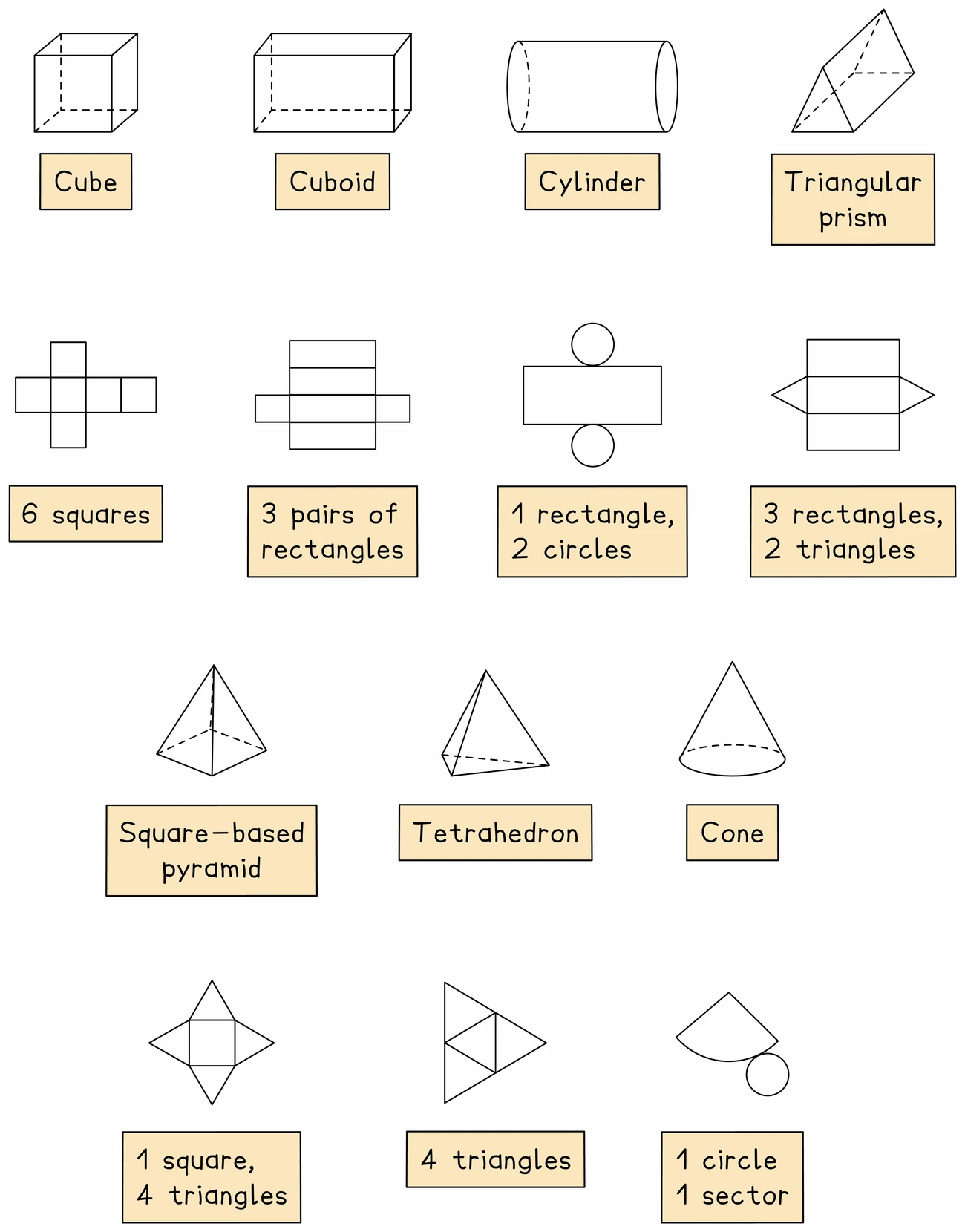
- A face is a flat surface, an edge joins two faces, and a vertex is a corner; the plural of vertex is vertices
- A curved surface, such as the side of a cylinder, counts as a surface rather than a face
| Solid | Faces | Edges | Vertices |
|---|---|---|---|
| Cube | 6 squares | 12 | 8 |
| Cuboid | 6 rectangles, in 3 matching pairs | 12 | 8 |
| Triangular prism | 2 triangles and 3 rectangles | 9 | 6 |
| Square-based pyramid | 1 square and 4 triangles | 8 | 5 |
| Tetrahedron | 4 triangles | 6 | 4 |
| Cylinder | 2 circles, plus a curved surface | 2 | 0 |
| Cone | 1 circle, plus a curved surface | 1 | 1 |
| Sphere | curved surface only | 0 | 0 |
- For a solid with flat faces and no hole through it, the three counts satisfy faces − edges + vertices = 2, which is a quick way to check a count
Worked example
Counting faces, edges and vertices
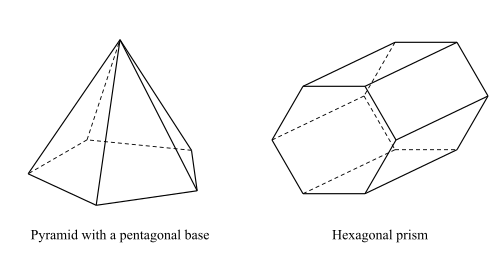
Write down the number of faces, edges and vertices of a pyramid with a pentagonal base and of a hexagonal prism.
Solution:
- For the pyramid, count the flat surfaces first
- One pentagonal base and a triangle on each of its five sides gives 6 faces
- The base has 5 edges, and 5 more rise from its corners to the apex, giving 10 edges
- The 5 corners of the base plus the apex give 6 vertices
- For the hexagonal prism, the two hexagonal ends plus one rectangle for each of the six sides give 8 faces
- Six edges round each hexagon plus six joining them gives 18 edges
- Six corners on each hexagon gives 12 vertices
- Check each with Euler's relationship, faces + vertices − edges = 2: 6 + 6 − 10 = 2, and 8 + 12 − 18 = 2
Nets
- A net is the flat shape that folds up to make a solid, so it shows every face laid out
- The area of a net equals the surface area of the solid, which is why nets are worth drawing for surface-area questions
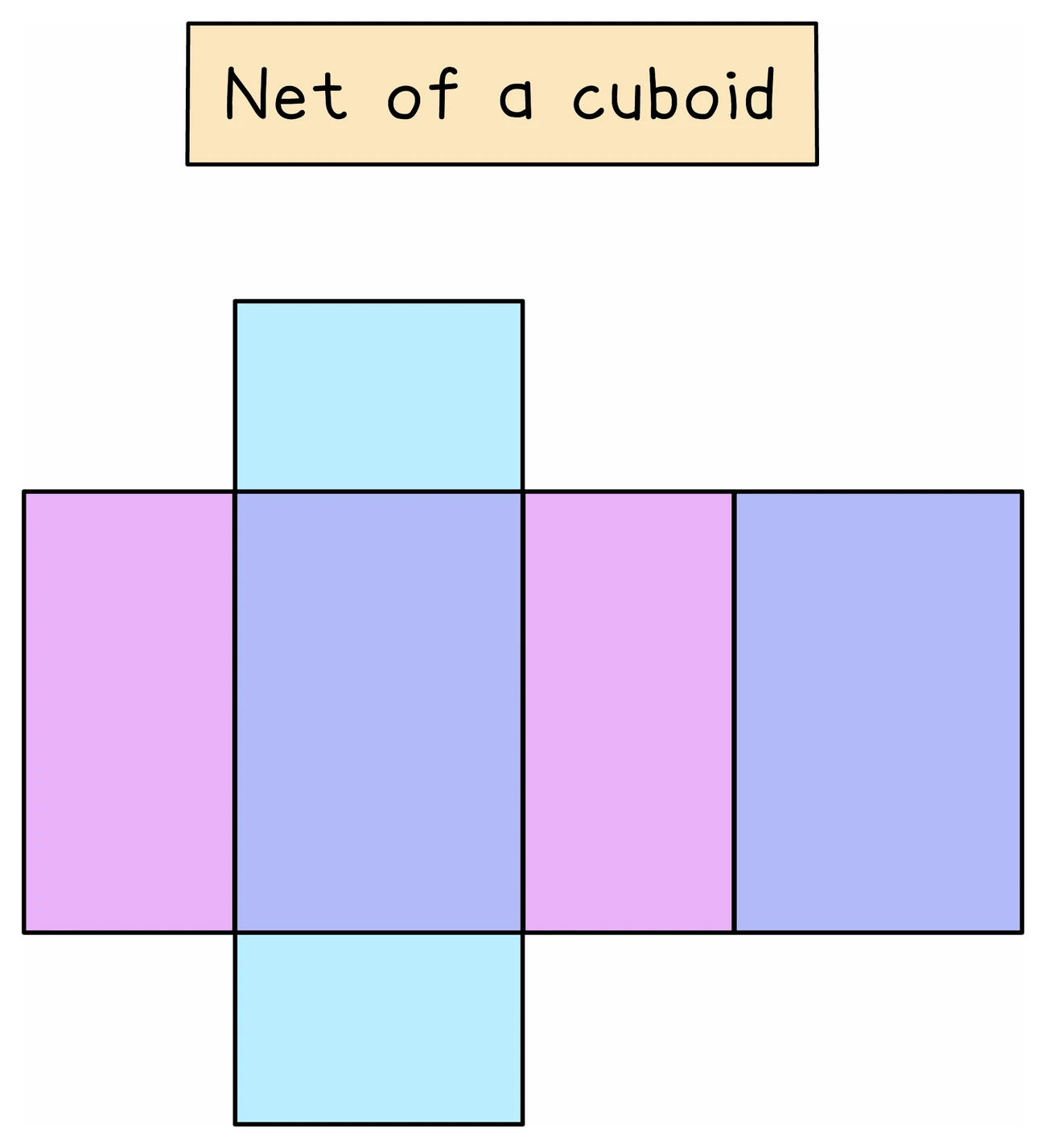
- A solid has more than one possible net, and a cube has eleven, so an arrangement different from yours may still be correct
- The net of a cylinder is two circles and a rectangle whose length equals the circumference of those circles
- Check a proposed net by asking whether the faces would overlap or leave a gap when folded
Exam tip
A part-finished net still scores
Drawing or completing a net was set in 10 of the 22 papers, always for 3 marks. The marks are given face by face: an unfinished net still earns one or two marks for the correct faces it adds in their correct places. So if the whole net will not come, still draw every face you are sure of, joined along an edge of the same length.
Worked example
Completing a net of a cuboid
A cuboid measures 6 cm by 3 cm by 2 cm. One of its 6 cm by 3 cm faces has been drawn on a 1 cm² grid. Complete a net of the cuboid.
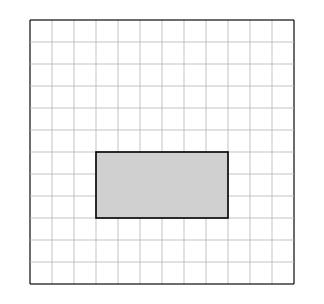
Solution:
- A cuboid has 6 faces in 3 matching pairs: here two 6 by 3 rectangles, two 6 by 2 and two 3 by 2
- Use the drawn face as the base, with its 6 cm edges at the top and bottom
- Join a 6 by 2 rectangle to each 6 cm edge of the base: these fold up to make the two long sides
- Join the second 6 by 3 rectangle to the outer 6 cm edge of the upper side: it folds over to make the lid
- Join a rectangle 2 squares wide and 3 tall to each 3 cm edge of the base: these fold up to make the two ends
- Check: there are 6 faces, two of each size, and every pair of edges that meet when it is folded are the same length
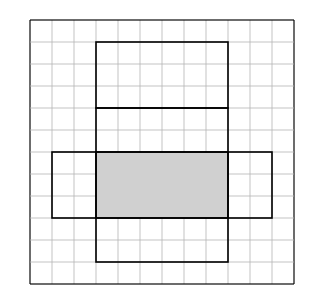
- The net is a column of four rectangles 6 squares wide, 3, 2, 3 and 2 squares tall from the top, with a 2 by 3 rectangle on each side of the base
6. Line symmetry
Mirror lines
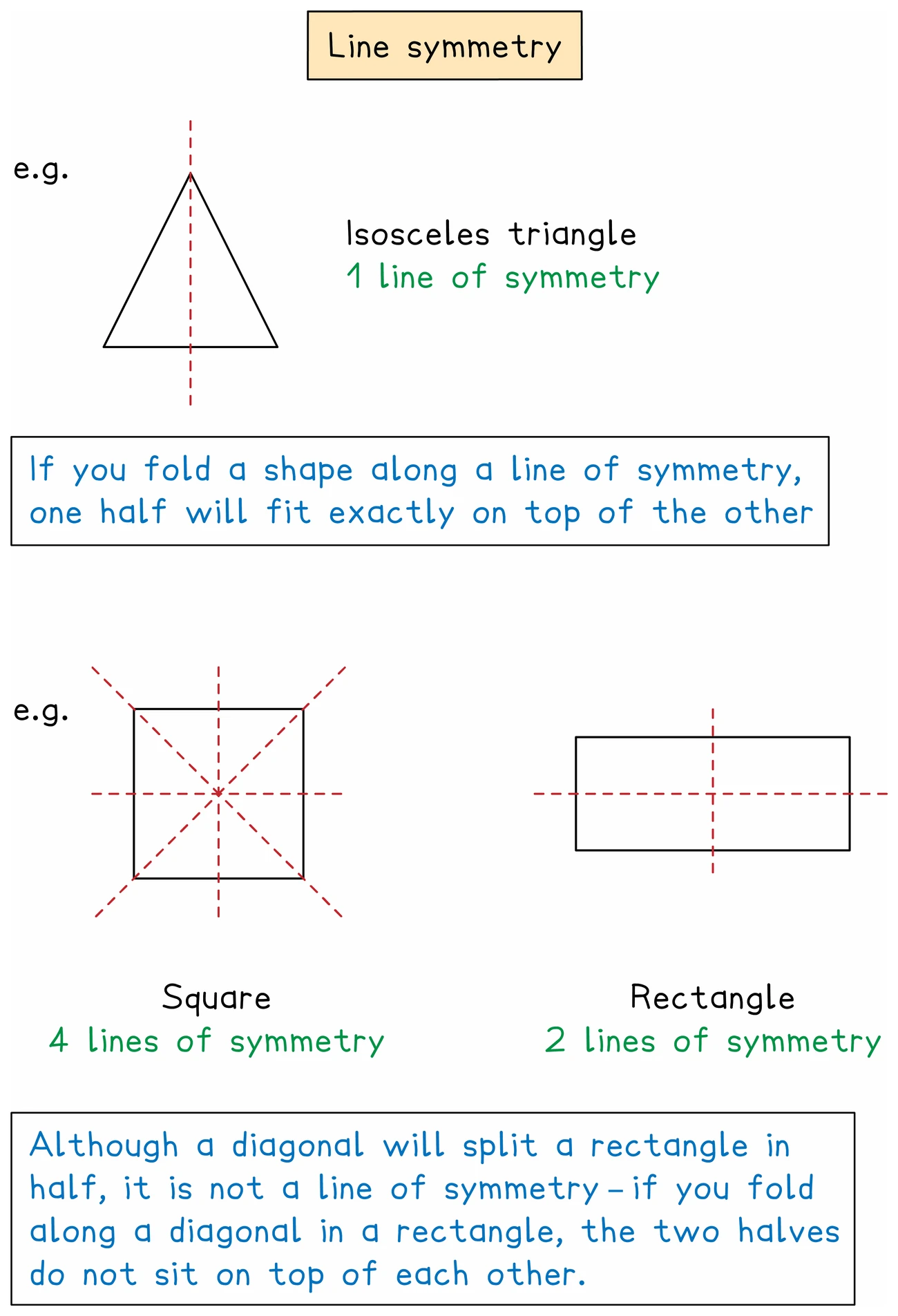
- A line of symmetry is a line across a shape such that folding along it makes the two halves match exactly
- Each half is the mirror image of the other, so a shape can be completed from half of it and the line
- Diagonal lines of symmetry are easy to miss, and turning the page helps
- You may use tracing paper in the examination, and it is the quickest way to test a line you are unsure of
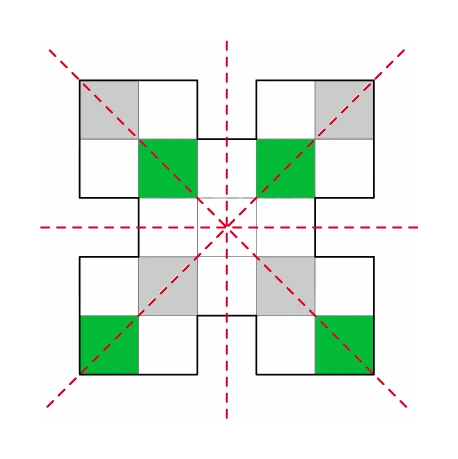
- Questions ask you to draw all the lines of symmetry or to shade squares to make a pattern symmetrical, so check horizontal, vertical and both diagonals every time
- A rectangle has 2, a square has 4, and a regular polygon with n sides has n
Exam tip
A wrong extra line costs a mark
Drawing all the lines of symmetry is worth two marks, and the second mark needs every line with no wrong ones. All the right lines plus one wrong line scores one mark, and so does a set with one line missing. So test each line with tracing paper before you draw it, and draw only the lines that pass: a guess that fails costs as much as a line left out.
Worked example
Finding every line of symmetry
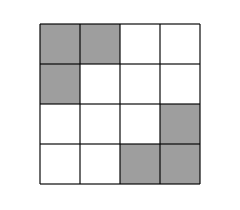
A pattern is drawn on a 4 by 4 grid of squares. In the top-left corner, the corner square and the two squares touching it are shaded. The same three squares are shaded in the bottom-right corner. Draw all the lines of symmetry of the pattern.
Solution:
- A square grid has four lines to test: the vertical and horizontal lines through the centre, and the two diagonals
- The vertical line would reflect the top-left group onto the top-right corner, which is empty, so it is not a line of symmetry
- The horizontal line would reflect the top-left group onto the bottom-left corner, also empty, so it is not one either
- The diagonal from top-left to bottom-right passes through both corner squares, and the two squares beside each corner swap places across it, so it is a line of symmetry
- The other diagonal reflects the top-left group onto the bottom-right group square for square, so it is a line of symmetry too
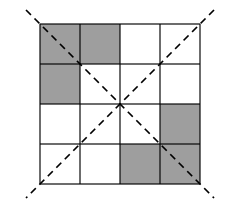
- The pattern has 2 lines of symmetry: the two diagonals
7. Rotational symmetry
Counting the order
- The order of rotational symmetry counts how many times a shape looks unchanged during one full turn about its centre
- Returning to the starting position always counts, so the smallest possible order is 1
- A shape of order 1 is normally described as having no rotational symmetry
- With tracing paper, draw an arrow to mark the starting position so you can tell when a full turn is complete
- A parallelogram has order 2 with no lines of symmetry, which shows the two kinds of symmetry are independent
- A regular polygon with n sides has order n and n lines of symmetry
Worked example
Shading for rotational symmetry
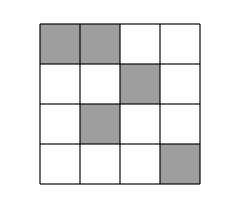
A pattern is drawn on a 4 by 4 grid of squares. Counting rows from the top and columns from the left, the shaded squares are in row 1, columns 1 and 2; row 2, column 3; row 3, column 2; and row 4, column 4. Shade one more square so that the pattern has rotational symmetry of order 2.
Solution:
- Order 2 means the pattern looks the same after a half turn about the centre of the grid
- A half turn sends every square to the one directly opposite it through the centre: row 1 swaps with row 4, row 2 with row 3, column 1 with column 4 and column 2 with column 3
- Row 1, column 1 goes to row 4, column 4, which is shaded
- Row 2, column 3 and row 3, column 2 go to each other, and both are shaded
- Row 1, column 2 goes to row 4, column 3, which is empty, so that is the square to shade
- Shade row 4, column 3
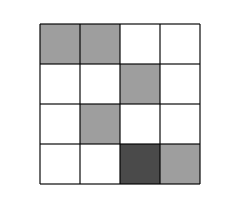
- Check with tracing paper: trace the new pattern, turn it half a turn, and every shaded square lands on a shaded one
- A quarter turn would send row 1, column 1 to a corner that is empty, so the order is exactly 2