1. What a rate is
Combining two quantities
- A compound measure is built from two different measurements rather than one
- It expresses a rate: how much one quantity changes for each unit of the other
- The word "per" signals the division, and the units say which way round it goes
- Speed measures distance per unit of time
- Population density measures people per unit of area
- Fuel consumption measures fuel used per unit of distance
Reading the formula from the units
- The units of a compound measure state its formula, which removes any need to memorise them separately
- A unit written as a/b means the quantity measured by a divided by the quantity measured by b
- g/cm³ is grams divided by cubic centimetres, so it is mass divided by volume
- people per km² is a count divided by an area
2. Speed, distance and time
The relationship
- Speed is distance divided by time, and in this context "speed" always means average speed
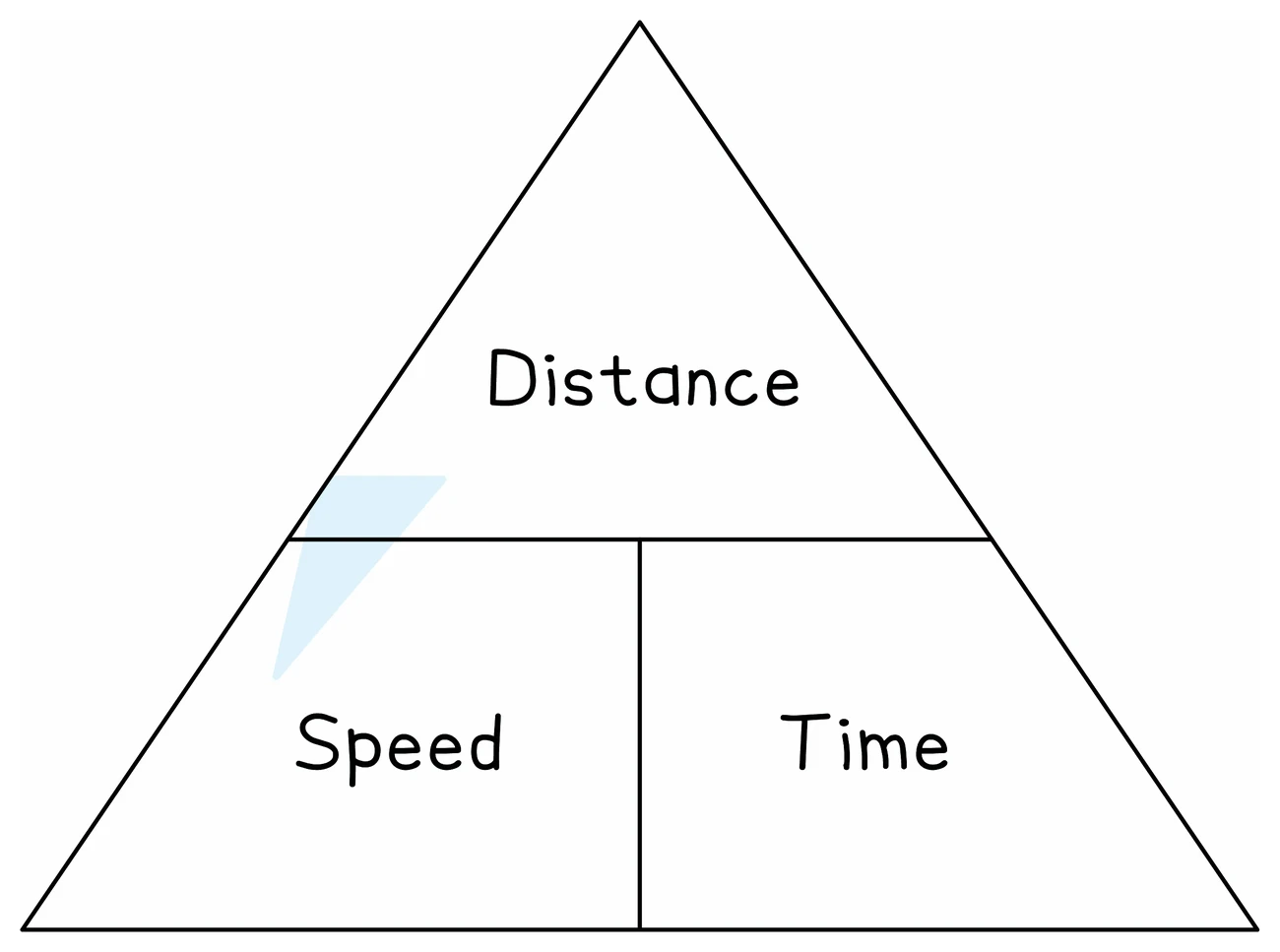
- The three arrangements follow from one another
| To find | Calculate |
|---|---|
| Speed | distance ÷ time |
| Distance | speed × time |
| Time | distance ÷ speed |
- Common units are metres per second (m/s) and kilometres per hour (km/h)
- A journey made in stages needs total distance divided by total time, not an average of the separate speeds
Time in hours
- Time must be expressed in the unit the answer requires, and part-hours are decimals of an hour rather than minutes written after a point
- 1 hour 48 minutes is 1.8 hours, because 48 minutes is 48/60 of an hour
- Writing 1.48 instead is a common error in these questions
Worked example
Average speed with a part-hour
A car travels 153 km in 1 hour 48 minutes. Find its average speed in km/h.
Solution:
- Convert the time to hours: 48 ÷ 60 = 0.8, so the time is 1.8 hours
- Speed is distance divided by time: 153 ÷ 1.8
- The average speed is 85 km/h
- Check by reversing: 85 × 1.8 = 153
3. Density and pressure
Density
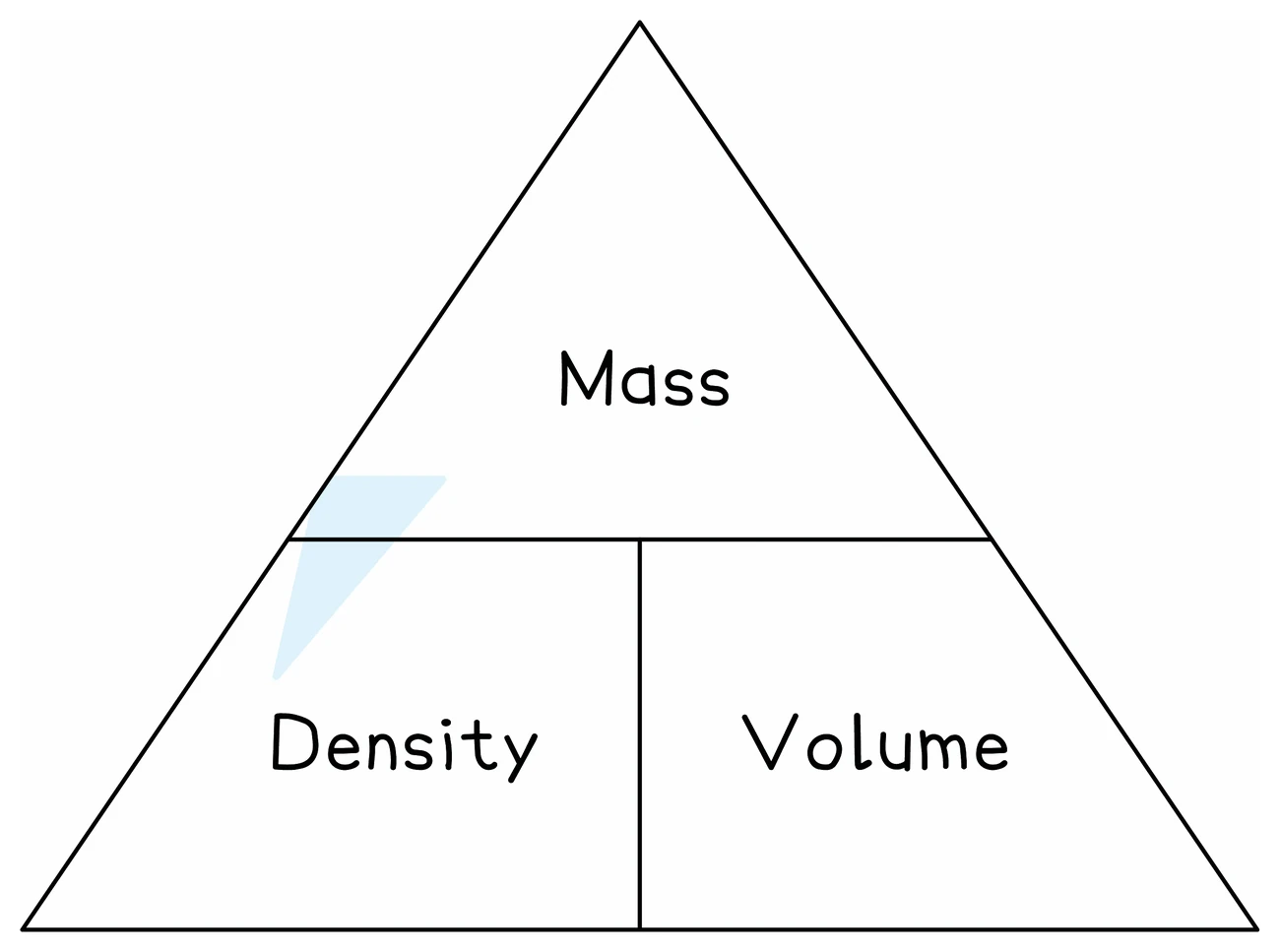
- Density is mass divided by volume, usually in g/cm³ or kg/m³
- Where the object is a solid shape, its volume may have to be calculated first
| To find | Calculate |
|---|---|
| Density | mass ÷ volume |
| Mass | density × volume |
| Volume | mass ÷ density |
Worked example
Finding a density
A metal block has a mass of 468 g and a volume of 60 cm³. Find its density.
Solution:
- Density is mass divided by volume
- 468 ÷ 60 = 7.8
- The units follow the division: grams divided by cubic centimetres
- The density is 7.8 g/cm³
Pressure
- Pressure is force divided by area, usually in newtons per square metre (N/m²), also called pascals
- Weight is a force and is not the same quantity as mass
4. Other rates
Rates in everyday contexts
- The same structure covers a wide range of contexts named by the specification
| Rate | Calculated as |
|---|---|
| Hourly pay | total pay ÷ hours worked |
| Exchange rate | amount in one currency ÷ amount in the other |
| Flow rate | volume ÷ time |
| Fuel consumption | fuel used ÷ distance travelled |
| Population density | population ÷ area |
- Each is handled by dividing, then attaching units built from the two quantities
- A tank taking 25 minutes to receive 4500 litres has a flow rate of 180 litres per minute
- A region of 800 km² holding 2.4 million people has a population density of 3000 people per km²
5. Working with the units
Matching units before calculating
- Both quantities must be in units that match the answer required
- Convert first, then divide, since converting afterwards invites a second error
- A speed wanted in m/s needs the distance in metres and the time in seconds
- A rate given per hour becomes a rate per minute by dividing by 60, and the reverse by multiplying
Exam tip
Change both units, not just one
Changing 5 m/s into km/h, or kilograms per hour into grams per second, changes two units at once. The method mark needs both changes, as in 5 × 60 × 60 ÷ 1000, not just one of them. The right digits with the wrong place value, such as 180 or 1.8 for 18, still keep one mark. Write the whole calculation, then check the size.
Worked example
Changing km/h to m/s and back
A cyclist rides at 27 km/h. Write this speed in metres per second. A runner's speed is 4.5 m/s. Write this speed in km/h.
Solution:
- 27 km/h means 27 km travelled in 1 hour
- 27 km is 27 000 m, and 1 hour is 60 × 60 = 3600 seconds
- 27 000 ÷ 3600 = 7.5 m/s
- 4.5 m/s means 4.5 m travelled every second
- In 3600 seconds that is 4.5 × 3600 = 16 200 m
- 16 200 m is 16.2 km, so the speed is 16.2 km/h
- Check: 7.5 × 3.6 = 27 and 16.2 ÷ 3.6 = 4.5, and each m/s value is the smaller number