1. Perimeter
Adding up the outside
- The perimeter is the total distance round the edge of a shape, so it is a length and its units are mm, cm, m or km
- Find it by adding every side, working round the shape once so nothing is counted twice or missed
- For a regular shape it is the number of sides times the length of one, so a square of side x has perimeter 4x
- A circle's perimeter has its own name, the circumference, and belongs to the circles topic
Missing lengths
- Compound shapes usually leave some sides unlabelled, and they have to be worked out before adding
- On an L-shape the two shorter horizontal sides together equal the long horizontal side opposite, and the same holds vertically
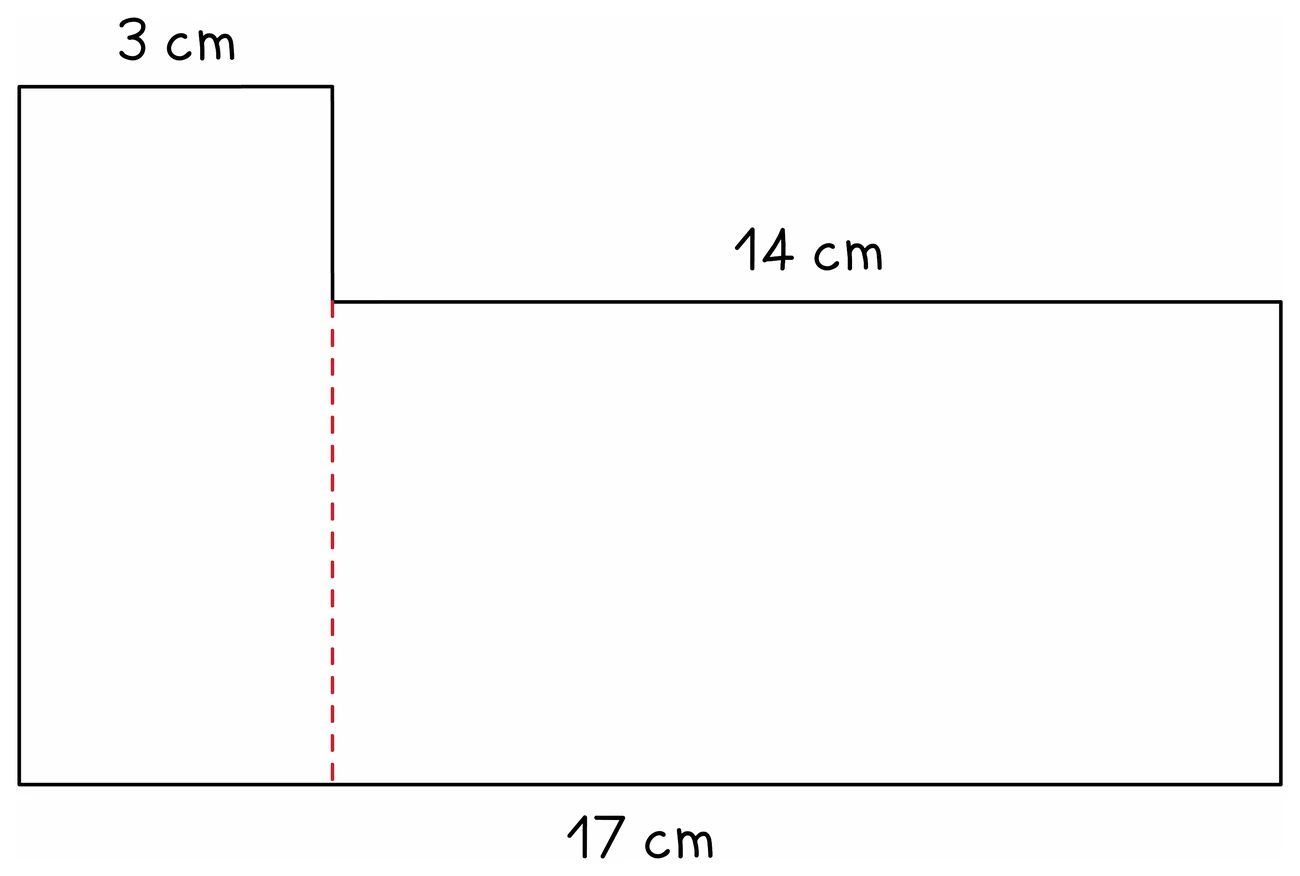
- Dashes on a diagram mark sides that are equal, and the question may state equalities in words instead
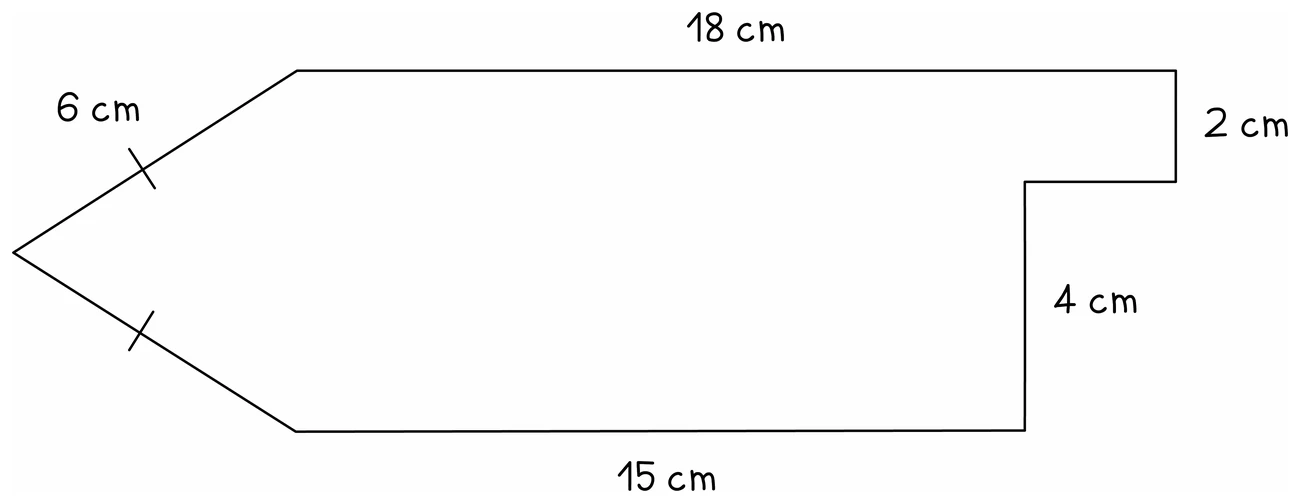
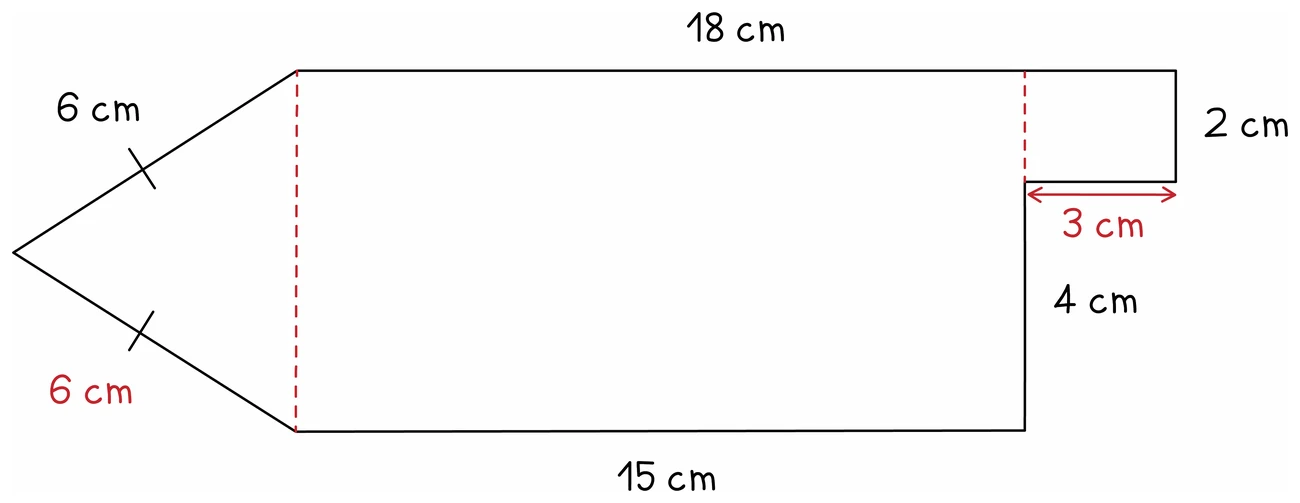
- Pythagoras supplies a sloping side where a right angle is available
Worked example
Perimeter of an L-shaped room
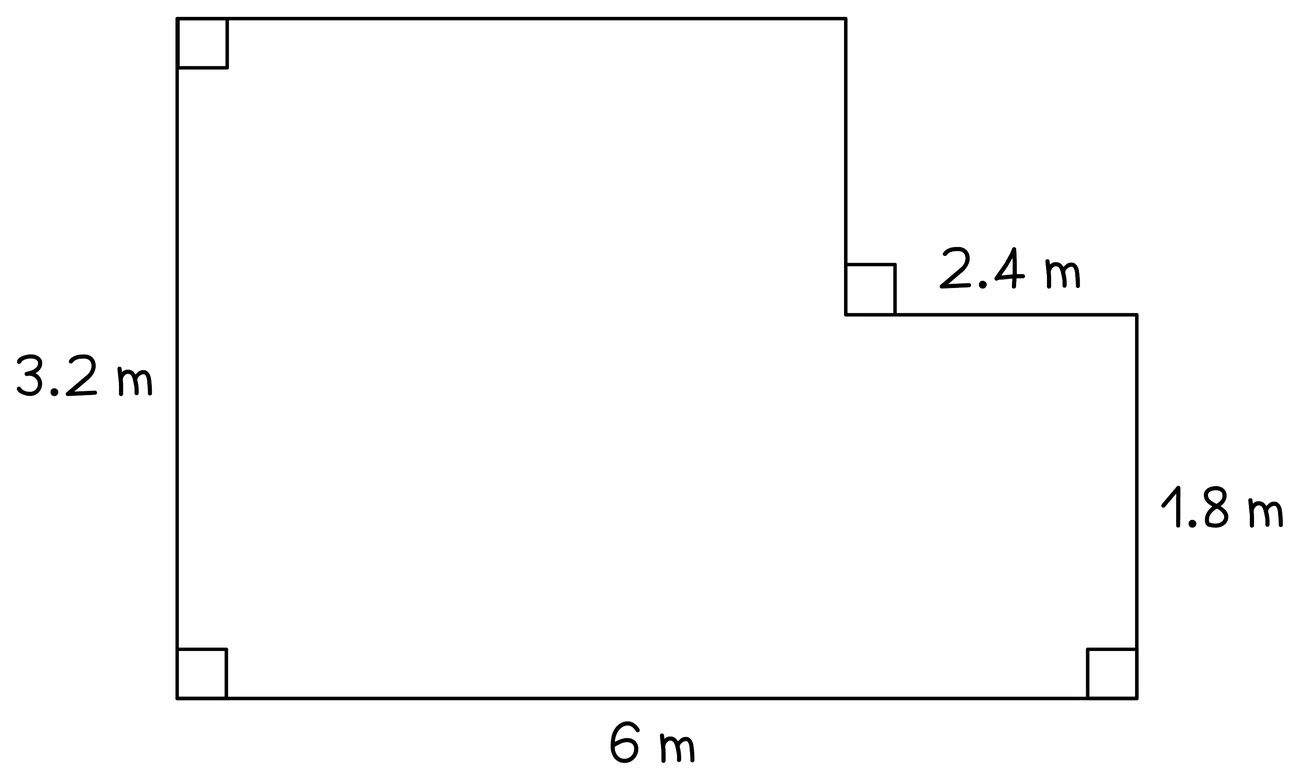
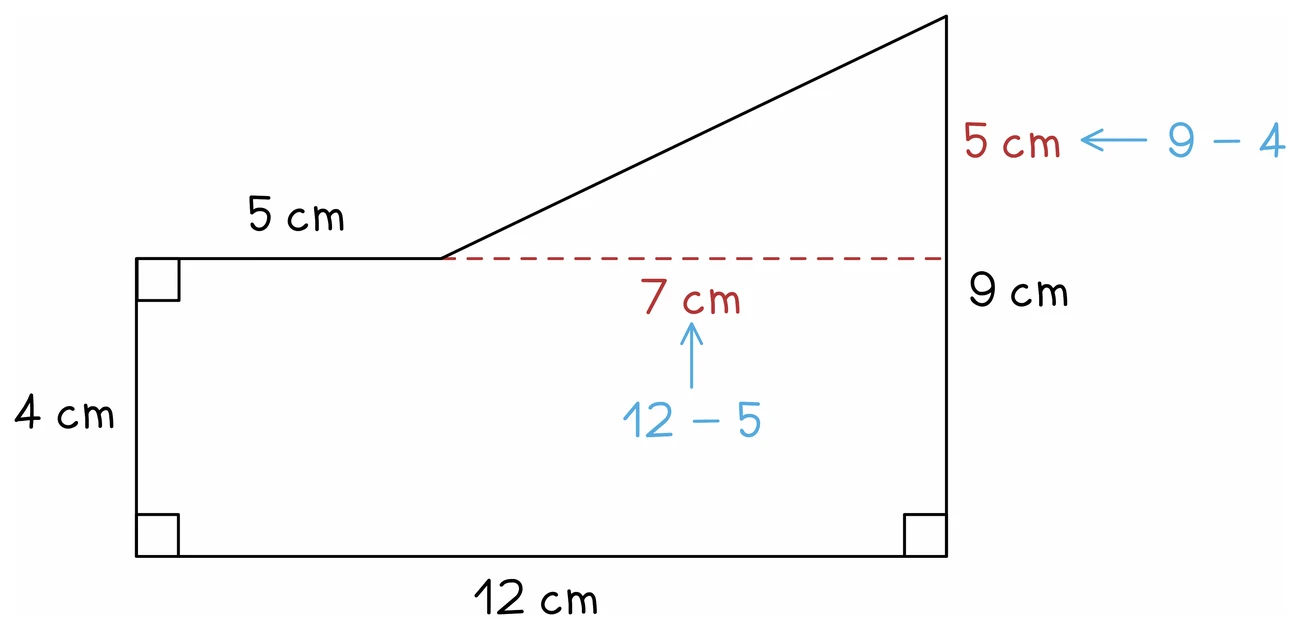
The floor plan below shows a room. All the corners are right angles. Work out the perimeter of the room.
Solution:
- Two sides are unlabelled, so find those first
- The two horizontal sides at the top must add to the 6 m base, so the top edge is 6 − 2.4 = 3.6 m
- The two vertical sides on the right must add to the 3.2 m left side, so the step down is 3.2 − 1.8 = 1.4 m
- Now add every side once, going round the shape
- 3.6 + 1.4 + 2.4 + 1.8 + 6 + 3.2 = 18.4 m
- Perimeter is a length, so the answer is in metres and not square metres
2. Area formulas
The four shapes
- Area is the space inside a shape, measured in squared units such as mm², cm² or m²
| Shape | Area |
|---|---|
| Rectangle | length × width |
| Triangle | ½ × base × perpendicular height |
| Parallelogram | base × perpendicular height |
| Trapezium | ½ × (sum of the parallel sides) × distance between them |
- Only the triangle formula is printed in the paper, so the other three have to be known
- Every one of them uses the perpendicular height, measured at right angles to the base (up to the opposite corner of a triangle, or across to the opposite parallel side) rather than along a sloping side
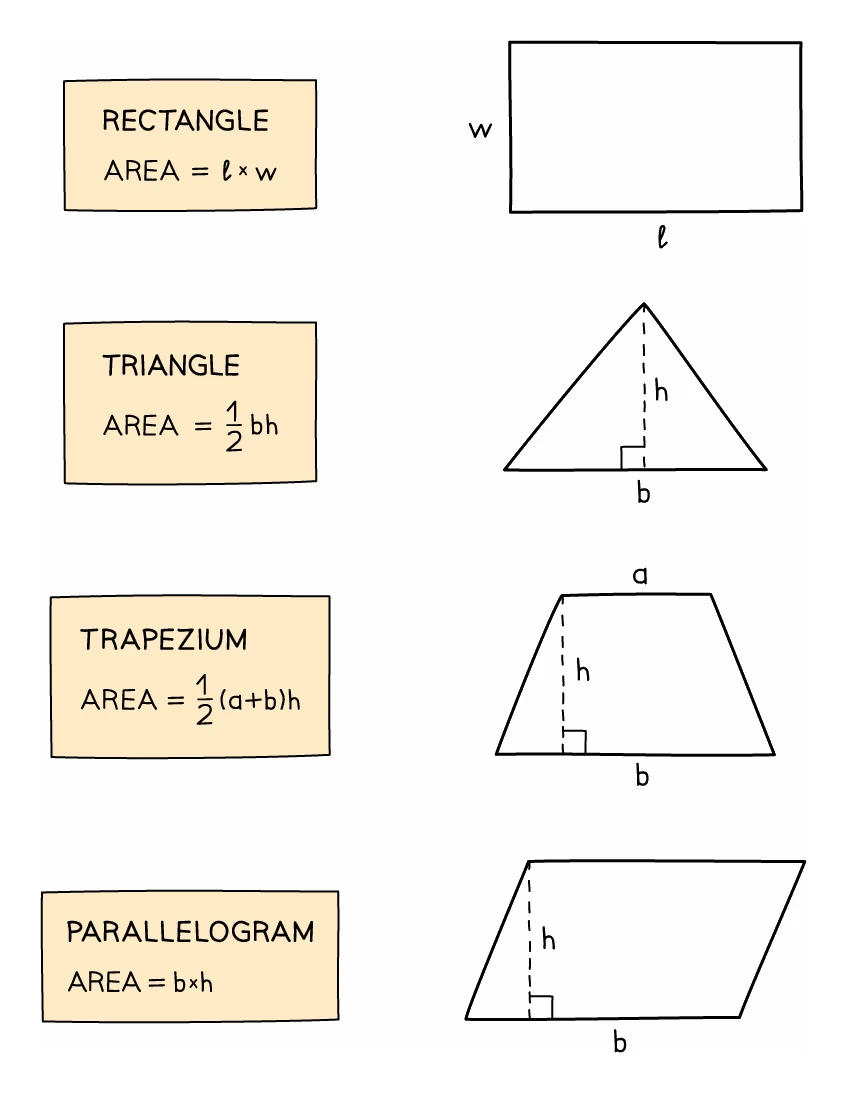
- The trapezium formula needs the two parallel sides identified first, since the other two play no part
- If a formula escapes you, cut the shape into a rectangle plus one or two triangles instead and add those areas: the total is the same
Worked example
Three areas from the formulas
Find the area of each shape.
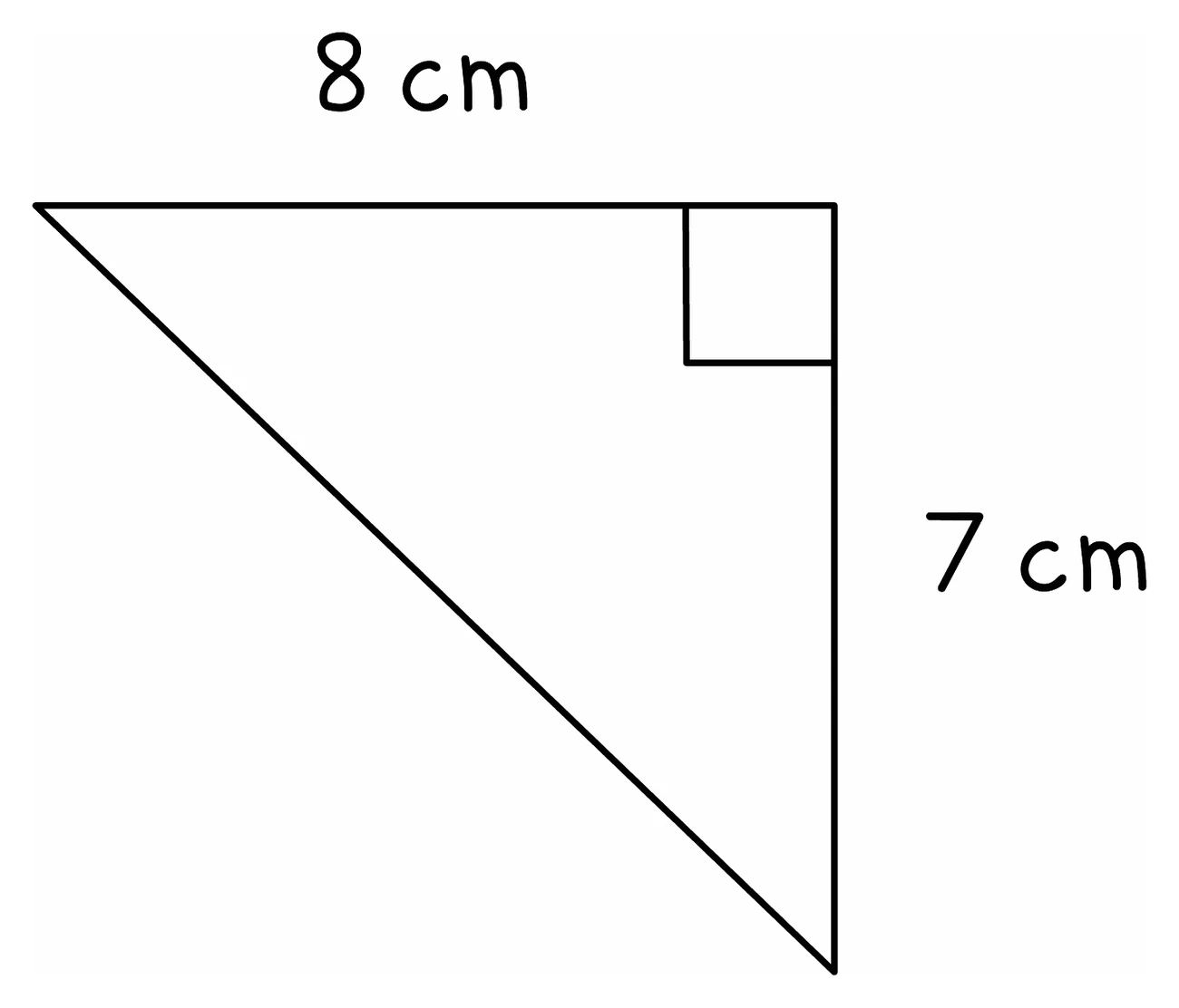
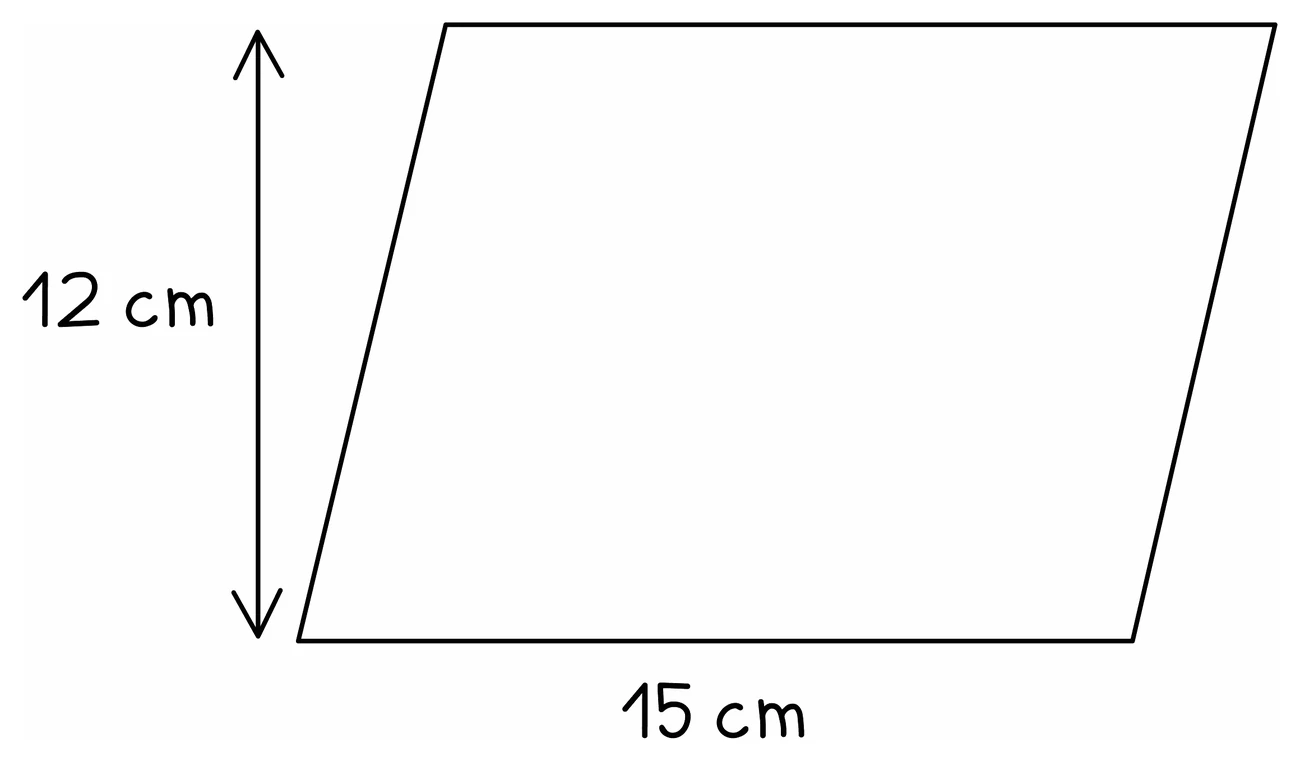
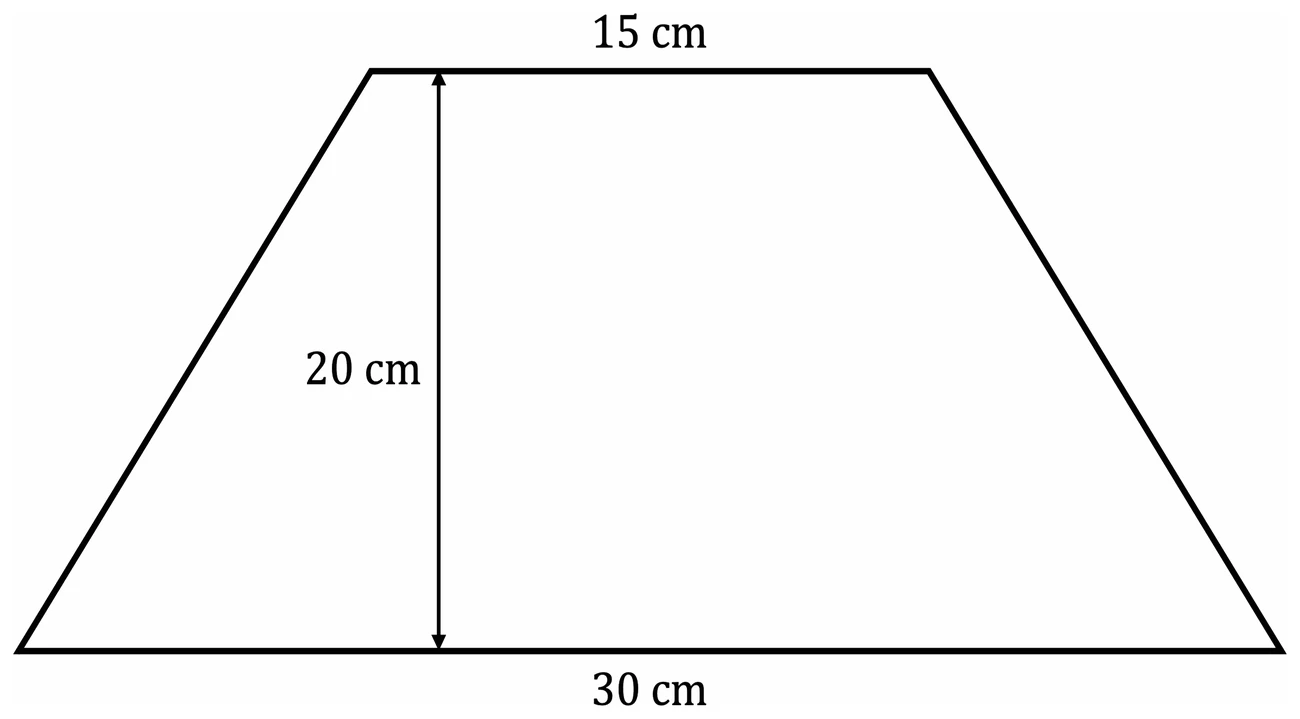
Solution:
- The triangle is right-angled, so the two sides meeting at the right angle are the base and the perpendicular height
- Triangle: ½ × 8 × 7 = 28 cm²
- On the parallelogram the 12 cm is the perpendicular height, not the sloping side
- Parallelogram: 15 × 12 = 180 cm²
- On the trapezium the parallel sides are 15 cm and 30 cm, and they are 20 cm apart
- Trapezium: ½ × (15 + 30) × 20 = ½ × 45 × 20 = 450 cm²
- Every answer is in cm² because area is measured in squared units
Areas on a grid
- Count the whole squares inside the shape first, marking them off as you go
- Then pair up the part-squares round the edge to make whole ones
- Check what one square stands for: on a 1 cm² grid the count is the area in cm², and if a square stands for any other area, multiply the count by that area
Worked example
Areas on a 1 cm² grid
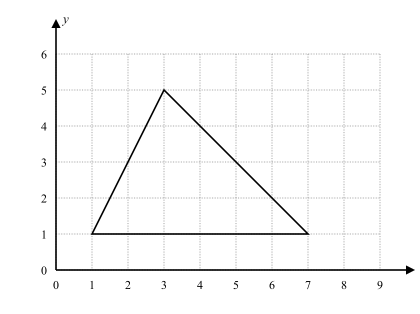
(a) The triangle on the first 1 cm² grid has its corners at (1, 1), (7, 1) and (3, 5). Find its area.
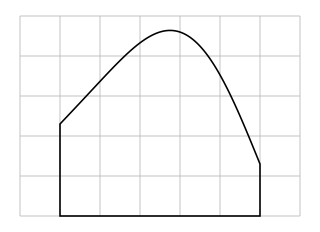
(b) Estimate the area of the shape with a curved side on the second 1 cm² grid.
Solution:
- (a) The side from (1, 1) to (7, 1) lies along a grid line, so it makes a good base: 7 − 1 = 6 cm
- The perpendicular height runs straight up from that base to the corner at (3, 5): 5 − 1 = 4 cm
- Area = ½ × 6 × 4 = 12 cm²
- With its corners on grid points the formula is exact, which is quicker and safer than counting the cut squares along the two sloping sides
- (b) A curved side has no formula, so count instead: 13 squares lie wholly inside the shape
- The curved side cuts through 10 more squares; these are roughly half covered each, so together they make about 10 ÷ 2 = 5 whole squares
- Estimated area = 13 + 5 = 18 cm²
- The part squares are only roughly halves, so this is an estimate, and a value a square or so either way is just as reasonable
3. Compound shapes and problem solving
Adding or subtracting
- A compound shape is built from simpler ones, and there are two ways to handle it
- Split it into rectangles and triangles, find each area, and add them
- Subtract, by taking the whole enclosing rectangle and removing the missing piece
- Subtracting is usually quicker where a corner or a hole has been cut out
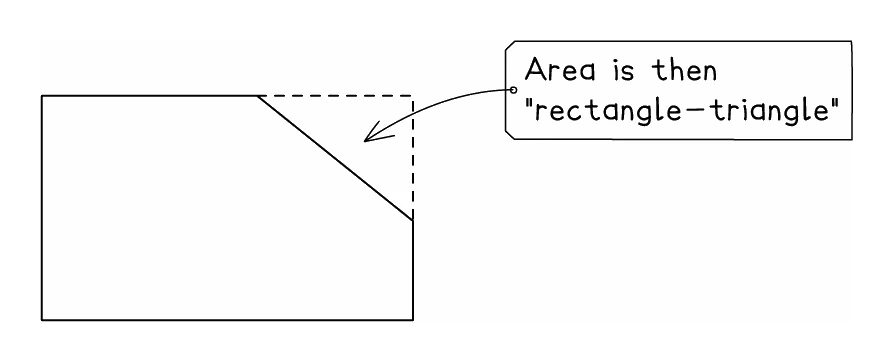
- Sketch the split on the diagram and label each piece, so the working shows where each number came from
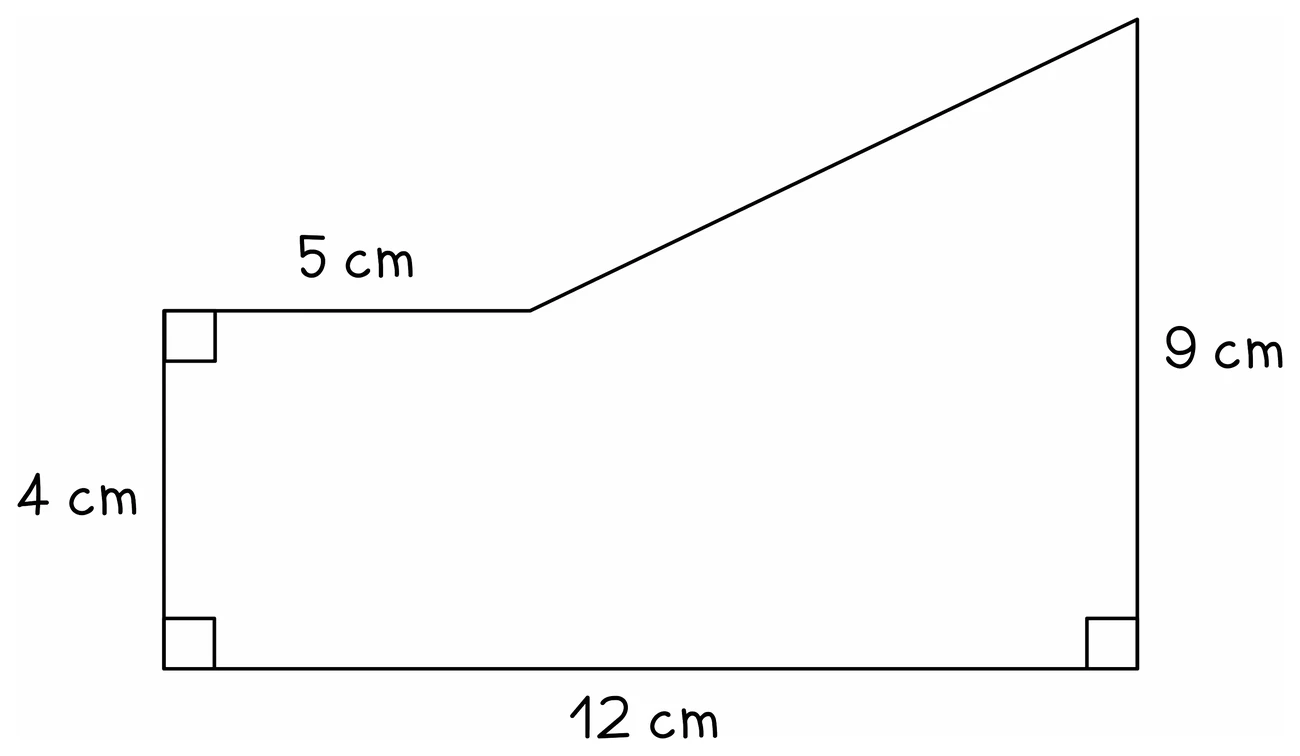
- Check the split covers the shape exactly once, with no overlap and no gap
Worked example
The same area two ways
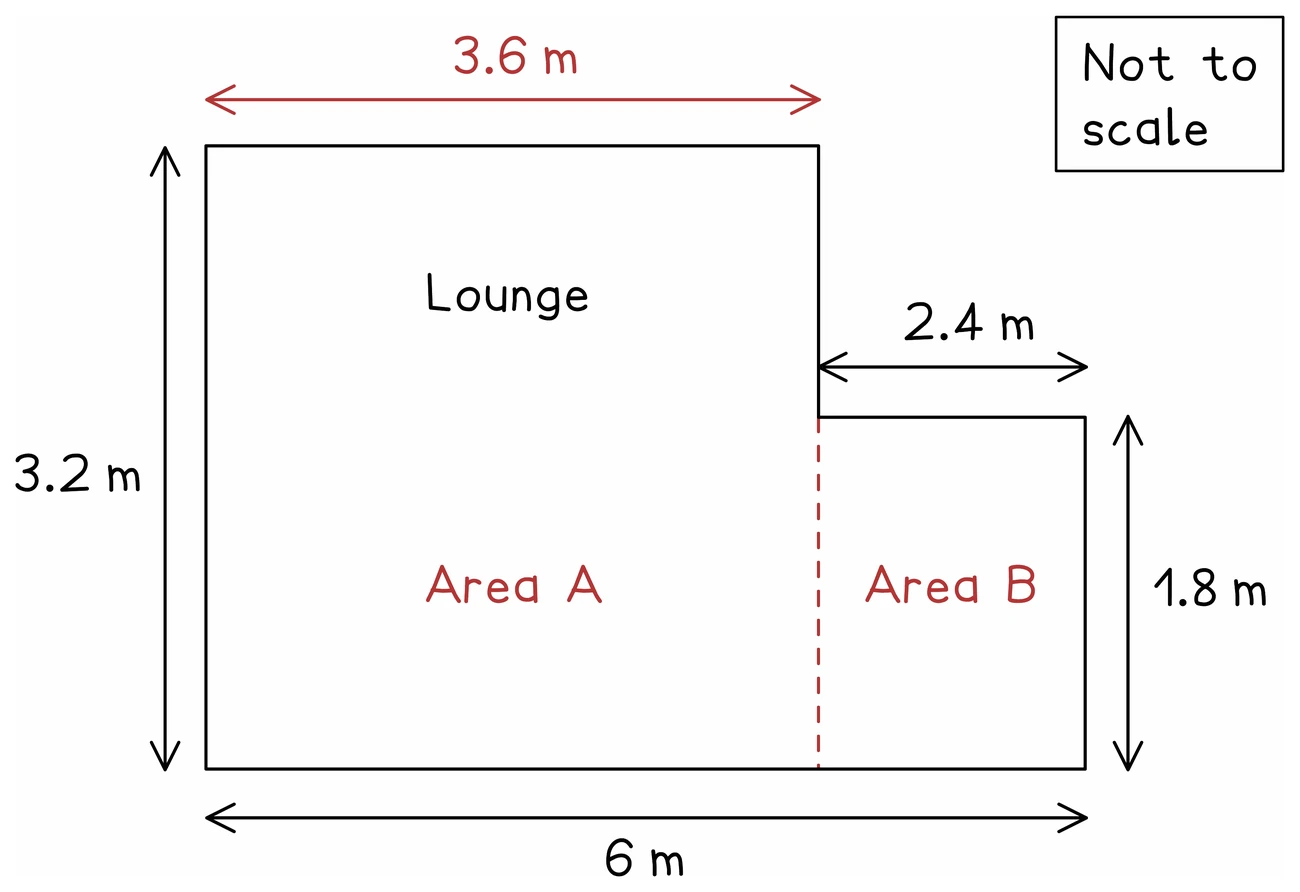
The floor plan of the same L-shaped room is split into two rectangles by the dashed line. Work out the floor area.
Solution:
- Area A is a rectangle 3.6 m by 3.2 m, so its area is 3.6 × 3.2 = 11.52 m²
- Area B is a rectangle 2.4 m by 1.8 m, so its area is 2.4 × 1.8 = 4.32 m²
- Adding: 11.52 + 4.32 = 15.84 m²
- Subtracting gives the same answer, which is a quick check
- The whole enclosing rectangle is 6 × 3.2 = 19.2 m²
- The piece missing from the top right is 2.4 m by 3.2 − 1.8 = 1.4 m, so 2.4 × 1.4 = 3.36 m²
- 19.2 − 3.36 = 15.84 m², as before
Working backwards
- A question may give the area and ask for a missing length, which means substituting into the formula and solving
- The same applies to perimeter, and a shape with an algebraic side turns into an equation
- Check the units the answer needs, converting only at the end
Worked example
An area given, a length wanted
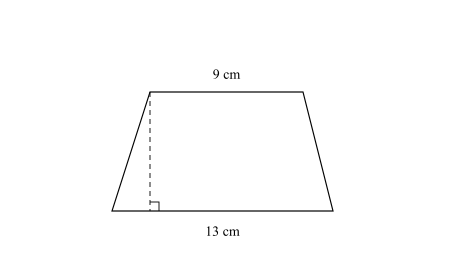
A trapezium has parallel sides of 9 cm and 13 cm and an area of 77 cm². Find the distance between the parallel sides.
Solution:
- Write the formula first, then substitute what is known
- Area = ½ × (sum of the parallel sides) × distance between them
- 77 = ½ × (9 + 13) × h
- 77 = ½ × 22 × h
- 77 = 11h
- h = 77 ÷ 11 = 7 cm
- Check by substituting back: ½ × 22 × 7 = 77, which matches the area given
- The answer is a length, so it is in cm and not cm²