1. What macroeconomic aims are
Macroeconomic aims are the objectives a government tries to achieve for the whole economy. They are the top-level targets that guide fiscal policy, monetary policy, and supply-side policy.
The syllabus focuses on six main aims. A government rarely achieves all six at once: pursuing one often makes another harder, which creates policy conflicts. Three pairings are named in the syllabus: and stable prices, full employment and stability, and and environmental sustainability. All are covered in section 4.
The six aims:
- Economic growth.
- Low (stable) .
- Low / full employment.
- Balance of payments stability (a roughly balanced current account).
- Equitable distribution of income (reduced inequality).
- Environmental sustainability (protecting the environment for future generations).
Each is examined separately in sections 2 and 3, and they are tested together in conflict and benefit questions in sections 4 and 5.
Common exam question
Picking out a macroeconomic aim
Question: Choose the option that is a macroeconomic aim of government, or the aim that a stated policy target serves (1 mark, multiple choice).
Set in 3 of the 13 multiple-choice papers. An aim is an outcome for the whole economy: economic growth, full employment, stable prices, balance of payments stability, redistribution of income or environmental sustainability. Beside it the papers set policy measures (a sales tax, a rule on years of schooling, a pay rise for nurses), goals of one market or one firm (equilibrium prices, profit maximisation) and a result that is not itself an aim (high wages).
A 2% inflation target is still an aim (low inflation): the number is the criterion set for it. When a question names a tool and what it is set to achieve, the aim is the outcome: a central bank moving its interest rate to hold price rises to a set rate is aiming for low inflation.
Exam tip
Take the aims one at a time in a Discuss answer
When a Discuss question asks whether a measure will help a government achieve its macroeconomic aims, build each side aim by aim: what the measure does to growth, to employment, to inflation, to the current account and to the distribution of income. The mark schemes for these questions list their points that way.
Part of the other side comes from a conflict between aims. Anything that adds to total demand, such as extra government spending or higher exports, can push up inflation. A measure that lifts wages raises firms' costs, so exports lose price competitiveness and the current account worsens.
2. The six aims defined
1. Economic growth
Economic growth is a sustained increase in (the total output of the economy, adjusted for inflation) over time.
Two key features:
- "Real" GDP, not nominal. Nominal GDP can rise just because prices are higher (i.e. inflation). Real GDP measures genuine increases in output.
- Sustained, not a one-off jump. A single year of fast growth followed by a recession is not really "economic growth".
Most developed economies aim for around 2–3% per year. That rate is fast enough to raise incomes but slow enough not to trigger excess demand-pull inflation.
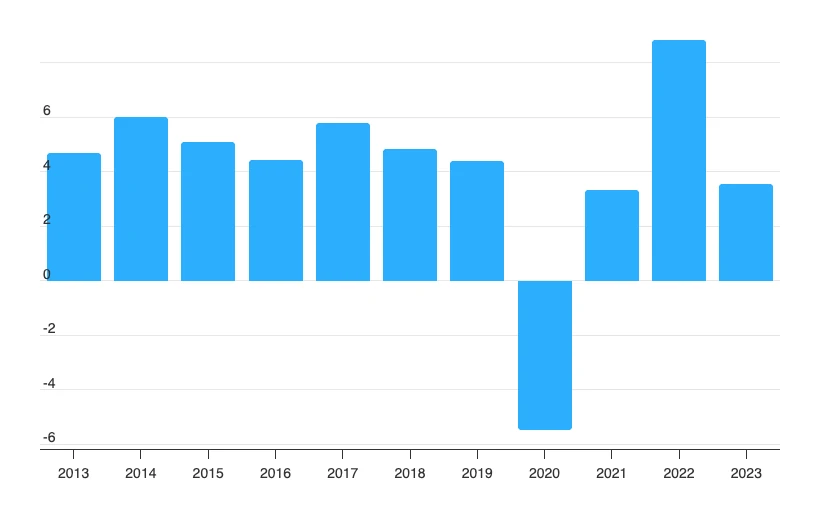
Say real GDP. When a question asks how growth is measured, "real" earns a mark of its own, so an answer that just says "GDP" keeps only one of the two marks. Without "real", the answer could be describing inflation rather than growth.
2. Low (stable) inflation
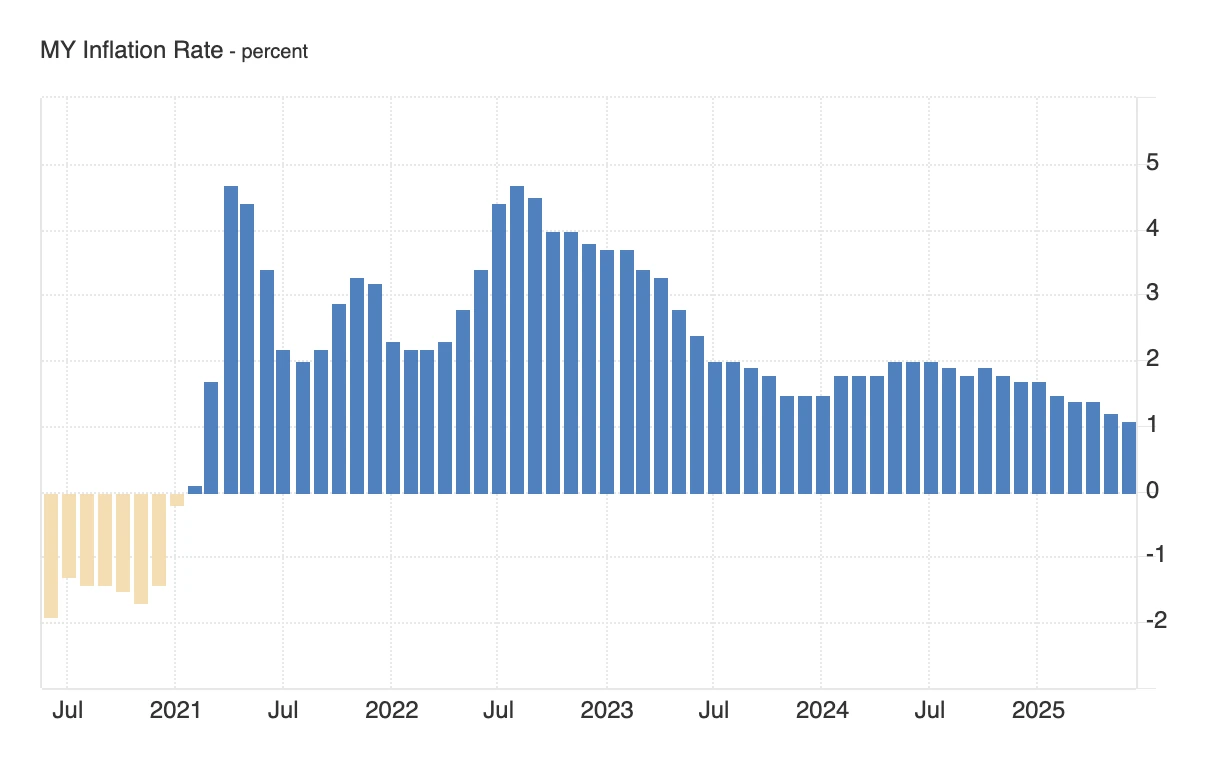
Inflation is a sustained rise in the general price level in the economy. The aim of "low inflation" means keeping the inflation rate low and predictable.
Most central banks target around 2% , measured by the Consumer Price Index (CPI) (covered in topic 13).
A low and stable rate matters for two reasons.
- Predictable inflation lets households and firms plan ahead. They know roughly what their wages, prices and savings will be worth in a year's time.
- Very low inflation (close to 0%) leaves no safety margin above deflation (a sustained fall in the general price level), so governments set the criterion as a low positive rate rather than zero.
The aim is low and stable, not zero. Zero or negative inflation is not the target.
Common exam question
Why a government aims for low, stable inflation
Question: Analyse why governments aim for stable prices, or discuss whether a central bank should target a low rate of inflation (6 marks).
Asked in 2 of the 11 structured papers. Each step of a chain earns a mark, so carry each reason to its effect. Stable prices give consumers confidence to spend and let firms plan, which attracts investment and multinationals and raises output and jobs. Low inflation keeps exports price competitive, helping the current account. It also stops a random redistribution of income away from savers and lenders, protects purchasing power, and avoids menu and shoe-leather costs.
In the Discuss version each side earns up to 4 marks. Against it: higher interest rates cut spending and investment, so cyclical unemployment rises and growth slows, and a central bank putting growth or jobs first may accept some demand-pull inflation. Exchange-rate effects score nothing, and neither does a point that only reverses one from the other side.
3. Low unemployment / full employment
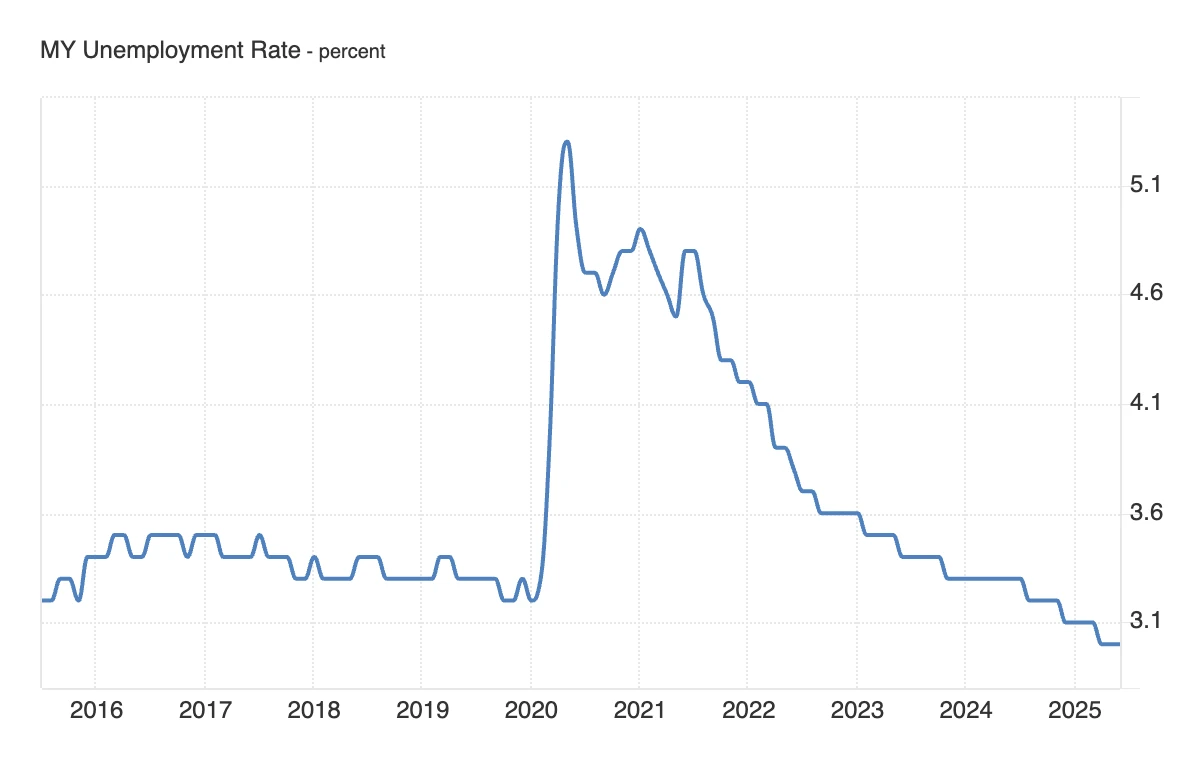
Unemployment means people who are willing and able to work but cannot find a job. The aim is to keep unemployment as low as possible while accepting that some unemployment is unavoidable.
does not mean 0% unemployment. It means everyone willing and able to work at the going wage rate has a job, so there is no cyclical ; some frictional (people between jobs) and seasonal unemployment still remains, which in practice leaves a measured rate of around 3–5% in a developed economy.
Different countries have different effective targets:
- A large, slowly-growing economy may consider 5–6% unemployment normal.
- A small, dynamic economy like Singapore may target under 2%.
Within the headline figure, governments often look at sub-groups as well: youth unemployment, long-term unemployment, regional unemployment, and unemployment by ethnicity or gender. A 5% national rate can hide a 20% youth rate, which is a separate policy problem.
4. Balance-of-payments equilibrium
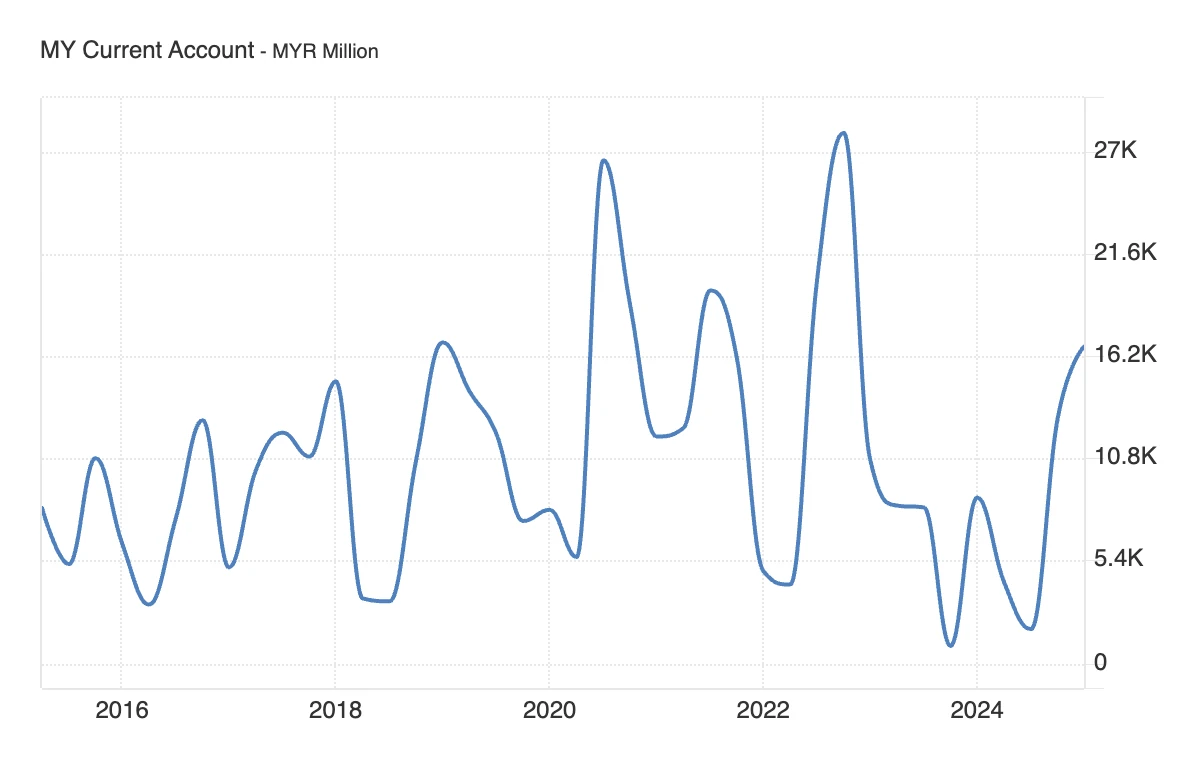
The balance of payments is a country's record of all financial transactions with other countries. The most-watched part is the current account, which mainly tracks exports and imports of goods and services. The aim of "BoP equilibrium" is to avoid a large, persistent current-account deficit or surplus.
A current-account deficit means imports exceed exports; a surplus means exports exceed imports. Either can become a problem if it gets too large and runs on too long.
- A persistent deficit means the country is consuming more than it produces and must finance the gap by borrowing from abroad or running down foreign-currency reserves. Eventually the currency may depreciate sharply or the country may face a balance-of-payments crisis.
- A persistent surplus means the country is producing more than it consumes; it may face foreign exchange-rate pressure and accusations of unfair trade from partners. (Surpluses are usually less worrying than deficits.)
The target is rough balance over the medium term: roughly Exports ≈ Imports for the current account.
5. Equitable distribution of income
Equitable distribution means a fair (less unequal) spread of income across the population, achieved largely through taxation, welfare and public-service spending.
"Equitable" does not mean "equal". A market economy will always produce some income inequality (skilled workers earn more than unskilled; capital owners earn more than wage-only workers). The aim is to reduce the gap between richest and poorest so that:
- Fewer people live in poverty.
- Access to merit goods (education, healthcare) is available to all, not just those who can pay.
- Social cohesion is maintained.
Common policy tools: progressive income tax (higher earners pay a higher rate), welfare payments (unemployment benefit, child benefit, pensions), state provision of merit goods (free schooling and healthcare).
6. Environmental sustainability
Environmental sustainability means meeting present needs without damaging the environment in ways that reduce the ability of future generations to meet their own needs. The aim is to limit pollution and the depletion of finite resources as the economy grows.
Rapid output growth often comes with environmental costs: air and water pollution, deforestation, carbon emissions and the using-up of non-renewable resources. A government that cares only about fast growth may store up long-term damage, so sustainability has become an explicit aim in its own right.
Common policy tools: taxes on pollution (for example a carbon tax), subsidies for clean technology and renewable energy, regulation (emissions limits, bans on harmful practices) and investment in public transport to cut emissions.
3. The six aims at a glance
| Aim | What it means | Headline target |
|---|---|---|
| Economic growth | Sustained rise in real GDP | ~2–3% per year |
| Low inflation | Low and stable rise in prices | Often ~2% CPI |
| Low unemployment | High employment rate | No cyclical unemployment; some frictional and seasonal remains |
| BoP equilibrium | Current account roughly balanced | Exports ≈ Imports over the medium term |
| Income redistribution | Reduced inequality, less poverty | No single number; judged from income-distribution and poverty data. |
| Environmental sustainability | Growth without lasting environmental damage | Lower pollution and emissions; sustainable use of resources |
4. Conflicts between macroeconomic aims
Achieving one aim often makes another harder. The syllabus names three pairings in particular: full employment and stable prices, full employment and stability, and and environmental sustainability. A conflicts question names the two aims (6 marks) and gives a mark for each link in the chain from one aim to the other.
Growth vs low inflation (demand-pull)
When the government uses expansionary fiscal or monetary policy (cutting taxes, raising public spending, cutting interest rates) to lift growth, total demand rises. If demand rises faster than the economy's productive capacity can match, the result is demand-pull .
So pursuing growth in the short run typically pushes the inflation rate up.
Full employment vs stable prices
The mechanism: when unemployment is very low, firms compete for the small pool of available workers and bid wages up. Higher wages raise firms' costs, which they pass on as higher prices. Inflation rises.
So a government that pushes unemployment too low in the short run accepts a faster inflation rate as a side-effect. (Economists call this short-run relationship the Phillips curve; you are not required to name it at IGCSE.)
Full employment vs balance of payments stability
Pushing the economy towards full employment tends to worsen the current account, through two channels.
Incomes. Policies that move the economy towards full employment put more people into work and raise household disposable income. Imports are income-elastic in most countries, so as incomes rise, spending on imports grows faster than export earnings and the current-account deficit widens.
Costs and competitiveness. A tight labour market leaves firms competing for a small pool of workers, so workers are able to bid wages up. Higher wages raise firms' unit costs and therefore export prices, so exports lose competitiveness abroad while relatively cheaper foreign goods take sales at home. Export revenue falls, import spending rises, and the current account worsens again.
So the closer a government pushes the economy to full employment, the harder balance-of-payments stability becomes.
Growth vs balance of payments
When incomes rise, consumers buy more imported goods (cars, electronics, foreign holidays). Imports are income-elastic in most countries.
So as growth raises incomes, imports rise faster than exports, and the current account deficit widens. Pursuing growth in this sense worsens the BoP position.
Growth vs equitable distribution
Growth raises average incomes but does not always raise everyone's income equally. Returns on capital, high-skilled wages, and ownership of property often grow faster than low-skilled wages. The result can be rising inequality alongside rising GDP.
So pursuing growth without redistributive policies may worsen the income-distribution aim.
Growth vs environmental sustainability
Faster output usually means more production, more energy use and more transport, which raise pollution and carbon emissions and use up finite resources more quickly. Chasing rapid growth can therefore damage the environment, while strict environmental protection (pollution taxes, emissions limits) can raise firms' costs and slow growth in the short run.
So the growth aim and the sustainability aim often pull against each other: more output now can mean greater environmental cost later.
When the conflicts ease: supply-side policies
Not every policy creates conflict. Supply-side policies that raise the productive capacity of the economy (better education and training, infrastructure, R&D, deregulation) can lift growth without pushing inflation up, because they raise total supply (productive capacity) rather than total demand. Long-run supply-side improvement is the cleanest way out of the growth-inflation trade-off. The same applies to the employment/balance-of-payments conflict: higher productivity holds unit costs down and improves export competitiveness, so employment can rise without the current account sliding into a widening deficit.
Common exam question
How two macroeconomic aims conflict
Question: Analyse how two macroeconomic aims may conflict, or discuss whether falling unemployment will cause inflation (6 marks).
Asked in 2 of the 11 structured papers, with a mark for each link. For full employment and stable prices, falling unemployment lets workers push up wages, raising costs, and higher incomes lift total demand: cost-push and demand-pull inflation. In a Discuss answer, counter that investment can raise total supply in step with demand.
The other paper paired growth with balance of payments stability, which the syllabus no longer lists; its links fit full employment instead: higher incomes pull in imports and rising prices cut price competitiveness. Growth can also harm the environment through pollution and resource depletion.
The same idea is set in 5 of the 13 multiple-choice papers. Demand-led growth, lower interest rates or measures to cut unemployment all raise demand, so jobs rise but so does inflation; supply-side policy is the most likely to deliver growth with stable prices.
5. Why governments pursue each aim
A question on why a government pursues an aim rewards each benefit carried through to its effect, one mark for each step of the chain.
Benefits of growth
- Higher real incomes for households → higher living standards.
- More jobs as firms expand → lower unemployment.
- Higher tax revenue for the government → more public services, lower government borrowing.
- Reduced poverty as more people enjoy rising real wages.
- Greater business confidence → more investment → still more growth.
Benefits of low inflation
- Preserves purchasing power of wages and savings. High inflation eats away at the real value of money.
- Encourages investment because firms can predict future costs and prices.
- Supports exports by keeping domestic costs competitive (high inflation makes exports more expensive abroad).
- Protects savers whose real returns are not eroded.
- Reduces "menu costs" (the time and money firms spend repricing products).
Benefits of low unemployment
- Reduces poverty because more people earn a wage.
- Raises tax revenue (more income tax, more VAT from spending).
- Cuts welfare spending on unemployment benefits.
- Improves social wellbeing: long-term unemployment is linked to poor mental and physical health.
- Uses spare capacity: idle workers are wasted productive resources.
Benefits of BoP equilibrium
- Stable exchange rate with foreign currencies.
- Avoids running down foreign-currency reserves to pay for excess imports.
- Sustains the trade position rather than relying on foreign borrowing.
- Maintains international confidence in the currency and economy.
- Avoids a sudden BoP crisis that could force austerity or a sharp fall in the currency.
Benefits of income redistribution
- Reduces poverty and improves living standards at the bottom.
- Improves social cohesion when extreme inequality is avoided.
- Funds merit goods like education and healthcare for everyone.
- Raises long-run growth because more children get the education needed to become productive adults.
- Strengthens consumer demand because low-income households spend a larger share of additional income than high-income households (higher marginal propensity to consume).